
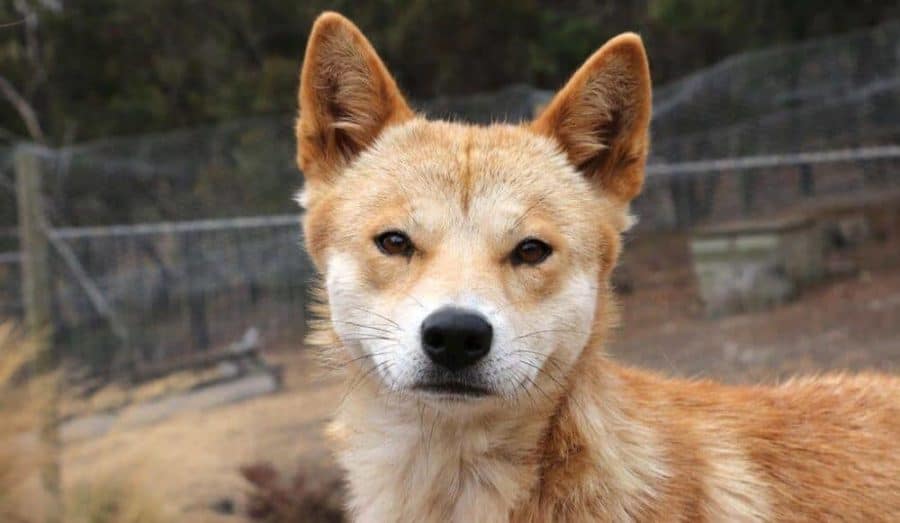
Why do dogs, unlike wolves, make eye contact with people? New Yale University research suggests that the unique history of the Australian dingo can help fill out the evolutionary history of the deep and enduring connection between humans and dogs.
Domesticated dogs look at their owners to convey and request a host of information — for instance, for help in solving a difficult problem. Wild wolves do not. Dingoes appear to represent an intermediate point in the domestication of wolves.
When dingoes arrived in Australia some 5,000 to 10,000 years ago, they were likely comfortable around humans, but not yet fully domesticated. “Dingoes give us glimpse at what dogs might have been like at the earliest stages of domestication,” said Angie Johnston, a graduate student at Yale.
The new study led by psychologists Johnston and Laurie Santos published in the journal Animal Behaviour shows dingoes are more likely to make eye contact with people than wolves are, but for a shorter period than dogs. According to the researchers, these findings suggest that dogs may have developed the motivation to make eye contact with people early in their domestication, but only developed the desire to maintain this contact later in their evolution as man’s best friend.
ScienceBlog.com has no paywalls, no sponsored content, and no agenda beyond getting the science right. Every story here is written to inform, not to impress an advertiser or push a point of view.
Good science journalism takes time — reading the papers, checking the claims, finding researchers who can put findings in context. We do that work because we think it matters.
If you find this site useful, consider supporting it with a donation. Even a few dollars a month helps keep the coverage independent and free for everyone.