


Senolytic drugs have been the most promising near-term anti-aging therapy since the ground-breaking paper by van Deursen of Mayo Clinic published in 2011. The body accumulates senescent cells as we age, damaged cells that send out signal molecules that in turn modify our biochemistry in a toxic, pro-inflammatory direction. Though the number of such cells is small, the damage they do is great. Van Deursen showed that just getting rid of these cells could increase lifespan of mice by ~25%. But he did it with a trick, using genetically engineered mice in which the senescent cells had a built-in self-destruct switch.
After that, the race was on to find chemical agents that would do the same thing without the genetically engineered self-destruct. They must selectively kill senescent cells, while leaving all other cells unharmed. It’s a tall order, because even a little residual toxicity to normal cells can be quite damaging. Before last week, the two best candidates were FOXO4-DRI and a combination of quercetin with dasatinib.
I’ve written in the past (here and here) that senolytic drugs are our best prospect for a near-term lift on the road to anti-aging medicine.
Last week, a large research group affiliated with the original May Clinic team published findings about fisetin, the latest and greatest candidate for a senolitic pill, another flavenoid, very close in structure to quercetin. 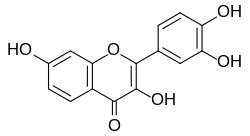
They grew senescent and normal cells in a test tube, then tested 11 different plant-derived chemicals for power to kill the one while leaving the other unharmed. The winner was fisetin.
 (MEF stands for Mouse Embryonic Fybroblast, the cells that were cultured in the screening experiment.)
Fisetin is especially interesting because it is cheap, easily available, widely-regarded as safe, but not nearly as well studied as quercetin.
They took the winner, fisetin, and subjected it to a series of tests. They began with in vitro (cell culture) tests and proceeded to in vivo tests with live animals, culminating with an impressive life span assay in mice.
(The runner-up was curcumin, less interesting perhaps only because it has already been extensively studied. The curcumin molecule is unrelated to quercetin or fisetin, and is not a flavenoid. I can’t help but wonder if they had subjected curcumin to the same thorough testing that they reserved for fisetin, how would curcumin have fared?)

The paper’s principal findings were:
- Fisetin has lower liver toxicity (at equivalent doses for senolytic benefit) than any of the other senolytics tested so far.
- Fisetin reduces pro-inflammatory signaling in a short course given to mice and in long-term experiments where fisetin was added to the mouse chow.
- Fisetin reduces number of senescent fat cells in a short course given to mice.
- Mice fed fisetin for long periods had much more glutathione than control mice. (Glutathione is one of very few marker molecules that seems to be wholly beneficial.)
- Most impressively, mice fed fisetin late in life lived 10-15% longer than control mice. This represents a 50% increase in the remaining lifespan after the intervention.

What we know and what we’d really like to know
We’d like to know, do humans who take large doses of fisetin live longer? Do they have toxic side-effects? These questions require decades to answer.
Does fisetin reduce age markers in humans, especially methylation age? This is a feasible study, since the test is mature and safety of fisetin is fairly well established for short courses. Perhaps this experiment is being considered; I’ve written to the corresponding authors of the most recent study, in case they haven’t already thought of it. This test would not be definitive because we know that methylation age is not perfectly correlated with biological age; but if positive it would confirm both that fisetin is accomplishing epigenetic rejuvenation and that methylation tests were correctly informing us of this; a negative result would be ambiguous.
Episodic Dosing
It makes sense that senolytics should be taken periodically, not continuously. A high dose can be toxic to existing senescent cells, and then getting out of the way, it can allow normal cells to recover from any damage. This sounds like good theory, but different dosing regimens have not been tested experimentally. In fact, the new paper reports positive results from both high episodic dosing and lower everyday dosing.
The Mayo group had previously tested fisetin, and found it effective in killing some kinds of human senescent cells but not others. In previous tests, fisetin was found to be effective in senescent fat cells (pre-adipocyte, white adipose tissue), and that is where it was primarily tested in the new studies.
Authors’ comments
They note that the episodic treatment and short half-life suggest that the benefits of fisetin come from its senolytic action, rather than other actions as an antioxidant and signal molecule. They emphasize that clearing senescent white blood cells and making room for new, active white blood cells are activities that enhance the benefits of fisetin, since white blood cells contribute to clearing the remaining senescent cells.
Fisetin has previously been shown to have anti-cancer activity and to inhibit inflammatory signals directly. Here is a review of benefits of fisetin from three years ago. Drugage lists just two previous lifespan studies with fisetin, with encouraging results from yeast and fruitflies.
The Bottom Line
If we choose to take fisetin at this stage in the science, we are early adopters, and our main concern ought to be safety. There is little doubt that killing senescent cells will be beneficial. But what is the toxic burden of fisetin, and what dosage can we safely take without risk of damage to normal cells? The current study covers a lot of ground but doesn’t answer this question, apparently because they are convinced that fisetin is quite safe.
Strawberries, apples, grapes, and onions all contain fisetin, but at low levels compared to a senolytic dose. For example, the highest food concentration, 160 ppm, is found in strawberries. A half pound of strawberries yields 36 mg of fisetin. We’re still guessing at the therapeutic dose, based on mouse studies, and the experimental dosage in human trials is about 1,000 to 1,500 mg (based on this clinical trial), the content to 30-40 pounds of strawberries on each of two consecutive days.
In the best cases, fisetin was shown to reduce senescent cell burden by 50% and up to 75% in cell cultures. This is a good start, and encourages us to think we can do better by combining fisetin with other agents, or perhaps with fasting.
Also reported today,
Clearing Senescent Cells From The Brain In Mice Preserves Cognition
It sounds impressive, but I’m not impressed. First, mouse models of Alzheimer’s have been discredited repeatedly. Mice don’t naturally get AD, so they have to be genetically engineered to do so, and the genetically modified mice don’t share the deep causes of human AD. Time and again, treatments have been found effective in the mouse model that fail to translate to humans. Second, the treatment used in the study to kill senescent brain cells also relied on another genetic modification, and would not be applicable to humans.
My guess is that effective senolytic agents for humans will be available within a few years, and that they will decrease risk of all age-related disease, including Alzheimer’s. But this study does little to advance us toward that goal.
Discussion
99 reader comments
Imported threads are marked Archive. New comments are welcome and moderated for spam.
Considering how fiscetin has evolved in such widely diverse plant species as apple, grape, onion, etc, it would be interesting to learn the function(s) it plays in the plants. Also, I cannot be the first to wonder what the health and longevity impacts would be on a transgenic mouse designed to express fiscetin.
I am on my third round, 2 months apart, using the Mayo protocol for taking fisetin to clear senecent cells. While I have not noticed any ”results”, I am experiencing mild fever. This happened last time as welI, showing up a few hours after 20mg/kg dose. Fever indicates that a heightened immune system is going after something. Let's hope it's going after those senecent cells. Of interest, I Quote:
”Exactly how fever works its magic is ill-understood. But research just published in Immunity by Chen Jianfeng of the Institute of Biochemistry and Cell Biology, in Shanghai, sheds light on the matter. Dr Chen’s work shows how febrile temperatures encourage a particular protein to shepherd immune-system cells to sites of infection.”..........could it also Shepherd the immune cells to sites of senecent cells? It is after all, a top notch immune system that keeps senescent cells at bay when we are young.
I've done several rounds of fisetin, sometimes with quercetin, sometimes by itself. I've tried the standard protocol, and tried seriously ODing on the stuff.
No fevers, though. I did get a headache one time, but it passed. And I haven't heard of others who take fisetin getting fevers.
So I suspect it's a coincidence, particularly if you didn't get a fever the last few times you took it. You may have a bug of some kind. Rest up :)
yeah I notied a little fever the next day too after taking 1.2 grams of fisetin the night before
165lb, 50 year old, male. Already taking metformin and NMN. No serious health problems as of yet other than a mild hyperlipidemia.
Tried one round of fisetin at the beginning of July 2019
1500mg at night, for four consecutive days
Doctor's Best brand ordered via Amazon.com
This is more-or-less the Mayo clinic protocol, slightly modified because I bought two bottles, which is about 4 does for my weight and it was easy to just use up the two bottles.
I took the pills with water, no fancy MCT oil or anything like that.
I also experienced a mild heat/tingling fairly rapidly after the first dose. It wasn't significant enough to keep me from sleeping and it was gone by the morning
The first day I had the clearest sinuses I've ever had (I tend to always have slight allergies/hayfever). Loved this. Too bad it didn't last as I was back to my slightly-stuffy sinus-normal by the morning of the second day
Second morning I was very hungry so I ate a big breakfast. I frequently intermittent fast and so rarely eat before lunch. It's quite unusual for me to be hungry in the morning.
Third and fourth days no noticeable symptoms or changes from my normal everyday experience.
I'm going to repeat in another month. I had a round of blood tests after the first dosing. I'll post if there is anything interesting, or not, to report. Of course there are a million variables so it will be hard to tease out any good data, but I will try.
not all types of senescent cells I do not think
fisetin seems to effectively remove senescent cells at doses of 30mg/per 1kg of body weight or higher (effect starts at about 15-20mg/1kg but is very weak at these doses). At doses of 30mg/1kg the effect is visible after just 4 three-daily repetitions of 30x100mg per 100 kg of weight, spaced for every two weeks (ie. after 2 months).
Hello
thanks for the info....
WHat do you eman by "visible" results thanks
not all tissue. But so far the broadest range. Including immune system, which then more efficiently than unaugmented clears it in other types of tissue. Visible means noticeably less wrinkles on hands.
As to Alzheimer's disease, I kinda chuckle at the mouse models, since we don't yet completely understand what causes it in humans. So we have genetically engineered mice to contract what we THINK is AD, without really knowing what AD is...
I have noticed that Unity' first target is ostoarthritis. They inect their senolytic substance into the joint.
Would that make sense for fisetin? In other words, would it be possible to disolve fisetin in approrpiate solvent, and inject to the joint?
How could a dose be calculated, in that case?
Any suggestions will be appreciated
Hello Zisos,
I have dissolved Fisetin in DMSO, and in PEG 400 when making a senolytic skin lotion, but it did not dissolve well in water.
An effective solvent for joints would probably be DMSO at 10% concentration. Though DMSO itself has an analgesic effect which may result in false positive results.
I arrived at the figure of 10% based on this paper -
"Modulating the Structure and Properties of Cell Membranes: The Molecular Mechanism of - Action of Dimethyl Sulfoxide"
Thank you, Craig.
While the analgesic effect might lead to a "false positive" for fisetin, this might not be bad for me. My intention for trying is to relieve pain. So what is important to me, is the combination of DMSO & fisetin.
Also, I would assume that the effect of DMSO will be short term, wheras the effect of fisetin (if it exists), will also be felt longer term.
Since you are knowledgeable on the subject, maybe I can ask another question:
One method of delivery, would probably injection in the joint. That is not easily done at home.
I have heard about 'iontophoresis', another method of delivery that in some cases is equivalent to injection. That is easier to try at home.
What is your opinion? Would that be an appropriate method of delivering the DMSO/fisetin to the joint?
It would be best if you found out the protocol that Unity are using. I will contact Judith Campisi, and ask her what solvent mixture is best for joint injection of Fisetin.
I spoke with my university tutor regarding use of DMSO. She is a professor researching flavanoids. She said that any concentration of DMSO over 0.2% is toxic. So, if you do make up a solvent, you should only add 2ml of DMSO per litre.
HI Zisos, I just wanted to let you know that a substance has been discovered that reverses the aging process in mesenchymal bone stem cells to promote osteogenesis and increase bone mass
Ref : Jinlong Sun, Leiguo Ming, Fengqing Shang, Lijuan Shen, Jihua Chen & Yan Jin , (2015) "Apocynin suppression of NADPH oxidase reverses the aging process in mesenchymal stem cells to promote osteogenesis and increase bone mass.", Scientific Reports volume 5, Article number: 18572
You can copy their protocol of application. The apocynin should greatly improve your osteoarthritis.
If you read up on how this drug can be applied to joints, then you should be able to figure out a way of applying it to your joints.
I will look into it myself, and learn more.
Hi Zisos
"Oxytocin and bone remodelling: Relationships with neuropituitary hormones, bone status and body composition" by Breuil V1, Amri EZ, Panaia-Ferrari P, Testa J, Elabd C, Albert-Sabonnadière C, Roux CH, Ailhaud G, Dani C, Carle GF, Euller-Ziegler L.
(2011)
This paper found a strong correlation between Oxytocin levels and osteoperosis - the correlation coefficient (r) was -0.6 at a probability level of 0.001 - so there is definitely a strong negative correlation.
Oxytocin is readily available on the world market from a reputable supplier. Application is fairly straightforward. You would need to make up a saline solution and add the required concentration of Oxytocin. You would then use a nasal atomiser to inhale the mist. It is absorbed quickly into the blood stream and circulates throughout the body. Oxytocin acts as a signal hormone.
Anyway, I would recommend you read up on Oxytocin and its effect on osteoperosis before doing anything.
The correlation between Oxytocin serum level and bone mineral density was +0.64. Osteoperosis being characterised by low bone mineral density
Oxytocin receptors expressed in osteoblasts are
functional: oxytocin elicits a rapid increase in the concentrations of intracellular calcium and these effects are blocked by the addition of an oxytocin antagonist. Treatment of undifferentiated and differentiated osteoblastic cells with
oxytocin stimulates PGE2 synthesis, which has been shown to increase bone formation. Therefore, oxytocin, or better oxytocin analogs with more favorable bioavailability, may represent potential anabolic bone agents.
"New approaches to the treatment of osteoporosis"
Francisco José López (2018)
I found this paper - which shows that Oxytocin is probably an effective treatment for osteoperosis, since it strongly correlates with bone density.
https://www.ncbi.nlm.nih.gov/pmc/articles/PMC4200383/
I have purchased Oxytocin from the world market. It comes as a white powder and costs about £200 per gram.
It readily dissolves in 0.9% saline (you can buy this from any chemist ready made in 500ml bottles).
The concentration I use is 13mg of Oxytocin in 100 ml of saline.
I use a nasal spray to administer it. The dose is 1ml per day.
If you want to link with me on Facebook, you can follow my progress - Craig Kooper
What would an experimental protocol look like? My guess might be 1x per week at 100iu of azithro, all the while ensuring you are taking a quality probiotic and eating fermented foods...Would love to hear everyone's thoughts on this.
What is the equivalent of 100iu in mg?
I purchased Azithromycin and took a single dose of 500 mg orally. I would not recommend it. Azithromycin is a strong antibiotic and gave me stomach ache and diarrhea for a week.
I also ground up an azithromycin pill and dissolved it in ethanol and PEG 400. I then applied it to my skin, with the idea that it would be absorbed into my skin and kill all the senescent cells. I can report that it had no negative side effects.
To see noticeable positive effects from topical applications will require about 30 days of application because new skin takes about 30 days to appear.
Hm. 500 mg is the normal first-day dose for Azithromycin, with 250 mg/day for four days after that. I've taken it many times for upper respiratory infections with very little in the way of side effects. I guess it's different for different people.
The concentrations required for senolytic effects are ~100 µM. It concentrates very differently in different tissues, but two Z-packs back to back should achieve the necessary dose in many tissues, including lung fibroblasts.
Where did you purchase it? I can only get it with a prescription, and it's a huge pain to even see a doctor in Canada, let alone to get their permission for a zany experiment like this.
Is this a new treatment for senescence cells? FDA approved, inexpensive antibiotic when millions are being spent to find a treatment.
One low dose cleaned out 97% of senescence cells without harming the other cells in vitro. Dosing was critical, 50 Ul, no effect 100 Ul great effect. Paper at bottom of page. Open source.
https://medicalxpress.com/news/2018-11-antibiotics-senescent-cells-ageing.html?fbclid=IwAR2-kOvpA_Vcg4PrtwQnetDQw6Uhezs6QWZ-TyM5xIIAPmfNKq7VyBWp6xw
The above study quoted by you also included a table of compounds which did not work in the lab on senescence cells.
https://s3-us-west-1.amazonaws.com/paperchase-aging/supplemental_materials/6fAcrvjkSYuFq34BD_sd1.pdf
I would say the real game changer is when they tweek Fisetin to be more bioavailable in vivo - OR - develop a highly lipophilic version of Fisetin that can be absorbed through skin.
Our skin is highly permeable to lipophilic substances as is the cell membrane of all cells. Creating a lipophilic version would mean that it could be applied as an oil all over the body - absorbing like a sponge from all sides - reaching all parts from the outside in - WITHOUT being metabolised by the digestive system.
It would be like taking a bath and arising renewed.
Certainly very encouraging news. One question though. Do we know, how Azithromycin acts on senescent pancreatic beta cells? Although senescent, they still very efficiently excrete insulin in response to glucose.
It's not difficult to acquire generics of this, where did you find the information re: 100mg, specifically? Have you tried this personally? What impact did you notice? My concern would be short term given it would destroy other bacteria as well, presumably...
IT IS NOT 100 mg if re the antibiotic
IU's are not mg's
it is also not 100mg if re fisetin
for senescence cells
as noted tests would correlate to roughly 500mg for fisetin over 5 days HOWEVER poorly bioavailable,
the antibiotic not done on mice yet, closest correlation in vivo math is quite high and may be dangerously high. So definitely not yet till at least mice study done.
100 IU's, yes; appreciate the clarification. Interesting study, thank you!
I believe the unit symbol is not "IU" for international units but is the Greek letter mu with a capital M, meaning "micromolar" -- the concentration in the tissue culture medium. Also, as a clinical internist, I've not heard of IUs of azithromycin.
They should also research substances that are pro-senolytic so we can avoid them. For example are sugar , animal products, fat pro senolytic. Knowing what is harmful senolytically is just as important as knowing what reduces senolytic cells
Why not take the study dose ( being conducted now) ?
1200 mg for each of 2 days, repeat 1 month later.
Do annually.
Or base it on rat data and do 500 mg, for 5 nights, that's it.
To enhance effect, water fast on dosing days.
Maybe add a dose of Life Extensions new bioavailable Quercetin plus black tea Senolyic product.
So you wouldn't take it on weekly bases? I was thinking to take it during fasting days, once per week... but I'm not sure, maybe it is dangerous
If, as an early adopter, I had to cycle fisetin, what kind of cycling would you recommend? thank you
I would be guessing. There is no data to support a dosing regimen. For my own purpose, I take a few pills in the morning and evening of fasting days.
- JJM
Thanks!
I took 900 mg of fisetin taken out of capsules and mixed powder with a tsp of mct oil each of all 3 water fasting days for "lunch". With a little salt added it was delicious. Added a dose of life extension's new senolytic supplement on day 3.
Quercetin causes double strand breaks. Is it really a senolytic, or just a destructive force, damaging perfectly good cells?
And just to better understand, how often do you fast? I fast one day per week