

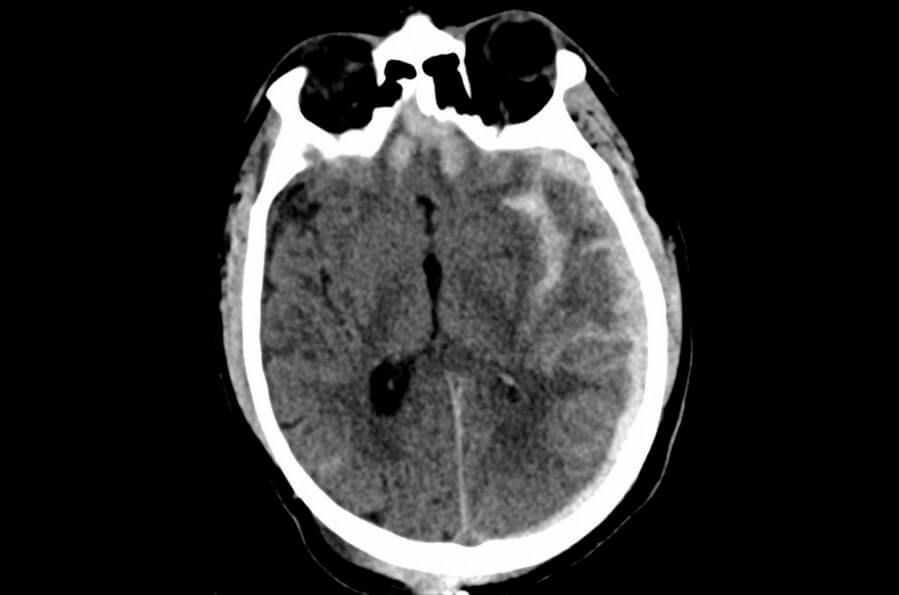
Even a mild concussion can quietly reshape your future. For years, researchers have known that traumatic brain injury significantly raises the risk of Alzheimer’s disease decades later, but the biological connection remained frustratingly unclear. Now, scientists at the University of Virginia School of Medicine have identified the critical link: head trauma damages the brain’s waste removal system, and that dysfunction accelerates the toxic protein buildup characteristic of Alzheimer’s.
More importantly, they found they could interrupt this process. Working with mice, the team showed that repairing the brain’s drainage system within 24 hours of injury prevented the cascade of damage that typically follows. The findings, published in Cell Reports, suggest that what happens in the brain’s hidden plumbing immediately after a blow to the head may determine whether that injury fades with time or sets the stage for neurodegeneration.
When the Brain’s Cleaning Crew Stops Working
The research centers on lymphatic vessels embedded in the meninges, the protective membranes surrounding the brain. These vessels, only discovered in humans a decade ago, act as the brain’s drainage system, flushing out metabolic waste and toxic proteins. John Lukens, PhD, and his colleagues found that even a single mild brain injury impairs this system for weeks.
That disruption has consequences far beyond the injury site. Using mice prone to developing tau pathology, the team observed widespread buildup of abnormal tau protein, the harmful tangles strongly associated with Alzheimer’s. Immune cells called macrophages shifted their activity in damaging ways. Neurons began dying. Memory declined measurably. The damage wasn’t confined locally—tau tangles appeared in brain regions distant from the original impact.
The findings detail a concrete chain of events: injury disrupts drainage, immune cell behavior changes, toxic tau accumulates and spreads. It’s a process that unfolds systematically once the cleaning system fails.
“Our findings indicate that fixing brain drainage following head trauma can provide a much-needed strategy to limit the development of Alzheimer’s disease later in life,” Lukens explains.
A Narrow Window Opens
The most striking result came from intervention. Within 24 hours of injury, researchers delivered VEGFC—a naturally occurring growth factor that promotes lymphatic vessel repair—directly into the meninges using a hollowed-out viral vector as a delivery vehicle. That single treatment restored drainage function, reduced tau accumulation, calmed inflammatory immune cells, and protected mice from later neuron loss and memory deficits.
Animals receiving the treatment performed comparably to uninjured controls on spatial memory tasks. Brain imaging revealed they were protected from the shrinkage typically seen after injury. Untreated injured mice showed clear impairments on both measures.
The implications extend beyond Alzheimer’s. Traumatic brain injury has been linked to Parkinson’s disease, ALS, and chronic traumatic encephalopathy. If enhanced drainage proves protective across conditions, it could reshape how clinicians approach head injuries—shifting focus from managing acute symptoms to preventing disease that emerges years or decades later.
Ashley Bolte, MD, PhD, a member of the research team, notes the urgency. “Traumatic brain injury is a condition where we have very few medical interventions currently, so a prospective therapeutic target is very exciting.” The approach is far from ready for human trials, and much work remains to understand exactly how enhanced drainage prevents long-term degeneration.
Still, the research identifies something concrete: a brief but potentially powerful therapeutic window immediately following head trauma. What happens to the brain’s drainage system in those first hours after injury may help determine whether cognitive decline follows twenty years down the line.