

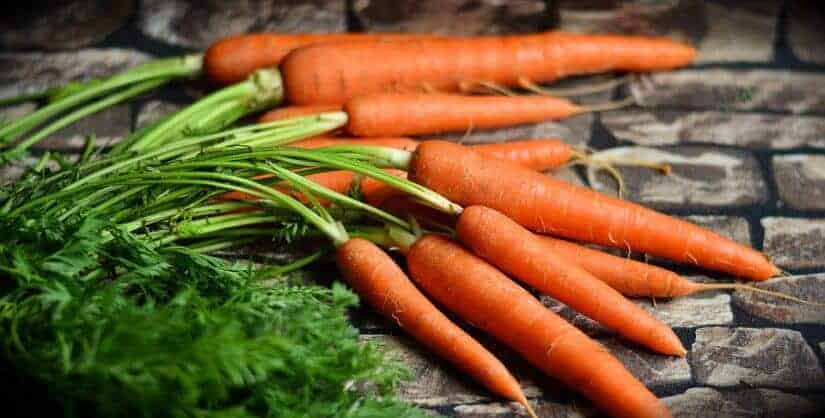
Every year, the food coloring industry discards thousands of gallons of liquid left over from processing carrots. German scientists decided to feed that waste to fungi. The result: a protein-rich ingredient that blind taste testers actually preferred over soy.
The study, published in the Journal of Agricultural and Food Chemistry, screened 106 fungal strains to find one capable of transforming carrot side streams into something people would want to eat. The winner was Pleurotus djamor, the pink oyster mushroom. Grown in submerged fermentation tanks on nothing but liquid carrot leftovers, this fungus produced dense mats of mycelium, the root-like network that forms the organism’s main body. Fresh, it smells neutral to savory and has a fibrous structure that mimics the chew of animal meat without any engineering.
When the team used this mycelium to make vegan burger patties, replacing soy protein entirely, untrained volunteers rated the fungal version higher on texture, smell, and overall appeal. Testers described the mushroom-based patties as softer and less dry, with fewer bitter notes. The sausage trials told a similar story. Compared against chickpea-based versions, the mycelium links earned higher marks for umami depth and a more satisfying bite.
Why the Pink Oyster Works
What makes this particular fungus so efficient is its nature as a decomposer. These organisms evolved to break down tough plant fibers, extracting nutrition from substrates that other protein sources simply can’t use. No extra farmland. No massive water inputs. The fungi consume what was already being thrown away.
“This study is a significant step towards a circular economy by transforming valuable food side streams into a high-quality protein source, highlighting the potential of fungal mycelium in addressing global food security and sustainability challenges,” Martin Gand, corresponding author, explains.
The nutritional profile backs up the sensory results. Protein content ranged from 22 to 31 grams per 100 grams of dry mycelium, depending on the carrot substrate. Fat stayed low. Dietary fiber came built in, courtesy of chitin and glucans from fungal cell walls. The biological value, a measure of how well human bodies absorb and use protein, rivals both plant and animal sources.
From Lab Curiosity to Dinner Plate
Mycelium grows faster than the mushroom caps we find in grocery stores, and liquid fermentation can produce it year-round in controlled environments. For the expanding population of people seeking vegan and vegetarian options, this offers something beyond another pea protein isolate or textured soy product.
Practical hurdles remain. Scaling production, maintaining batch consistency, testing how long the ingredient stays stable on shelves. The researchers acknowledge these gaps. But the core finding holds: a fungus most people have never encountered, eating scraps most companies discard, made a burger that strangers genuinely liked better.
The arithmetic of feeding 10 billion people keeps getting harder. Approaches that convert waste into nutrition won’t solve the whole problem. They might, however, change which parts of the carrot we throw away.
Journal of Agricultural and Food Chemistry: 10.1021/acs.jafc.5c11223