

Some lung tumors that once shrugged off chemotherapy can be forced to respond again with a single, precise gene edit.
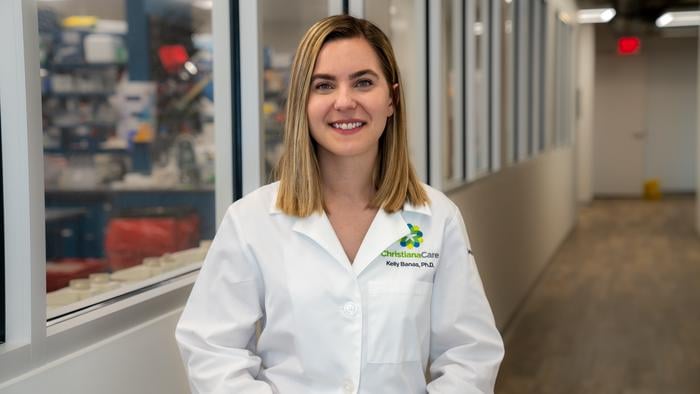
In an experimental study published November 13, 2025 in Molecular Therapy Oncology, researchers at ChristianaCare’s Gene Editing Institute led by Kelly H. Banas, PhD, describe a tumor specific CRISPR strategy that targets a mutation in the stress response gene NRF2. Working in lung squamous cell carcinoma models in cells and mice, they show that selectively disrupting this mutation can restore sensitivity to standard chemotherapy without needing to edit every cancer cell in a tumor.
How A Tumor Mutation Becomes Its Weak Spot
For many people with solid tumors, including lung cancer, chemotherapy and radiation eventually stop working. One major reason is NRF2, a transcription factor that coordinates cellular stress defenses. When NRF2 is overactive, cancer cells can neutralize toxic damage, pump out drugs, and survive treatments that would otherwise kill them.
In some lung squamous cell carcinomas, a specific mutation called R34G appears in the KEAP1 binding region of NRF2. Normally, KEAP1 tags NRF2 for destruction when cells are not under stress, keeping the system under tight control. R34G disrupts that partnership, allowing NRF2 to accumulate and drive resistance to chemotherapy, radiotherapy and immunotherapy.
The ChristianaCare team realized that this dangerous mutation also creates an opening. R34G introduces a new DNA sequence motif, a PAM site that CRISPR Cas9 requires to cut. That means a guide RNA can be designed to recognize and cleave only the mutant version of NRF2, leaving the normal gene in healthy cells untouched. In principle, a single edit could flip off the resistance switch in tumor cells while sparing normal tissue.
To build a realistic testbed, the researchers engineered the R34G mutation into a clinically relevant human lung cancer line, NCI H1703. Using a two step CRISPR and homology directed repair strategy, they created both homozygous and heterozygous R34G clones that mirror the genetic diversity seen in tumors. Deep sequencing showed that CRISPR cutting generated a range of insertions and deletions around the target site, some of which knocked out NRF2 completely while others preserved partial function.
Instead of treating that diversity as a nuisance, the team dissected it. They isolated many individual edited clones, sequenced their genomes and transcripts, and measured how much NRF2 protein each produced. Clones with certain edit patterns lost NRF2 protein entirely, while others with in frame deletions retained an intact or partly functional protein. Downstream, classic NRF2 target genes such as NQO1, HMOX1 and GCLC dropped sharply only in the clones where NRF2 protein was truly absent, revealing which edit combinations actually shut down the resistance program.
“This work brings transformational change to how we think about treating resistant cancers,” said Eric Kmiec, PhD, senior author of the study and executive director of the Gene Editing Institute. “Instead of developing entirely new drugs, we are using gene editing to make existing ones effective again.”
Because any clinical application will hinge on safety as well as potency, the team also mapped possible off target effects. They used three complementary approaches to nominate candidate sites across the genome, combining in silico prediction (Cas OFFinder), biochemical mapping (SITE Seq) and cell based tagging (GUIDE Seq). This produced 499 potential off target regions, which were then checked individually using multiplexed deep sequencing. Only a handful showed detectable editing, and when a high fidelity form of Cas9 was used, off target activity fell below 0.2 percent while on target editing at NRF2 remained high.
Testing The Strategy In Living Tumors
With the mechanism nailed down in cells, the group moved into animal models. They chose lipid nanoparticles, or LNPs, as a non viral delivery system for the CRISPR payload. Several formulations from an external supplier were screened by packaging firefly luciferase mRNA, injecting each candidate directly into R34G mutant tumors in mice, and measuring where the signal appeared. One formulation, labeled LNP 3, produced strong luciferase expression in the tumor with much weaker signals in other organs.
The researchers then loaded LNP 3 with 5 methoxyuridine modified Cas9 mRNA and the R34G specific guide RNA. In lung cancer cells, higher doses of this CRISPR LNP produced higher frequencies of frameshifting edits, with the same characteristic patterns that had been mapped using Cas9 protein. When the payload was injected into established tumors in mice and sampled 72 hours later, sequencing again showed robust editing at the NRF2 locus with an indel profile that matched the in vitro work.
Editing alone made a difference. In xenograft models where R34G mutant H1703 tumors were treated with CRISPR LNP, tumor growth slowed compared with tumors injected with saline. Across tumors, average editing efficiency was roughly in the 20 to 40 percent range, and expression of NRF2 itself, its downstream target NQO1, and the proliferation marker Ki 67 all declined.
The key question, though, was whether that level of editing could change how tumors responded to chemotherapy. To find out, the team combined a single intratumoral dose of CRISPR LNP with standard carboplatin plus paclitaxel, given once a week for three weeks in mice bearing R34G mutant tumors. In this combinatorial regimen, tumor growth was effectively arrested compared with chemotherapy alone. The data suggest that editing a minority of tumor cells to disable NRF2 is enough to tip the balance back in favor of the drugs.
“We’re hopeful that in clinical trials and beyond, this is what will allow chemotherapy to improve outcomes for patients and could enable them to remain healthier during the entirety of their treatment regimen,” Banas said.
Although the work focuses on one mutation in one tumor type, the stakes are broader. Overactive NRF2 contributes to resistance in several solid tumors, including liver, esophageal and head and neck cancers. Wherever somatic mutations create tumor specific CRISPR target sites, similar strategies could, in principle, be used to dial down NRF2 and reopen the window for standard chemotherapy.
The authors also acknowledge the remaining hurdles. They had to engineer their own NRF2 mutant cell model because no suitable system was available off the shelf, and delivery of CRISPR systems in people remains a central challenge. Even so, the study offers a template for using gene editing not as a stand alone cure, but as a combinatorial tool that disables resistance pathways so familiar drugs can work again at lower, more tolerable doses.
If that approach can be translated safely to the clinic, patients whose tumors have learned to ignore chemotherapy might gain a second chance at control, or even at surgical removal, without escalating toxic side effects. At its core, the work suggests that a carefully chosen gene, a tumor specific mutation, and a precisely tuned CRISPR system can together make even hardened lung tumors vulnerable again.