
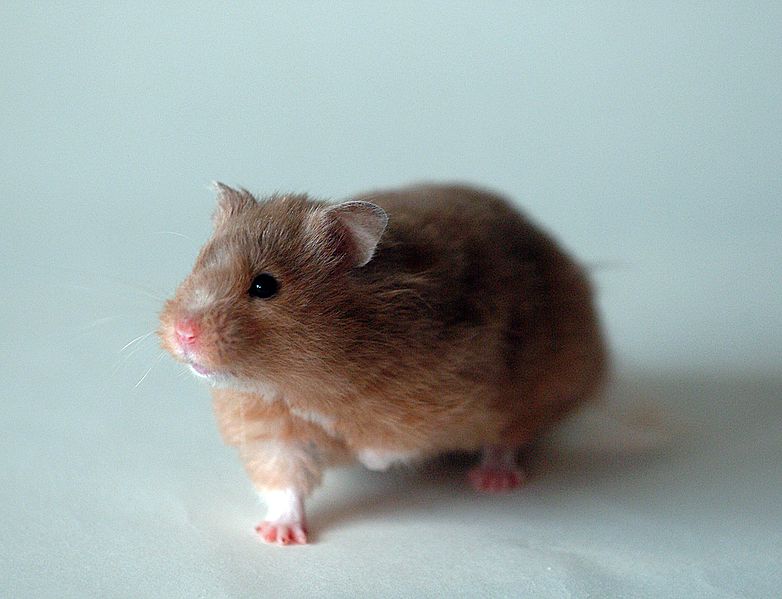
Syrian hamsters are golden-haired rodents often kept as house pets. Cold and darkness can cause the animals to hibernate for 3-4 days at a time, interspersed with short periods of activity. Surprisingly, the hibernation spurts of these cute, furry creatures could hold clues to better treatments for Alzheimer’s disease (AD), according to a recent study in ACS’ Journal of Proteome Research.
When hamsters and other small mammals hibernate, their brains undergo structural and metabolic changes to help neurons survive low temperatures. A key event in this process appears to be the phosphorylation of a protein called tau, which has been implicated in AD. In the brains of hibernating animals, phosphorylated tau can form tangled structures similar to those seen in AD patients. However, the structures disappear and tau phosphorylation is rapidly and fully reversed when the hibernating animal wakes up. Coral Barbas and colleagues wondered if determining how hibernating hamsters’ brains clear out the tangled proteins could suggest new therapies for AD.
So the researchers used mass spectrometry to analyze metabolic changes in Syrian hamster brain before (control), during and after hibernation. A total of 337 compounds changed during hibernation, including specific amino acids, endocannabinoids and brain cryoprotectants. In particular, a group of lipids called long-chain ceramides, which could help prevent oxidative damage to the brain, were highly elevated in hibernating animals compared with those that had recently woken up. The largest change for any metabolite — about 5-fold more in hibernating animals compared with control animals — was for phosphatidic acid, which is known to activate an enzyme that phosphorylates tau. The Syrian hamster is an excellent model to study substances that could help protect neurons, the researchers say.
ScienceBlog.com has no paywalls, no sponsored content, and no agenda beyond getting the science right. Every story here is written to inform, not to impress an advertiser or push a point of view.
Good science journalism takes time — reading the papers, checking the claims, finding researchers who can put findings in context. We do that work because we think it matters.
If you find this site useful, consider supporting it with a donation. Even a few dollars a month helps keep the coverage independent and free for everyone.