

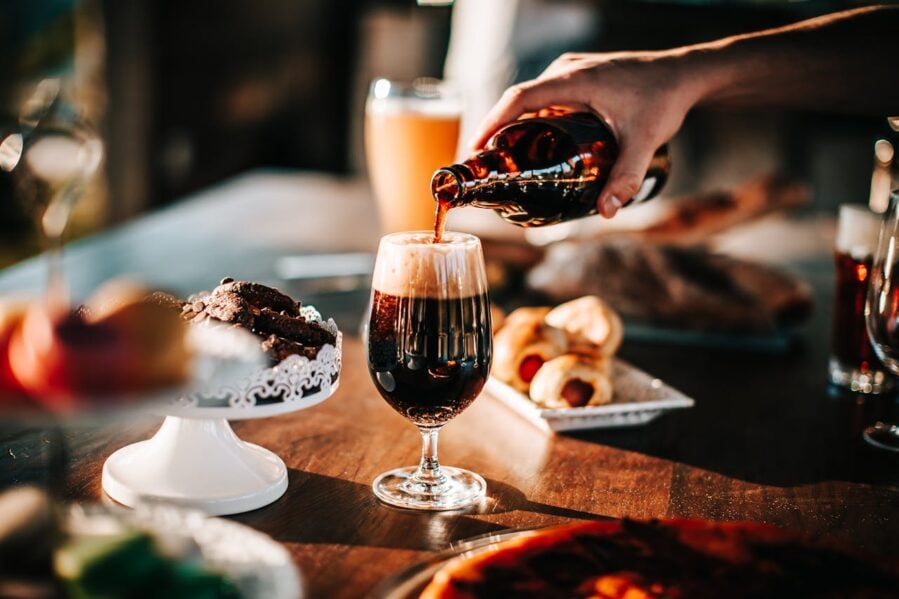
It’s a familiar scene across seven Chinese provinces. Family gatherings in private homes, the clinking of glasses, relatives pressing drinks into young hands – sometimes very young hands. The casual expectation that a thirteen-year-old should join in the toast. Xin-Ying Zeng and her colleagues at the Chinese Center for Disease Control and Prevention knew this happened, but they didn’t know just how early, how often, or how quietly Chinese teenagers were learning to drink.
In 2021, they sent questionnaires into 420 schools across mainland China. When responses came back from 57,336 middle and high school students, the picture was sobering. Roughly 44% had consumed alcohol at some point in their lives. Nearly one in three reported their first drink at age thirteen or younger.
The survey revealed something unexpected – adolescent drinking is often passive, occurring without strong emotional motives. About 36% of drinking episodes happened without any particular emotional trigger. Not rebellion. Not peer pressure in the traditional sense. Just the ambient normalcy of alcohol woven into the fabric of Chinese social life.
The numbers tell a story of gradual exposure; among middle schoolers, 36% had tried alcohol, whilst among high schoolers, the figure climbed to 55%. Boys drank more than girls across every measure – lifetime use, past-year drinking, monthly consumption – with rates roughly 1.6 times higher. Rural adolescents showed higher drinking rates than their urban counterparts, and Central China recorded the highest prevalence of both drinking and drunkenness.
Yet drunkenness itself remained relatively uncommon. While 12% reported having been drunk at some point, only 1.6% had experienced it in the past month. This pattern – widespread exposure to alcohol but infrequent intoxication – sets Chinese teenagers apart from their Western peers. Among American adolescents surveyed the same year, past-month drunkenness stood at 7.4%. European fifteen to sixteen-year-olds reported 13%.
The most striking finding wasn’t about quantity consumed or frequency of drinking. It was about context. Adolescent drinking primarily occurs during family gatherings, the study found. Over half of drinking episodes – 51% – happened at family events, with private homes serving as the location for 69% of alcohol consumption. Beer and wine dominated the beverage choices, with 71% of past-year drinkers consuming beer and 69% wine. Spirits were less common.
This social embedding of adolescent drinking complicates prevention efforts. The alcohol isn’t sneaked from parents’ liquor cabinets or purchased with fake IDs – it’s offered, often pressed upon teenagers by well-meaning relatives who see shared drinking as social bonding, respect for elders, or simple hospitality.
The researchers emphasised the importance of addressing social and cultural environments that shape adolescent alcohol exposure. When drinking happens at family celebrations rather than in alleys or parking lots, it carries an implicit parental sanction (though few parents would probably frame it that way). The family gathering becomes a training ground, normalising alcohol use years before the legal drinking age of eighteen.
There’s encouraging news buried in the data. Comparing these 2021 figures with a 2005 national survey reveals significant declines. Lifetime drinking prevalence dropped from 64% to 44%. Past-month drinking fell from 25% to 11%. Past-year drunkenness plummeted from roughly 15% to 6%.
This downward trajectory mirrors trends in Europe, the United States, Canada and Japan, where adolescent drinking has declined over the past two decades. Two Chinese laws may have contributed: the 1992 Law on the Protection of Minors, which emphasised preventing underage drinking, and the 1999 Law on the Prevention of Juvenile Delinquency, which prohibited alcohol sales to minors. The most comprehensive measures came in 2006, when China set the legal drinking age at eighteen and required retailers to post visible signs refusing alcohol sales to minors.
But enforcement remains patchy. Unlike purchases at shops, the alcohol consumed at family gatherings and private homes escapes regulatory oversight entirely – the laws address commercial transactions but can’t reach into the dining rooms where most adolescent drinking occurs, can’t interrupt the toast at Grandma’s birthday, can’t question the uncle who thinks he’s being generous.
Regional patterns add another layer. Northwest China, with its predominantly ethnic minority communities and stricter cultural attitudes toward alcohol, showed the lowest drinking rates across all timeframes. Central China showed the highest, suggesting deeply rooted drinking cultures that foster widespread acceptance.
The researchers note that easier access to alcohol for rural adolescents, coupled with less parental supervision, may explain their heavier alcohol consumption compared to urban teens. The study points to China’s “left-behind children” phenomenon – millions of children whose parents work in cities whilst they remain in villages with grandparents – as one factor that may weaken parental oversight precisely when adolescents face easy access to alcohol.
Early initiation carries long-term risks. Alcohol consumption during adolescence affects neurodevelopment, increases injury risk, impairs learning, and predicts continued alcohol use into adulthood. The fact that 31% of students reported starting at thirteen or younger means nearly one-third of Chinese adolescents begin drinking during a critical period of brain development.
The study authors observed that this national survey provides a clear reminder that underage drinking remains a widespread and socially embedded behaviour. They emphasised that although severe intoxication has declined compared with earlier surveys, early initiation and persistent exposure continue to pose long-term risks. The findings highlight the importance of parental influence, family environments, and social norms in shaping adolescent drinking behaviours. According to the authors, prevention efforts should move beyond individual education and address broader cultural and environmental factors that normalise alcohol use among young people.
We’ve come far from the days when Chinese adolescent drinking patterns remained largely unmeasured and invisible to public health officials. This 2021 survey provides the first comprehensive national data in over a decade.
The challenge now isn’t gathering more statistics. It’s figuring out how to shift the cultural scripts playing out in those private homes and family gatherings – the ones where a well-meaning uncle pours a fourteen-year-old a glass of wine, where passive drinking passes from generation to generation, where the boundary between hospitality and harm remains as hazy as the morning after.