
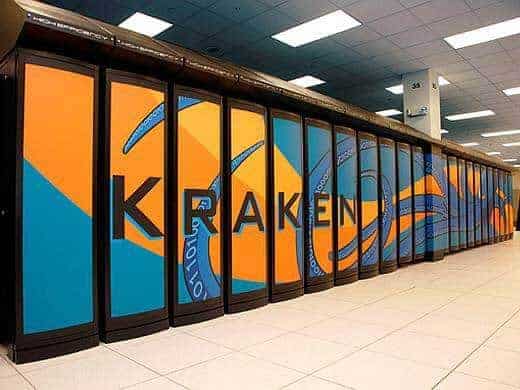
University of Tennessee’s supercomputer, Kraken, which broke a major barrier by becoming the world’s first academic supercomputer to enter the petascale, performing more than 1 thousand trillion operations per second. Kraken was only the fourth supercomputer of any kind to break the barrier. Kraken first entered operation in late 2007, and has expanded through a series of planned upgrades that have made it progressively faster and more powerful. Kraken is made up of over 100,000 computing cores, and it gets its power by making those cores work together in the most effective way possible on any given problem. Kraken’s power makes it possible for scientists to create complex models to simulate processes in the real world in more understandable ways. Those models can be used to address issues from health and medicine to alternative energy.
Image credit: University of Tennessee, Knoxville
ScienceBlog.com has no paywalls, no sponsored content, and no agenda beyond getting the science right. Every story here is written to inform, not to impress an advertiser or push a point of view.
Good science journalism takes time — reading the papers, checking the claims, finding researchers who can put findings in context. We do that work because we think it matters.
If you find this site useful, consider supporting it with a donation. Even a few dollars a month helps keep the coverage independent and free for everyone.