

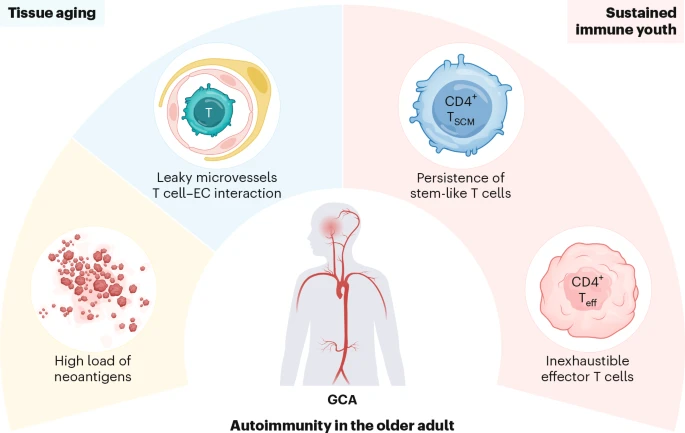
Scientists at the Mayo Clinic have uncovered a surprising twist in human biology: in some adults over 60, the immune system can remain strikingly youthful, but that vigor comes at a cost—an increased risk of autoimmune disease.
The research, published in Nature Aging, suggests that immune aging may sometimes protect the body rather than simply weaken it.
Led by rheumatologist Dr. Cornelia Weyand and aging researcher Dr. Jörg Goronzy, the team studied more than 100 older adults being treated for giant cell arteritis, a rare autoimmune condition that inflames major arteries, including the aorta. In diseased tissue, they found unusually high numbers of stem-like memory CD4+ T cells—immune cells normally linked to regeneration—that were actively fueling the disease.
“We observed that these patients have very young immune systems despite being in their 60s and 70s. But the price they pay for that is autoimmunity.” — Dr. Cornelia Weyand
Why Immune Aging Can Be Protective
Immune aging, or immunosenescence, is often blamed for weaker vaccine responses, higher infection rates, and slower healing. Yet the Mayo researchers argue it may also serve as a built-in safeguard against autoimmunity. As immune cells become less reactive with age, they are less likely to attack the body’s own tissues.
When the immune system stays “young,” it can mount aggressive responses to pathogens—but also to normal cells. This is especially risky when aging tissues produce large amounts of neoantigens from DNA damage, environmental exposure, and tissue wear. These unfamiliar antigens can overwhelm the body’s tolerance mechanisms and trigger autoimmune attacks.
The Neoantigen Flood of Aging
Over decades, genetic mutations, chronic infections, and pollutants like airborne microparticles accumulate in the body. These changes generate neoantigens the immune system has never seen before. Normally, regulatory T cells suppress overreactions, but in conditions such as giant cell arteritis, those safeguards break down, allowing harmful T cells to spread.
Data from the UK Biobank show that the incidence of many autoimmune conditions—including polymyalgia rheumatica and rheumatoid arthritis—peaks later in life, challenging the view that these diseases primarily strike the young.
Balancing Resilience and Risk
This research is part of the Pre-cure initiative, which aims to create diagnostics to identify people with unusually high levels of stem-like T cells before symptoms appear. Catching the risk early could allow for preventive treatment.
Dr. Goronzy notes the delicate trade-off: “Contrary to what one may think, there are benefits to having an immune system that ages in tandem with the body. We need to consider the price to pay for immune youthfulness. That price can be autoimmune disease.”
Implications for Healthy Aging
The study reframes aging as a double-edged process—sometimes, biological decline is protective. For future therapies that aim to keep the immune system strong in old age, avoiding autoimmune triggers will be a critical challenge.
By revealing how immune youthfulness can backfire, Mayo Clinic scientists are prompting a rethink of aging research and paving the way for interventions that preserve resilience without turning the immune system against the body itself.
