

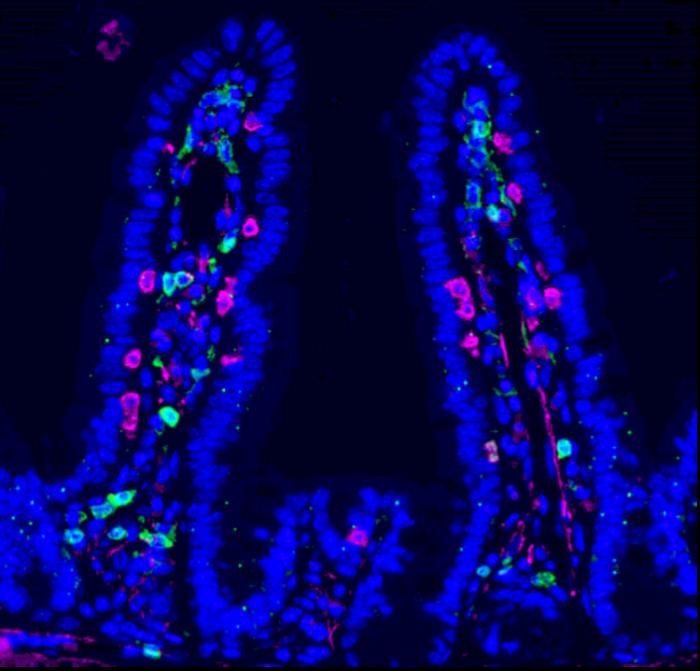
Chemotherapy damages the intestines. Everyone who undergoes cancer treatment knows this. The side effects are brutal and inescapable. Your digestive system rebels. You lose weight. Your body punishes itself from the inside out. For decades, oncologists have viewed this intestinal mucositis as pure collateral damage, a regrettable tax paid for killing cancer cells.
They’ve been wrong about what happens next.
When researchers at the University of Lausanne set out to understand how the gut reshapes itself after chemotherapy, they expected to find a story of recovery and healing. Instead, they discovered something far more remarkable: the damage doesn’t remain confined to the intestines. It sends a signal outward, rippling through the body in ways that fundamentally rewire immunity itself. In doing so, it builds a fortress against one of cancer’s most lethal talents: spreading to the liver.
The story begins with bacteria that live nowhere near the intestines yet derive their entire livelihood from what passes through them. When chemotherapy agents like 5-fluorouracil and oxaliplatin scorch the intestinal lining, they don’t just kill cancer cells circulating through the bowel. They eliminate nutrient-absorbing cells, leaving undigested amino acids and peptides sitting in the colon. For most bacteria, this would be catastrophic. For a particular group called Clostridia, it’s an opportunity.
These bacteria specialise in consuming proteins when everything else becomes scarce. Given an abundance of dipeptides and amino acids, they flourish. And as they multiply, they produce something unexpected: a small molecule called indole-3-propionic acid, or IPA. This metabolite, derived from the amino acid tryptophan, would remain obscure were it not for one remarkable property. It travels.
From the colon, IPA enters the bloodstream. It reaches the bone marrow, that deep tissue where the body manufactures immune cells. There, it does something counterintuitive. It tells cells to finish growing up. In the bone marrow’s developmental hierarchy, common myeloid progenitors face a choice: become neutrophils, or become monocytes. Normally, the body cranks out Ly6C-high monocytes, cells that suppress immunity and let tumours slip past defences. IPA shifts that balance. It nudges progenitors toward the macrophage lineage instead, mature cells that fight infection rather than enable disease.
This shift has consequences for the liver, where colorectal cancer loves to settle. With fewer immunosuppressive monocytes flooding into liver metastases, the immune system gains ground. CD4+ T cells (the orchestrators of antitumor immunity) activate in greater numbers. They organise themselves more effectively around the tumours. CD8+ cytotoxic T cells find themselves positioned alongside Th1 helper cells rather than regulatory T cells that would dampen their killing power. The spatial architecture of the immune response changes, and tumours that should have flourished instead shrivel.
“We were surprised by how a side effect often seen as collateral damage of chemotherapy can trigger such a structured systemic response,” says Ludivine Bersier, the first author leading this work. “By reshaping the gut microbiota, chemotherapy sets off a cascade of events that rewires immunity and makes the body less permissive to metastasis.”
The research team didn’t discover this by accident. They spent months tracking metabolites through mouse intestines and portal blood. They sequenced bacterial DNA from faeces. They cultured bone marrow cells and watched how IPA changed their differentiation patterns. They imaged liver tissue using advanced cytometry techniques that map where every immune cell sits relative to others. The evidence accumulated, each experiment adding another thread to a narrative that connected intestinal damage to systemic immune transformation.
The experiments had a particular elegance. By injecting cancer cells five days after chemotherapy (after the drug had cleared from the body), the researchers isolated the lasting effects from the immediate cytotoxicity. The chemotherapy itself had vanished, yet metastasis formation still dropped dramatically. The effect persisted for ten to twenty days after a single chemotherapy cycle. This “chemomemory,” as they termed it, vanished entirely when mice received antibiotics that wiped out their microbiota. But remarkably, it could be restored by simply feeding mice purified IPA.
The clinical relevance emerged from patient data. Among fourteen chemotherapy-naive colorectal cancer patients who donated blood before and after their first cycle of chemotherapy, nine showed increased circulating IPA after treatment. The pattern held: patients with higher IPA levels had fewer circulating monocytes. These patients also had a higher lymphocyte-to-monocyte ratio, a parameter associated with improved survival. In a larger retrospective analysis of over a thousand localised colorectal cancer patients from Geneva University Hospital, high monocyte counts predicted worse overall survival. The protective pathway was visible in human biology.
This discovery reframes how we think about chemotherapy’s side effects. Intestinal mucositis has always been presented as something to prevent or mitigate. Yet here it appears to be mechanistically central to an unexpected protective mechanism. The damage isn’t merely tolerable. It might be essential.
The implications expand beyond colorectal cancer. The same biological pathway has been implicated in aging, where elevated IPA levels from youthful microbiota transplants blunted myeloid cell expansion in aged mice. It appears in asthma models, where IPA supplementation reduced lung monocytes. The gut-derived metabolite seems to be a master regulator of a developmental choice the bone marrow makes thousands of times daily.
Yet mysteries remain. Why does IPA increase in some patients but not others? The team’s observations suggest that antibiotic use, diet, and individual microbiota composition all influence whether chemotherapy successfully triggers this cascade. A patient who received antibiotics before chemotherapy might miss this window entirely. Someone whose gut bacteria lack the genes to produce sufficient IPA could receive the same drugs and fail to mount the same response.
Tatiana Petrova, who directed the research, emphasises that understanding these variables is crucial. “This work shows that the effects of chemotherapy extend far beyond the tumor itself,” she notes. “By uncovering a functional axis linking the gut, the bone marrow and metastatic sites, we highlight systemic mechanisms that could be harnessed to durably limit metastatic progression.”
The next steps seem obvious yet challenging. Can IPA supplementation (already available as a dietary compound) enhance chemotherapy response? Early experiments combining IPA with standard chemotherapy suggest the answer is yes, at least in mice. The combination decreased liver metastasis burden more effectively than either alone. But translating this into clinical benefit requires careful trial design, patient stratification by IPA-producing capacity, and honest assessment of whether a molecule produced by your own bacteria might work better than a pill.
There’s also the uncomfortable possibility that standard cancer care has been inadvertently undermining this protective mechanism. Broad-spectrum antibiotics, administered perioperatively to prevent infection, might be erasing the very bacteria that would otherwise help prevent metastatic relapse. A large retrospective study found that patients receiving antibiotics during perioperative colorectal cancer treatment had significantly worse disease-free survival. A correlation that now has a potential explanation.
What emerges from this research is a picture of the body as an integrated system. Intestinal damage triggers distant immunity through metabolite signals. Bacterial byproducts shape immune cell fate in the bone marrow. Side effects from cancer treatment might occasionally be features rather than bugs. It challenges the instinct to shield patients from every adverse effect. Some damage, it turns out, makes the body stronger.
For colorectal cancer patients facing the intestinal agony of chemotherapy, there’s something to hold onto in this finding. The nausea and weight loss aren’t merely things endured. They might be part of a biological process that reaches far beyond the visible lesions in the gut, rewriting the immune landscape in ways that keep the cancer from taking root elsewhere.