

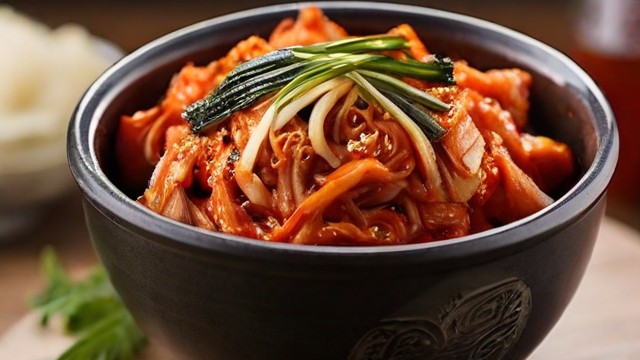
A bowl of fermented cabbage sounds unremarkable until you watch immune cells shift their posture after weeks of eating it. In a 12 week clinical trial in Korea, researchers used single cell RNA sequencing to track how kimchi changes human antigen presenting cells and gently steers CD4 T cells toward balanced defensive and regulatory roles. The work, published in npj Science of Food, offers the most detailed look yet at how a traditional fermented food can tune the immune system without setting off alarm bells.
A Subtle Rewrite Of The Immune Conversation
The research began with an ordinary intervention, a daily capsule of kimchi powder. But the analytic lens was anything but ordinary. Thirteen overweight adults provided blood samples before and after the trial, and each person’s peripheral blood mononuclear cells were pulled apart into nearly ninety thousand single cell transcriptomes. This produced a cellular map, the kind with enough resolution to detect small shifts in signaling that conventional immune assays tend to smooth over.
The big pattern was simple enough to describe. Antigen presenting cells, especially monocytes and dendritic cells, became more talkative. Their MHC class II genes rose, their outgoing and incoming communication strengthened, and their ability to take up and process antigen increased. Flow cytometry backed this up, showing higher HLA DR surface expression and greater uptake of DQ ovalbumin. The study framed these changes as adaptive rather than inflammatory, a calibrated boost rather than a system wide escalation.
“The analysis of the results indicated that in the kimchi consuming groups, the function of antigen presenting cells, which recognize external invaders such as bacteria and viruses and transmit signals, was strengthened.”
Single cell trajectory analysis added another layer. CD4 T cells nudged forward along effector and regulatory branches. Their differentiation curves shifted toward more mature states, the kind associated with improved antigen specific priming and tighter regulatory control. CD8 T cells, B cells, NK cells, and hybrid NK like T cells mostly stayed where they were. The immune landscape, in other words, bent in selected places rather than everywhere at once.
This narrow targeting hinted at a mechanism. The researchers saw strong correlations between rising MHC II expression and interferon gamma response modules. In vitro experiments strengthened the point. Kimchi supernatants activated IFN responsive genes, boosted CIITA, and pushed up HLA DRA and HLA DRB1 expression. When the JAK1/2 inhibitor ruxolitinib was added, these effects largely disappeared. That suggested a familiar axis, JAK–STAT1–CIITA, tuned upward just enough to improve antigen presentation without spilling into unwanted inflammation.
Different Fermentation, Similar Direction
Participants consumed either spontaneously fermented kimchi powder or a version made with a starter strain, and the two behaved more alike than different. Both increased MHC II programs and strengthened APC networks. Both sped CD4 trajectories. Yet the starter fermented version showed a slightly stronger in vitro signal, particularly in its ability to boost IFN responsive genes. The in vivo differences were more muted, suggesting that whatever distinctions exist inside a fermenter tank, the human immune system blends them into broadly similar outcomes.
“Kimchi does not just stimulate the immune system, but also acts as a precision regulator that enhances the defense capabilities of the immune system if necessary and suppresses unnecessary and excessive responses.”
The restrained nature of the response may be the most intriguing part. Many dietary immunology studies struggle with broad noise, with immune activation that is either diffuse or too weak to interpret. Here, the signal remained narrow. APCs became more capable. CD4 T cells edged toward specialized roles. Everything else stayed home. The immune system, after all, is built to avoid unnecessary commotion. Kimchi appeared to honor that preference.
The team behind the work sees room for expansion, both in larger cohorts and in exploring the functional consequences of these shifts for vaccine response and antiviral preparedness. For now, the study places kimchi in a growing category of fermented foods that can do more than shape the gut. It can reach the immune system directly, cell by cell, nudging it toward sharper recognition and calmer regulation.
Journal: npj Science of Food