

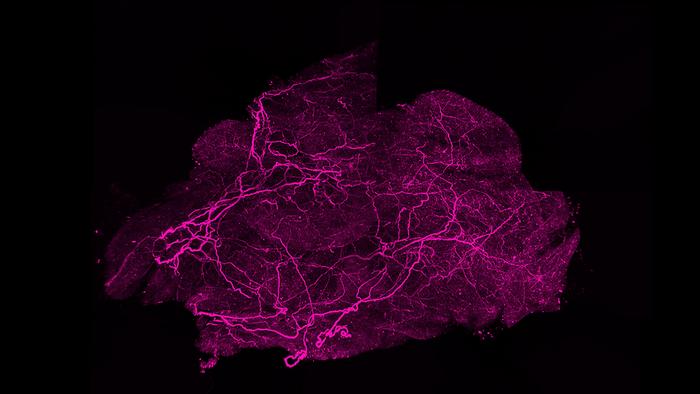
Every time your body shivers or burns a little extra energy to stay warm, brown fat cells are doing something peculiar: running a futile cycle, burning through energy not to build anything but simply to generate heat. For decades, researchers assumed this process had one master switch, a protein called UCP1. Then they found a second pathway. What they couldn’t figure out, for years, was how it turned on. The answer, it turns out, was hiding in one of the most ordinary molecules in metabolism: glycerol.
A team led by Lawrence Kazak at McGill University’s Rosalind and Morris Goodman Cancer Institute has now solved that mystery, and the implications reach beyond thermogenesis altogether, into the crumbling bones of patients who’ve lived for years without an adequate treatment.
The second heat-producing pathway is called the futile creatine cycle, a loop in which a molecule called creatine is phosphorylated and then dephosphorylated in rapid succession, burning through ATP without building anything. The key enzyme in this cycle, TNAP, had been known to biochemists for decades as a critical player in bone mineralisation. What nobody had worked out is what makes TNAP switch on in fat cells during cold exposure. Kazak’s group ran metabolomic profiles of brown adipose tissue from mice kept at thermoneutral temperatures and from mice exposed to six degrees Celsius for three weeks, looking for candidates. Thirty-two metabolites spiked in the cold. Most were dead ends. Glycerol was not.
It’s a surprisingly humble molecule for such a pivotal role. Glycerol is released as a byproduct of lipolysis, the process by which stored fat is broken down. When cold triggers fat breakdown in brown adipocytes, glycerol accumulates inside the cell. Kazak’s group found it binds to a specific surface pocket on TNAP, distinct from the enzyme’s active site, switching up its catalytic activity in a highly specific, concentration-dependent way.
The structural details are striking. Working with McGill structural biologist Alba Guarné, the team solved the crystal structure of the relevant TNAP complex at 2.3 angstrom resolution, revealing the exact geometry of what they call the glycerol pocket, a cavity lined by three key residues: Lys52, Thr321, and Asp370. Mutate any two of those residues and the activating effect disappears entirely. TNAP’s activity drops back to its uninduced baseline, the futile cycle stalls, and heat production falls precipitously. Mice engineered to express only these mutant forms of TNAP in their fat cells, even those also lacking UCP1, could not maintain normal energy expenditure when exposed to cold.
A Bigger Contributor Than Anyone Expected
The thermogenesis community had long suspected the futile creatine cycle was significant, but quantifying it was difficult. The new paper provides the most rigorous estimates yet. In brown adipocyte mitochondria, the cycle provides roughly 40% of the thermogenic capacity attributable to UCP1 in cultured cells. In isolated bat mitochondria under conditions mimicking cold-adapted tissue, the contribution reaches somewhere between 23 and 60 percent of fatty-acid-induced leak respiration, depending on the precise concentrations of creatine and glycerol. That’s not a minor footnote to the UCP1 story; it’s practically a co-protagonist.
“This is the first time we’ve identified how an alternative heat-producing pathway is activated, independent of the classic system,” said Kazak. “That opens the door to understanding how multiple energy-burning systems work together to keep the body warm at the just-right temperature.”
The glycerol mechanism has an elegant logic to it. The molecule doesn’t operate as an on-off switch but as a tunable dial, more technically, a negative cooperativity system in which the enzyme’s responsiveness extends across a wide range of glycerol concentrations. This matters because brown adipocytes don’t flood with glycerol instantaneously; they accumulate it gradually as lipolysis ramps up during cold exposure. TNAP can therefore calibrate its activity proportionally to the rate of fat breakdown, coupling thermogenic output directly to fuel availability.
The Bone Connection
TNAP is not a protein researchers would normally associate with thermogenesis. Its defining role, the one that fills most of the literature, is in skeletal mineralisation. In osteoblasts, TNAP sits anchored to the plasma membrane, where it cleaves pyrophosphate, a potent inhibitor of calcium phosphate deposition. Lose enough TNAP activity and bones don’t harden properly. This is hypophosphatasia, a disorder of “soft bones” that causes fractures, pain, and skeletal deformity. The condition is rare overall, but disproportionately prevalent in parts of Canada due to inherited mutations in select populations, particularly in Quebec and Manitoba.
When Kazak’s group began investigating whether the glycerol pocket they’d found in brown fat also mattered in bone cells, the results were sobering. The team performed gene burden analyses using whole-exome sequencing data from around 500,000 participants in the UK Biobank. People carrying deleterious variants in the glycerol pocket had significantly lower plasma alkaline phosphatase activity, which is the clinical hallmark of impaired TNAP function, and lower bone mineral density. The strength of these associations was second only to mutations in TNAP’s active site itself. In osteoblast cell culture experiments, enzymes with glycerol pocket mutations were clearly slower to restore normal mineralisation after pyrophosphate-induced inhibition than wild-type TNAP.
The therapeutic possibility here is direct. Rather than replacing defective enzyme wholesale, as current hypophosphatasia therapy requires (burdensome tri-weekly injections), a small molecule that binds the glycerol pocket and boosts residual TNAP activity could in principle achieve the same end with far less burden on patients. Marc McKee, who helped develop the existing enzyme replacement therapy and is also a co-author of the new paper, put it plainly: “This finding opens the door to a new kind of treatment, where increasing the activity of the TNAP enzyme through its glycerol pocket by natural or synthetic bioactive compounds could potentially boost the beneficial actions of the enzyme in patients, to help restore deficient bone mineralization to healthy levels.” The group has already identified dozens of candidate compounds for further study.
What the research also underlines is that TNAP’s glycerol pocket is evolutionarily conserved across alkaline phosphatase isoforms more broadly. Intestinal alkaline phosphatase. Placental alkaline phosphatase. The same regulatory pocket, presumably the same metabolite-sensitive logic, potentially operating throughout the body in contexts nobody has studied yet. Whether that opens new windows on liver function, bile production, or neurological vitamin B6 metabolism remains, for now, an open question.
https://doi.org/10.1038/s41586-026-10396-9
Frequently Asked Questions
What is the futile creatine cycle and why does it matter for body temperature?
The futile creatine cycle is a cellular loop in brown fat in which creatine is repeatedly phosphorylated and then dephosphorylated, consuming ATP without producing any useful cellular work beyond heat. It complements the better-known UCP1 pathway in thermogenesis, and this study suggests it contributes somewhere between 23 and 60 percent of the heat-generating capacity attributable to UCP1 under relevant physiological conditions, making it a much larger contributor to warmth than previously appreciated.
Why is glycerol the switch for this pathway rather than some other molecule?
Glycerol is released inside brown fat cells whenever stored fat is broken down during cold exposure, so it is naturally co-produced at precisely the moment thermogenesis needs to ramp up. Its concentration rises and falls in rough proportion to the rate of fat breakdown, which means TNAP, the enzyme it activates, can use glycerol as a real-time signal of how hard the cell is working to mobilise fuel. The specificity is notable: closely related molecules such as glyceraldehyde and ethylene glycol do not activate TNAP through the same pocket.
How does this connect to soft-bone disease in humans?
The same molecular pocket that glycerol uses to boost TNAP activity in fat cells is also required for normal bone mineralisation by osteoblasts. UK Biobank data on roughly 500,000 people found that variants in the glycerol pocket of TNAP were strongly associated with lower alkaline phosphatase activity and reduced bone mineral density, effects rivalled only by mutations that directly disable the enzyme’s active site. Some of these variants are already catalogued as causative for hypophosphatasia, the disorder of soft and fragile bones.
Could a drug targeting the glycerol pocket treat bone disease?
That is the researchers’ central hope. Current treatment for hypophosphatasia involves enzyme replacement therapy delivered by injection three times per week, which is demanding for patients. A small molecule that binds the glycerol pocket and boosts residual TNAP activity in patients who still produce some enzyme could in principle achieve similar benefits with much less burden. The McGill team has already identified dozens of candidate compounds, though these are at an early preclinical stage and considerable work remains before any could be tested in people.
Does this finding have any implications for obesity research?
Potentially, though it is some distance from clinical application. Mouse studies have shown that loss of TNAP or its creatine cycle partner CKB in fat cells increases susceptibility to diet-induced obesity and impairs glucose regulation, suggesting the futile creatine cycle normally contributes to metabolic housekeeping beyond just cold thermogenesis. Understanding exactly how to activate the cycle pharmacologically, which this study now makes more tractable, could in principle offer a route to therapies that increase resting energy expenditure, though the obesity angle remains speculative for now.