

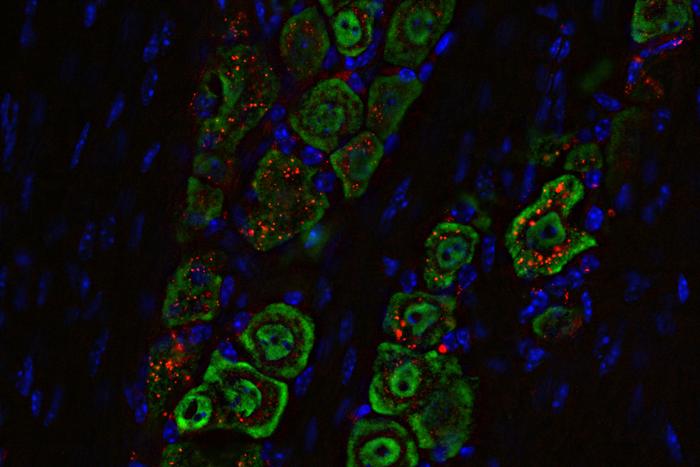
The biological defenses that protect the brain from toxins also lock out most cancer drugs, making glioblastoma one of the hardest tumors to treat. But researchers have found a way to bypass those barricades entirely: a nasal spray that hijacks facial nerves to carry cancer-killing nanoparticles directly to the tumor.
In a study published this month in PNAS, a team from Washington University School of Medicine in St. Louis and Northwestern University demonstrated that this noninvasive approach eliminated aggressive brain tumors in mice, offering a potential path to treating human patients without invasive surgery.
Hitching a Ride on the Trigeminal Nerve
Glioblastomas are notoriously “cold” tumors, meaning they suppress the local immune system and avoid detection. Scientists have long known that activating a specific cellular pathway called STING can wake up the body’s defenses and turn these cold tumors hot. The challenge has always been delivery. Drugs that trigger STING degrade rapidly in the bloodstream, and getting them past the blood-brain barrier usually requires direct, high-risk injection into the brain tissue.
To solve the access problem, the research team utilized spherical nucleic acids (SNAs). These nanostructures, developed by collaborators at Northwestern, consist of a gold core densely packed with DNA strands. The team found that when these particles were administered as nasal drops, they didn’t just stay in the nasal cavity. Instead, they moved along the trigeminal nerve and the olfactory nerve, effectively using the body’s own wiring to travel deep into the brain.
“We really wanted to minimize patients having to go through that when they are already ill, and I thought that we could use the spherical nucleic acid platforms to deliver these drugs in a noninvasive way,” said first author Akanksha Mahajan, PhD, a postdoctoral research associate in the Stegh lab.
This route allowed the drug to bypass the blood-brain barrier while minimizing exposure to the rest of the body. Once the particles arrived at the tumor, they targeted macrophages, a type of immune cell often co-opted by the cancer to support its growth. The DNA shell of the nanoparticle bound to cGAS, an internal sensor that detects foreign genetic material, effectively tricking the macrophages into thinking they were under attack and sparking an inflammatory response against the tumor.
Turning the Immune System Against the Cancer
The treatment proved highly effective in animal models. When the researchers combined the nasal drops with a checkpoint inhibitor—a drug that takes the brakes off the immune system—the therapy cleared the tumors in the mice. The treatment induced a lasting memory in the immune system, protecting the animals from recurrence long after the initial dosing.
“With this research, we’ve shown that precisely engineered nanostructures, called spherical nucleic acids, can safely and effectively activate powerful immune pathways within the brain,” said co-corresponding author Alexander H. Stegh, PhD. “This redefines how cancer immunotherapy can be achieved in otherwise difficult-to-access tumors.”
Stegh notes that while the STING pathway is a powerful tool, the tumor often has backup mechanisms to shut down the immune response. Consequently, the team is working to modify the nanostructures to hit multiple targets simultaneously. Because the SNA platform is modular, researchers can swap out the DNA codes on the particle surface, potentially allowing them to hit multiple cancer vulnerabilities at once—all through a few drops in the nose.