

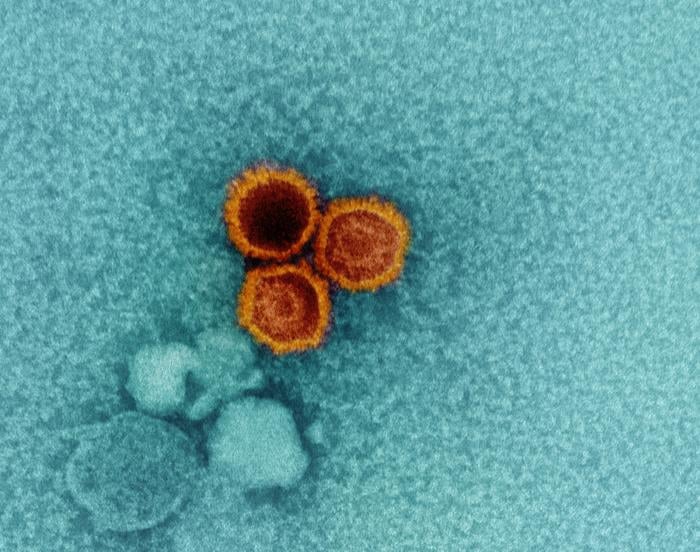
Epstein-Barr virus has spent millennia perfecting a trick that makes it almost impossible to target: it latches onto nearly every B cell in our immune system, the very cells we’d want to use to fight it. An estimated 95 per cent of people on the planet carry the virus, most of us without ever knowing. For the vast majority, that coexistence is uneventful. But for the immunocompromised, particularly people undergoing organ or bone marrow transplants, EBV can awaken with lethal consequences.
Now a team at Fred Hutchinson Cancer Center in Seattle has found a way around the virus’s defences, using mice engineered with human antibody genes to produce the first genetically human monoclonal antibodies that block EBV from entering our cells. The results, published in Cell Reports Medicine, mark a meaningful step toward a therapy that has eluded researchers for decades.
The challenge has always been peculiar. To develop antibodies against a virus, you typically need to find immune cells that recognise it. But EBV’s surface proteins, gp350 and gp42, bind to receptors found on virtually all B cells, the very cells scientists would normally sort through to find virus-targeting antibodies. It’s a bit like trying to pick out someone wearing a distinctive hat in a crowd where everybody has put on the same hat. “Finding human antibodies that block Epstein Barr virus from infecting our immune cells has been particularly challenging because, unlike other viruses, EBV finds a way to bind to nearly every one of our B cells,” says Andrew McGuire, a biochemist in the Vaccine and Infectious Disease Division at Fred Hutch.
Previous attempts haven’t been entirely fruitless. A mouse-derived antibody called 72A1 showed promise in a small pilot study of liver transplant recipients back in 2006. It appeared to offer short-term protection, but there was a catch: every participant developed anti-drug antibodies, and one had a hypersensitivity reaction. The human immune system, it turned out, didn’t much care for mouse-made molecules.
McGuire’s team took a different approach, working with transgenic mice from Alloy Therapeutics whose own antibody genes had been swapped out for human ones. These ATX-GK mice produce antibodies that are genetically human from the start, sidestepping the rejection problem entirely. The researchers immunised the mice with two key EBV proteins, gp350 and gp42, then screened the resulting antibodies for those that could actually neutralise the virus.
Out of that effort came ten promising candidates: two targeting gp350, which helps the virus grab hold of cells, and eight targeting gp42, which allows it to fuse with and enter B cells. The standout performer was an antibody called ATX-42-2, directed against gp42. Crystal Chhan, a pathobiology PhD student in the McGuire Lab who worked on the study, noted that the team had also validated a new approach for discovering protective antibodies against other pathogens. “As an early-career scientist, it was an exciting finding and has helped me appreciate how science often leads to unexpected discoveries,” she said.
When the team tested ATX-42-2 in humanised mice, animals with transplanted human immune systems that can be infected by EBV, the results were striking. Across three separate experiments involving 13 mice, not a single animal that received ATX-42-2 had detectable viral DNA in its spleen. Compare that with the control groups, where 10 of 12 mice showed clear signs of infection, including swollen spleens, viral DNA, and in some cases visible tumours. A gp350-targeting antibody, ATX-350-2, offered partial protection but was less consistent, possibly because gp350 isn’t actually essential for EBV to infect B cells, while gp42 is.
The structural work underpinning the study is equally telling. X-ray crystallography and electron microscopy revealed exactly where these antibodies latch onto the viral proteins, mapping sites of vulnerability that could inform future vaccine design. ATX-42-2 blocks the precise spot where gp42 would normally engage with HLA class II molecules on B cells, essentially jamming the virus’s key in the lock.
Why does this matter clinically? More than 128,000 people in the US alone undergo organ or bone marrow transplants each year, and the immunosuppressive drugs they need can unleash dormant EBV. The result can be post-transplant lymphoproliferative disorder, an aggressive and sometimes fatal lymphoma. Rachel Bender Ignacio, an infectious disease physician at Fred Hutch, has described effective prevention of EBV viremia as a significant unmet need in transplant medicine. Children are particularly vulnerable, as a higher proportion haven’t yet encountered the virus.
The team envisions an infusion of these antibodies before transplant, a prophylactic shield during the most dangerous window. Fred Hutch has filed for intellectual property on the antibodies, and McGuire and Chhan are working with industry partners to move toward clinical testing. “There’s momentum to advance our discovery to a therapy that would make a huge difference for patients undergoing transplant,” McGuire says.
There are caveats, of course. The mouse model can only test protection of human B cells, not epithelial cells, which EBV also infects. And a single antibody infusion may not provide lasting coverage; the gp350 antibodies, in particular, decayed faster in the bloodstream than the gp42 ones. Combinations of antibodies targeting different viral proteins, or engineering to extend their half-life, could eventually prove more robust. But after years of EBV dodging our best efforts, having genetically human antibodies that can block it, proven across multiple animal experiments and ready for the road to clinical trials, feels like the kind of progress this field has been waiting for.
Study link: https://www.cell.com/cell-reports-medicine/fulltext/S2666-3791(26)00035-2