
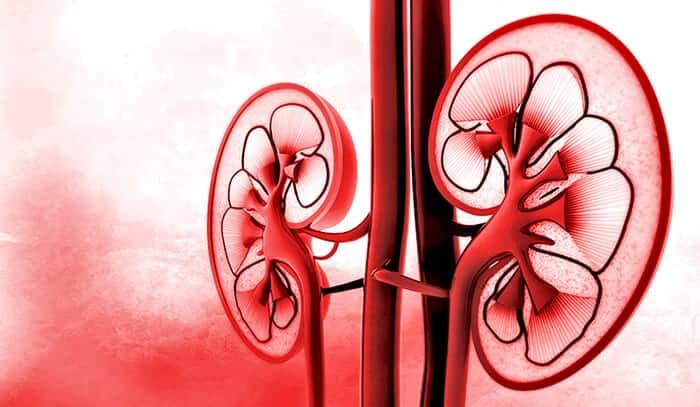
A common complication of type 2 diabetes occurs when filters within the kidney are damaged, leading to an abnormal buildup of protein in urine and a decline in kidney function. This condition, called diabetic kidney disease, can lead to irreversible kidney failure that is currently difficult to predict. A team of researchers led by professor of medicine Dr. Chirag Parikh in collaboration a group at Icahn School of Health at Mount Sinai has recently made strides that could lead to improved diagnostics and treatment plans for this condition.
Using samples from two large federally-funded clinical trials, the team measured three specific proteins (TNFR-1, TNFR-2, and KIM-1) in the blood of diabetic patients. They tested whether these proteins were associated with decline in kidney filtration function. Results showed that each protein was independently associated with higher risk of decline in kidney function in patients with both early and advanced diabetic kidney disease.
These results show promise for potential use of these proteins as biomarkers to predict kidney disease progression in diabetics, as well as to evaluate the efficacy of disease therapies in clinical trials.
The full paper can be accessed in the Journal of the American Society of Nephrology.
ScienceBlog.com has no paywalls, no sponsored content, and no agenda beyond getting the science right. Every story here is written to inform, not to impress an advertiser or push a point of view.
Good science journalism takes time — reading the papers, checking the claims, finding researchers who can put findings in context. We do that work because we think it matters.
If you find this site useful, consider supporting it with a donation. Even a few dollars a month helps keep the coverage independent and free for everyone.