

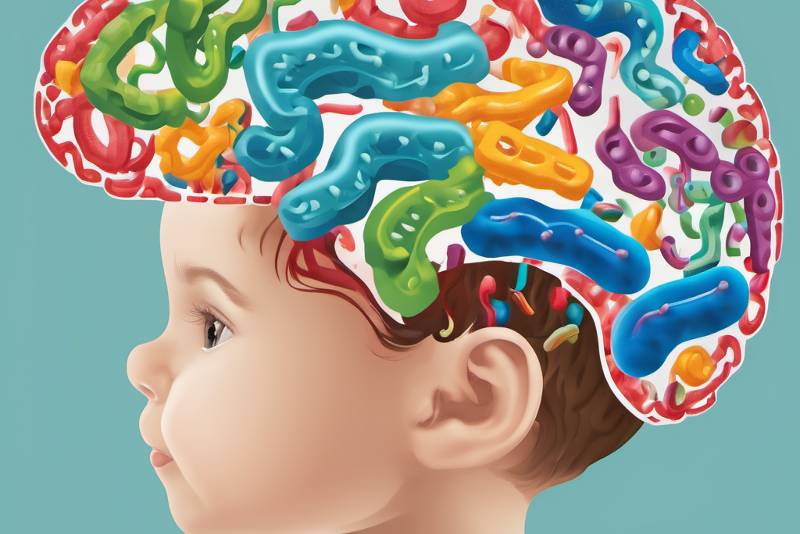
Researchers have discovered a strong connection between the types of bacteria living in children’s guts and their brain function. This groundbreaking study, part of the National Institutes of Health’s ECHO Program, examined 381 healthy kids in Providence, Rhode Island, shedding light on early childhood development.
Key Discoveries:
- Specific gut bacteria, like Alistipes obesi and Blautia wexlerae, are linked to better brain function in children.
- Conversely, certain bacteria, such as Ruminococcus gnavus, are more prevalent in kids with lower cognitive scores.
- Microbial genes involved in processing brain-affecting compounds influence cognitive abilities.
- Advanced computer models suggest that gut bacteria can predict changes in brain structure and cognitive performance, hinting at potential early intervention strategies.
What’s Unique About This Research?
This study is the first to explore the link between gut bacteria and normal brain development in healthy children. Using complex models, researchers connected gut bacteria profiles with cognitive abilities, even predicting future performance based on early-life microbes.
Why It Matters for Public Health
The findings could lead to new ways of spotting early developmental issues and supporting kids’ brain health. Understanding the importance of gut health in childhood suggests possible dietary and lifestyle adjustments for parents and healthcare providers. It sets the stage for further experiments and animal studies.
Wellesley College’s Contribution
Wellesley College, particularly the Klepac-Ceraj Lab in the Department of Biological Sciences, played a crucial role. Dr. Kevin Bonham and Dr. Guilherme Fahur Bottino led the data analysis. The college’s commitment to collaboration across disciplines was vital for this intricate study.