Skip to content
ScienceBlog.com
  • Featured Blogs
    • EU Horizon Blog
    • ESA Tracker
    • Experimental Frontiers
    • Josh Mitteldorf’s Aging Matters
    • Dr. Lu Zhang’s Gondwanaland
    • NeuroEdge
    • NIAAA
    • SciChi
    • The Poetry of Science
    • Wild Science
  • Topics
    • Brain & Behavior
    • Earth, Energy & Environment
    • Health
    • Life & Non-humans
    • Physics & Mathematics
    • Social Sciences
    • Space
    • Technology
  • Our Substack
  • Follow Us!
    • Bluesky
    • Threads
    • FaceBook
    • Google News
    • Twitter/X
  • Contribute/Contact

cognitive abilities

The study used imaging data from more than 6,000 people in 22 countries. By comparing several thousand patients with schizophrenia and healthy individuals, the variability of brain structure could be studied with a high degree of reliability. (Image: iStock.com/Jolygon)

Common Psychiatric Medications Silently Sabotage Brain Function in Psychosis Patients

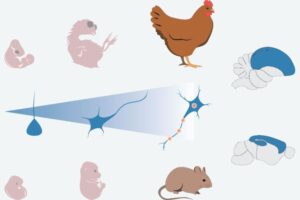
A single-cell comparison of the pallium – the brain region crucial for cognitive functions – reveals its complex evolution despite similar functions in birds and mammals. | © Bastienne Zaremba, Nils Trost, Marta Sanchez-Delgado

Bird Brains Reveal Surprising Path to Intelligence

Toddler boy in overalls

Multilingualism Offers Unexpected Benefits for Children with Autism

A male individual cracking nuts using stones. Credit: Dora Biro.

Complex Tool Use in Wild Chimps Reveals Sophisticated Mental Planning

Girl playing a small guitar

New Evidence Shows Musical Training Enhances Children’s Mental Control

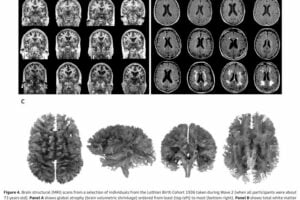
25-year study reveals key factors in healthy brain aging and cognitive performance

25-Year Study Reveals Childhood Intelligence Shapes Brain Health in Old Age

The effect of temperature on language complexity: Evidence from seven million parliamentary speeches

Parliamentary members use simpler language on hot days

A very smart dog, doing calculus

Study Reveals Dogs Can Imitate Human Actions from Video Projections

a Tyrannosaurus rex alongside a modern-day crocodile. The T. rex and crocodile are positioned side by side, with their heads at a similar level, emphasizing the comparison of their cognitive abilities.

When it Comes to Smarts, Dinosaurs Were More Like Crocodiles Than Monkeys

illustration of a child's brain and bacteria

New Study Links Gut Bacteria to Kids’ Brain Power and Development

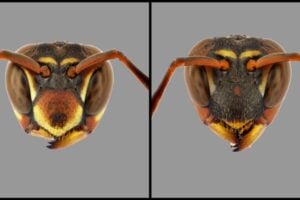
wasp faces

Wasps that recognize faces cooperate more, may be smarter

Smaller dogs may live twice as long life as their larger counterparts.

How body size shapes dogs’ aging patterns

A blank face

COVID-19 can cause ‘face blindness’

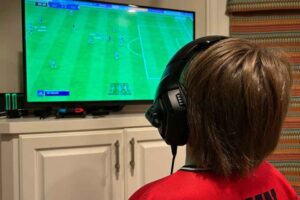
New research defies long-held worries that lots of videogame playing could hamper young children’s pace of learning. A study of fifth graders published in the Journal of Media Psychology found no meaningful links between video game playing – even for hours – and the children’s cognitive ability. The news is likely to reassure parents and thrill game-loving kids.

Video game playing causes no harm to young children’s cognitive abilities

Older posts
Page1 Page2 Next →
Substack subscription form sign up

Comments

  • Norwood johnson on Electrons in New Crystals Behave as If They Live in Four Dimensions
  • ScienceBlog.com on Hidden Geometry Could Finally Fix Quantum Computers
  • Theo Prinse on America Is Going Back to the Moon. This Time, It Plans to Stay
  • george w on Hidden Geometry Could Finally Fix Quantum Computers
  • Tom Hughes on Years of Exercise, Blood Pressure Drugs Failed to Slow Cognitive Decline in Seniors at Dementia Risk
© 2026 ScienceBlog.com | Follow our RSS / XML feed