

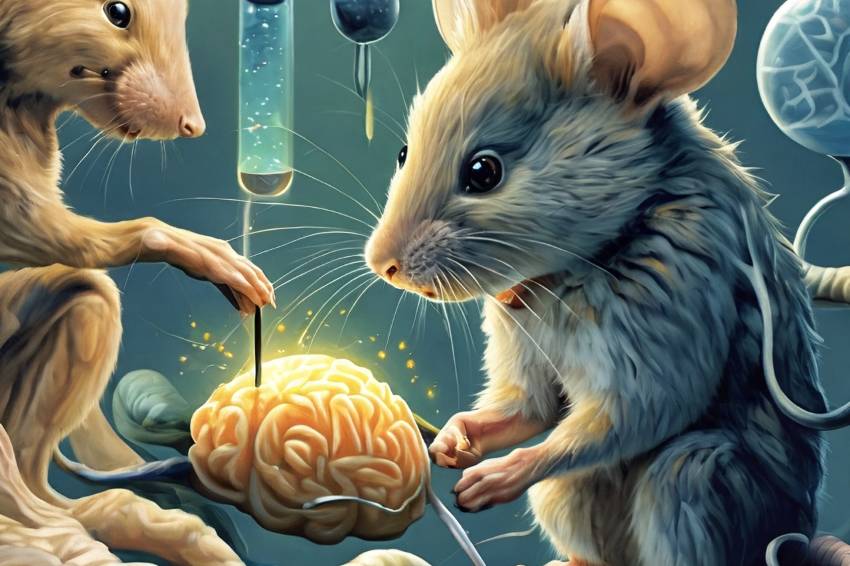
Scientists at UC San Francisco have identified a single protein that may play a key role in age-related memory loss.
The protein, called ferritin light chain 1 (FTL1), builds up in the hippocampus of aging mice and is linked to worsening cognition. When researchers increased FTL1 in young animals, their memory and synapses weakened. Reducing FTL1 in older animals restored both. The team also found that FTL1 disrupts mitochondrial energy pathways, but giving the animals NADH helped offset the damage. The findings, published in Nature Aging, suggest a promising target for treating cognitive decline.
Why a single protein matters in hippocampus aging
The hippocampus, a hub for learning and memory, is among the first brain regions to falter with age. Using neuronal nuclei RNA sequencing and synaptic proteomics, the team found that FTL1, a protein that helps store iron, increases in aging hippocampal neurons and negatively correlates with performance on standard memory tasks in mice. Iron handling intersects tightly with cellular energy and oxidative stress, which are core features of brain aging. The authors linked elevated FTL1 to a shift toward ferric iron and to fewer excitatory and inhibitory synapses, echoing the synaptic thinning that defines cognitive aging.
How the scientists tested cause and effect
To move beyond correlation, the group manipulated FTL1 directly:
- Overexpression in young mice: Raising neuronal FTL1 reduced dendritic complexity, depressed long‑term potentiation, and erased preference for novel objects and maze arms.
- Knockdown and CRISPR knockout in old mice: Lowering neuronal FTL1 increased synaptic markers and restored memory performance to youthful levels.
- Metabolism link: Multi‑omics pointed to ATP synthesis pathways. Primary neurons with excess FTL1 produced less ATP, while reducing FTL1 nudged ATP production up.
- NADH rescue: Supplementing NADH, which fuels mitochondrial respiration, mitigated neurite loss and rescued memory in FTL1‑overexpressing mice.
“It is truly a reversal of impairments,” said Saul Villeda. “It’s a hopeful time to be working on the biology of aging.”
FTL1 aging brain target points to translational paths
FTL1 sits at the intersection of iron biology and neuronal metabolism. Iron dysregulation can damage mitochondria, undermine ATP production, and create oxidative stress. The authors’ bidirectional experiments support FTL1 as a driver, not just a passenger, in hippocampal aging. Although all findings are in mice, the work aligns with broader evidence that higher ferritin levels track with cognitive problems in older adults. That convergence makes FTL1 an appealing target for interventions that adjust iron handling or bolster cellular energy, potentially in concert with other strategies now under study in aging research.
What to watch next
Before any human application, researchers will need to test safety and durability of FTL1 modulation, map off‑target effects in other brain regions, and determine whether benefits extend in models of Alzheimer’s and Parkinson’s disease. The metabolic angle also invites trials that pair FTL1 targeting with safe bioenergetic support, while carefully monitoring iron homeostasis. If future studies replicate these synaptic and behavioral gains in older animals and disease models, FTL1 could become a compelling lever for cognitive resilience in aging.
Learn more about the journal at Nature Aging, the institution at UCSF, aging and brain health at the National Institute on Aging, and background on cognitive decline at the Alzheimer’s Association.
Journal: Nature Aging