

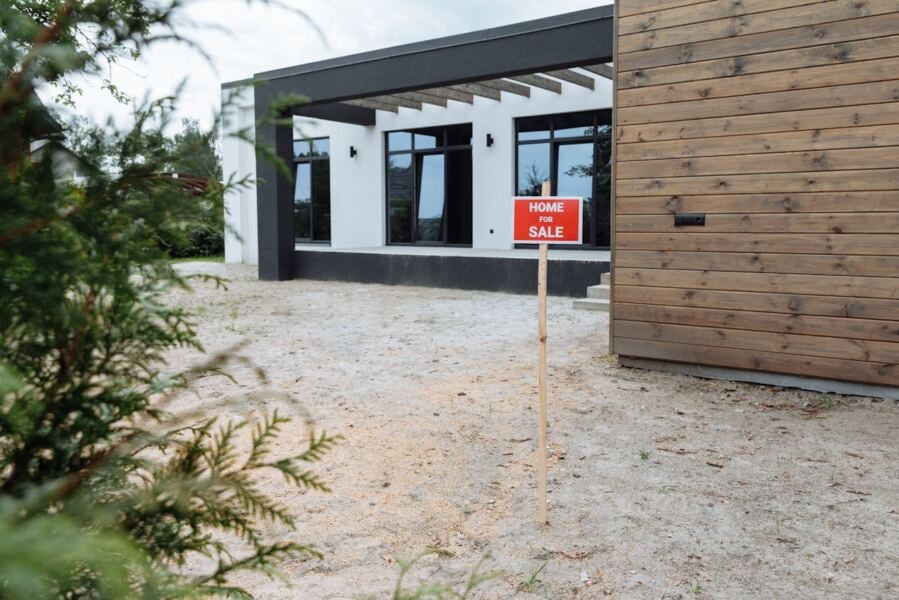
Follow the money far enough and it ends up somewhere physical. A car. A furniture order. A house. When economists at the University of Texas at Austin went looking for what happened to the billions stolen from America’s pandemic relief programs, that is roughly where the trail led: into driveways and onto deeds. Stolen public money, it turns out, does not just vanish into someone’s account. It goes shopping.
And when it went shopping for houses, it left a mark on the price everyone else paid.
That is the uncomfortable finding from John Griffin, Samuel Kruger and doctoral student Prateek Mahajan, whose paper is forthcoming in the Journal of Financial Economics. The trio had already spent years picking apart fraud in the Paycheck Protection Program, the $793 billion scheme rushed out in 2020 to keep small businesses alive. Their earlier work flagged tens of billions in suspicious loans, the kind of number that gets you cited by a congressional committee. This time they asked a different question. Not how much was stolen, but what the theft did to the rest of us.
The answer is a bit grim if you bought a home in the wrong place at the wrong time.
Following the Stolen Money Into the Housing Market
Working through property records for 18,761 ZIP codes, covering 93 percent of the US population, the team matched a random sample of 250,000 PPP recipients against who was buying houses and when. People who took flagged, likely-fraudulent loans were 17% more likely to buy a home than recipients whose loans looked clean. They moved more, too. And because this particular flavour of fraud clustered, spreading along social networks until some neighbourhoods had upwards of 40 per cent of their loans flagged as dodgy, all that sudden buying power landed in the same places at once.
“That’s where real people get hurt by this,” says Kruger. “If you’re just a regular homeowner, and you happen to purchase in one of those areas in 2021 or 2022, you probably purchased at an inflated price. As that excess demand comes off the market, you’re going to expect to lose money on the house.”
Here is the part that ought to give policymakers pause. The researchers compared house price growth across ZIP codes inside the same county, so they could strip out the obvious macro stuff, interest rates, the general post-2020 mania. ZIP codes in the top tier of suspicious lending saw prices climb 5.8 percentage points more than those in the bottom tier. That sounds modest until you scale it: it accounts for roughly 22.5% of the average price surge during 2020 and 2021. Run a horse race among all the usual suspects, remote work, migration out of cities, the teleworkable office job, prior price momentum, and fraud comes out as one of the two strongest predictors, neck and neck with plain old lack of available land. Legitimate PPP money, the loans that did what they were meant to do, had no measurable effect on prices at all. Which makes sense. That cash was plugging holes, not chasing real estate.
The distortion was worse exactly where you would least want it. In tight markets, places where you cannot just throw up more houses to soak up demand, the effect was over 30% stronger.
None of this means fraud was the whole story; migration and remote work were real and the authors are careful to say so. But fraud was bigger than either, which almost nobody saw coming.
Why Dirty Money Moves Prices and Clean Money Doesn’t
What lifts this out of the usual fraud-accounting exercise is the idea underneath it. Economists have long suspected that fraud carries costs beyond the stolen sum, a notion that goes back to George Akerlof and Paul Romer in the early 1990s. A normal government transfer, a stimulus cheque say, is spread thinly and proportionally and mostly offsets lost income. A fraudulent one behaves differently: it is a windfall, concentrated, and the sort of person willing to commit fraud is perhaps not the sort to tuck it away in savings. So it gets spent, fast, on cars (auto registrations ticked up measurably in high-fraud areas), on furniture, on restaurant meals, and on houses. And spending that is bunched up in space and time is exactly what moves a local price. The effect even shows up later in regional inflation figures, lingering into 2023.
“It hurt individuals who bought houses at inflated prices,” says Griffin. “Fraud can have large unintended consequences.”
There is a sting in the tail, literally. After June 2022, the high-fraud areas turned around and underperformed, clawing back about a third of those earlier gains as the fake demand drained away. So the regular buyer who bought near the peak got it from both ends: an inflated purchase price, then a softer market to sell into. Heads you lose, tails you lose.
Griffin, who knows his financial history, points to an unsettling precedent. The 2008-09 crash was fuelled in part by inflated home prices that eventually cracked, taking the banking system with them. He is not predicting a repeat, exactly. But fraud-fuelled price bubbles have form.
The researchers’ verdict is less a warning than a design note for next time, and there will be a next time, because there is always another emergency and another firehose of relief money. “Our findings show fraudulent transfers can be wealth shocks that generate economic distortions not created by normal transfers,” Kruger says. “Future government program designs should take more proactive steps to prevent fraud on the front end.” Build the locks before you fill the vault, in other words. The PPP was designed for speed, and speed is what it delivered, to everyone, including the thieves.
https://doi.org/10.1016/j.jfineco.2026.104275
Frequently Asked Questions
How could loan fraud actually push up the price of a house down the street?
Stolen relief money behaved like a sudden windfall rather than a top-up for lost income, so recipients spent it fast, and a chunk went on homes. Because this fraud clustered in particular neighbourhoods, the extra buyers piled into the same local markets at the same time, and concentrated demand is exactly what nudges prices upward. The effect was strongest in tight markets where supply could not stretch to meet it.
Is it true that the fraud mattered more than remote work or migration?
According to the study, yes, at least within the comparison it ran. When the researchers pitted all the leading explanations against each other in the same statistical model, suspicious lending came out as one of the two strongest predictors of price growth, rivalling a simple shortage of land. Remote work and migration were real, but smaller once everything was weighed together.
If I bought a home in one of these areas, did I lose money?
Possibly, if the timing was unlucky. High-fraud areas saw inflated prices through mid-2022, then underperformed afterwards as the artificial demand drained away, clawing back roughly a third of the earlier gains. A buyer near the peak could have paid too much and then watched the local market soften, a double hit the researchers describe in detail.
Could this happen again with the next round of emergency relief?
The researchers think it could, which is rather the point of their warning. Programs built for speed, like the 2020 Paycheck Protection Program, tend to skimp on fraud safeguards, and the next national emergency will bring another flood of fast money. Their suggestion is to design those defences in from the start rather than chasing the losses afterwards.