

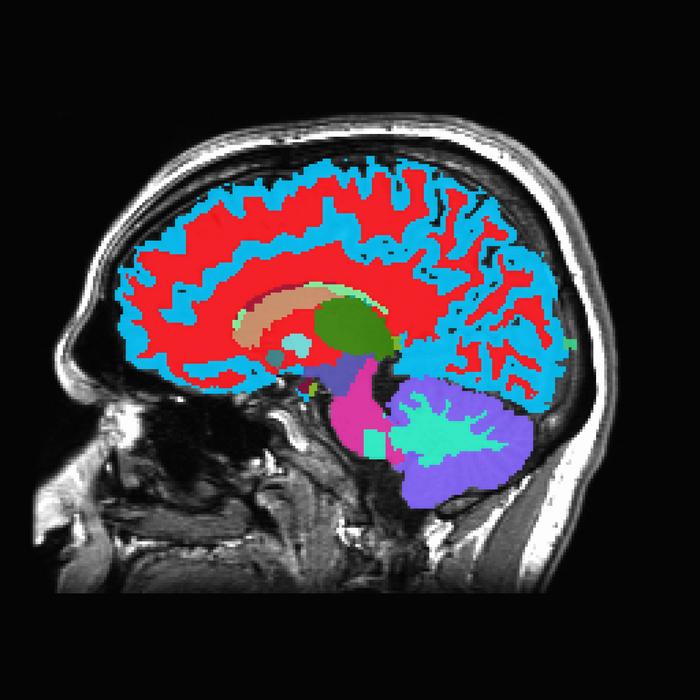
Even in old age, parts of the human brain remain active, adaptable, and structurally preserved. New research shows that some layers of the cerebral cortex actually thicken with age, providing evidence of neuroplasticity that lasts a lifetime. The work, published in Nature Neuroscience, could change how scientists view sensory processing and aging.
The Brain’s Touch Processor
The study focused on the primary somatosensory cortex, a strip of tissue that processes touch signals from across the body. It is critical for activities as simple as holding a key or walking across a room. Using ultra-high-field 7T MRI, researchers mapped this region in about 60 adults aged 21 to 80, capturing detail down to structures the size of a grain of sand.
“Until now, it had not been considered that the primary somatosensory cortex consists of a stack of several extremely thin layers of tissue, each with its own architecture and function,” said lead author Prof. Esther Kühn. “We have now found that these layers age differently.”
Key Findings
- Overall cortical thinning with age is driven by degeneration in the deepest layers.
- The middle input layer (layer IV) is often thicker and more myelinated in older adults than in younger ones.
- Upper layers involved in fine-tuning touch remain relatively stable.
- Deep layers show signs of compensatory changes, including increased myelin content.
What Is Used Is Preserved
The middle and upper layers receive the bulk of external sensory input and remain constantly active. Kühn suggests that frequent use helps preserve their structure. In one case, a 52-year-old participant missing an arm since birth showed a thinner middle layer in the cortex area linked to the absent limb, consistent with the “use it or lose it” principle.
Tests of tactile sensitivity and hand dexterity supported this idea: abilities that are regularly practiced, such as typing, tend to be maintained into old age, while those requiring filtering of background “noise” often decline, possibly due to changes in deeper cortical layers.
Mouse Experiments Mirror Human Results
To explore the mechanisms behind these changes, the team also studied the whisker barrel cortex in mice, a sensory area comparable to the human hand region. Older mice, like older humans, had thicker and more myelinated input layers and showed stronger sensory responses. The deep layers, though thinner, contained more inhibitory neurons, possibly helping maintain signal clarity despite structural loss.
“I think it’s an optimistic notion that we can influence our aging process to a certain degree,” Kühn said. “But of course, everyone has to find their own way to tap into this potential.”
Research Partners
The work was led by the German Center for Neurodegenerative Diseases (DZNE) in collaboration with the University of Magdeburg and the Hertie Institute for Clinical Brain Research at the University of Tübingen.
Implications for Healthy Aging
The findings highlight that brain aging is not uniform and that targeted activity could help preserve or even enhance certain neural circuits. They also raise questions about whether these compensatory mechanisms can be strengthened through training, rehabilitation, or other interventions.
For conditions such as Alzheimer’s disease and multiple sclerosis, which involve layer-specific damage, high-resolution mapping of cortical layers could offer earlier diagnosis and more precise treatment strategies.
Journal
Nature Neuroscience, “Layer-specific changes in sensory cortex across the lifespan in mice and humans” (DOI: 10.1038/s41593-025-02013-1)