
As the weather heats up this summer, many of us are firing up our grills and going on picnics. But one thing we all want to avoid is getting food poisoning from the food or beverages we consume.
Each year, an estimated 48 million Americans get sick, 128,000 are hospitalized and 3,000 die of foodborne diseases. An obstacle to extensive testing of foods for microbes, pathogens and toxins that cause food poisoning is equipment cost, according to an Agricultural Research Service (ARS) scientist.
Reuven Rasooly, a chemist at ARS’s Western Regional Research Center in Albany, California, has developed a simple and inexpensive system for detecting Shiga toxin, a product of pathogenic Escherichia coli O157:H7. This particular pathogen causes about 73,000 cases of food poisoning and more than 60 deaths in the United States each year.
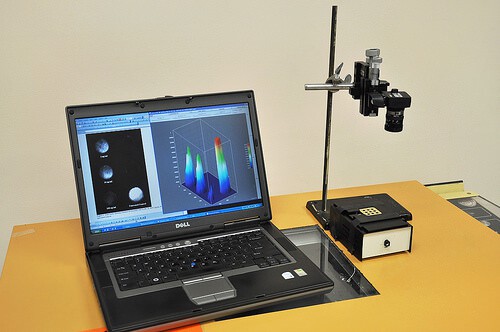
The new system uses a camera and a light-emitting source to detect active toxins. Tests used today cannot distinguish between the active and inactive form of Shiga toxin, Rasooly says. It’s important to tell the difference between the two, because the toxin’s active form poses a threat to humans while the inactive form does not.
“We need devices that are affordable and sensitive to reduce the sources and incidence of foodborne illness,” Rasooly says. “Equipment such as a commercial fluorometer, typically used to detect Shiga toxin and other pathogens, is too expensive for developing countries, where the risk of foodborne illness and outbreaks is greatest.”
In a study, Rasooly and his colleagues showed that the camera system was as effective in measuring Shiga toxin activity as a fluorometer. Both instruments had the same toxin detection levels. The difference is that a fluorometer costs about $35,000 while the camera only costs $300, making it an affordable alternative for diagnostic labs.
In addition, the new system can easily be adapted for detecting other foodborne toxins. Rasooly recently demonstrated that the camera system can be used to detect Aflatoxin B1, a toxin produced by Aspergillus flavus and Aspergillus parasiticus.
“The toxin contaminates crops and foodstuffs worldwide, affecting 4.5 billion people,” Rasooly says.
For an interactive look at USDA’s work to ensure your food is safe, visit the USDA Results project on Medium.com and read Chapter Seven: Safer Food and Greater Consumer Confidence.
ScienceBlog.com has no paywalls, no sponsored content, and no agenda beyond getting the science right. Every story here is written to inform, not to impress an advertiser or push a point of view.
Good science journalism takes time — reading the papers, checking the claims, finding researchers who can put findings in context. We do that work because we think it matters.
If you find this site useful, consider supporting it with a donation. Even a few dollars a month helps keep the coverage independent and free for everyone.