

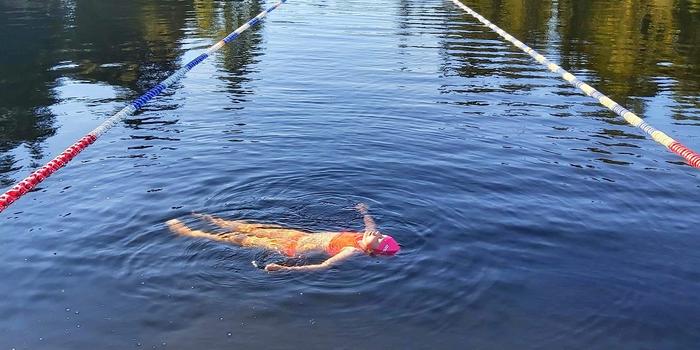
Eight out of ten children who swim confidently in heated pools struggle when tested in cold, natural water. This striking finding from Norwegian researchers challenges how we think about swimming education and water safety.
A study tracking 83 children aged 9-10 revealed that nearly half who demonstrated swimming competence in indoor pools failed to maintain the same skill level in an open-water lake. The research, published in Physical Education and Sport Pedagogy, suggests that traditional pool-based swimming lessons may leave children unprepared for real-world water emergencies.
The Temperature Factor
“Swimming in a warm indoor pool in your swimming trunks is a completely different experience from falling into a cold fjord, lake, or river, perhaps in the dark with all your clothes on,” explained Jon Sundan from the Norwegian University of Science and Technology’s Department of Teacher Education.
The researchers tested children first in a heated indoor pool (27-28°C) and then in a natural lake (15-16°C). While conditions seemed similar—both had calm water, consistent depth, and swimming lanes—the temperature difference proved decisive.
Skills Most Affected by Environment
Three specific abilities showed the most dramatic decline in open water:
- Water entry: Cold shock response caused hyperventilation and panic
- Surface diving: Reduced visibility and cold water created disorientation
- Swimming on the back: Children flexed necks to avoid cold water contact
The cold water triggered what researchers call “cold shock response”—a physiological reaction that peaks at 10-15°C. This response includes involuntary gasping, hyperventilation, and reduced cognitive function, all of which can impair swimming ability and decision-making.
Beyond Pool Walls
The study’s findings align with drowning statistics. “Most drowning accidents occur in natural environments, where currents, low water temperature, waves and limited visibility make self-rescue significantly more challenging,” noted Monika Haga, Professor of Physical Education and Sports at NTNU.
Children who maintained competence in both environments likely had previous experience in open water outside school time. This suggests that exposure to varied aquatic conditions builds transferable skills that indoor training alone cannot provide.
Rethinking Swimming Education
The research team used the Swimming Competence Assessment Scale, which evaluates six key skills: water entry, front swimming, surface diving, floating, back swimming, and water exit. In pools, approximately 80% of children demonstrated sufficient basic swimming skills, but this dropped to just 30% in open water.
Current Norwegian curriculum requires outdoor swimming practice, but implementation remains inconsistent. “We simply have to acknowledge that swimming varies according to the water environment in which it is done,” Sundan emphasized.
The researchers advocate for swimming education that includes both indoor skill development and outdoor application. They suggest making indoor practice more representative of natural conditions while ensuring all students experience supervised open-water training.
This approach could help bridge the gap between pool proficiency and real-world water safety, potentially reducing drowning risks when children encounter unexpected aquatic situations.