

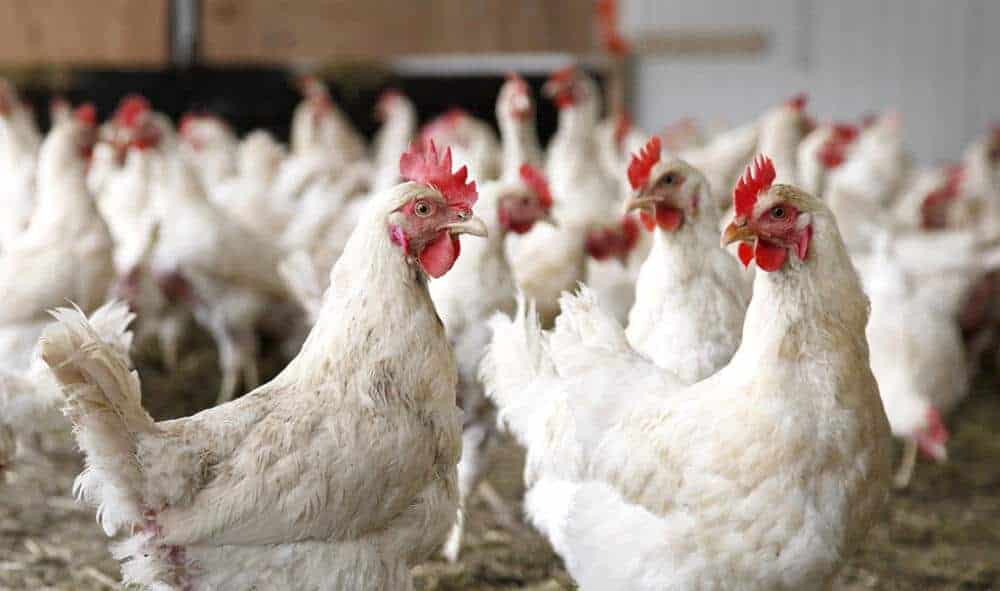
The secret ingredient was hiding in plain sight all along: egg yolk. After decades of failed attempts, researchers have finally succeeded in creating authentic embryonic stem cells from chickens and seven other bird species, opening possibilities that range from cultivating lab-grown poultry to potentially reviving extinct avian species.
The discovery, published today in Nature Biotechnology, marks a significant advance in stem cell biology. While scientists established authentic embryonic stem cells from mice in the 1980s and rats in 2008, birds have stubbornly resisted similar efforts until now.
“We successfully derived and maintained true self-renewing and pluripotent ESCs from chicken, quail, pheasant, turkey, duck, goose, peafowl, and ostrich,” said Qi-Long Ying, a professor of stem cell biology and regenerative medicine at the Keck School of Medicine of USC who led the study.
A Decade-Long Pursuit With an Unexpected Turn
The journey to this point was anything but straightforward. First author Xi Chen spent ten years advancing the research, first during his PhD and postdoctoral work in Ying’s lab at USC, then continuing at Caltech. The team initially focused on identifying the right chemical cocktail to prevent stem cells from differentiating into specialized cell types.
They found that two chemicals – IWR-1, which blocks Wnt signaling, and Go6983, which inhibits protein kinase C – could coax cells from chicken embryos into forming stem cell colonies. Yet these cells refused to survive beyond two passages in the lab, repeatedly differentiating despite the researchers’ best efforts.
The turning point came from a mundane observation: when embryonic cells were transferred from eggs along with larger amounts of yolk, they tended to survive better. This led the team to suspect that egg yolk contained some crucial but unknown factor for stem cell maintenance.
Through meticulous fractionation experiments, they isolated proteins from the yolk based on molecular weight and tested each fraction. The active component turned out to be ovotransferrin, a protein abundant in egg yolk that weighs around 75 kilodaltons.
A true embryonic stem cell has two key qualities: it is self-renewing and can multiply to produce more stem cells; and it is pluripotent, meaning it can differentiate into all cell types of the embryo – both in a culture dish and after being reintroduced into an embryo.
Species-Specific Recipes Required
The three-ingredient formula that worked for chickens – ovotransferrin plus the two chemical inhibitors – proved insufficient for other birds. Each species demanded its own variation. Pheasants, ducks, and turkeys required a fourth ingredient to prevent the cells from spontaneously beating like heart muscle. Quail, geese, and peafowl needed that fourth component plus a fifth: chicken-derived LIF, a signaling protein.
Ostrich cells behaved differently still, thriving with four ingredients but actually differentiating when exposed to chicken LIF. The researchers suspect this relates to elevated levels of LIF receptors in ostrich cells, creating a signaling threshold that triggers differentiation rather than self-renewal when LIF is added.
The chicken stem cells passed the most rigorous test: creating chimeras, animals composed of cells from two genetically distinct sources. When injected into developing chicken embryos that had been exposed to low-dose radiation to reduce competition from native cells, the lab-grown stem cells contributed to multiple tissues and organs. Most notably, they gave rise to both body cells and reproductive germ cells, including sperm precursors.
In one striking demonstration, stem cells derived from Rhode Island Red chickens (which have reddish-brown feathers) were injected into White Leghorn embryos (which are completely white). The resulting chimeric chickens displayed patches of pigmented feathers where the donor cells had contributed to melanocyte lineages in feather follicles.
The cells also proved amenable to CRISPR gene editing, with researchers achieving a 9.3 percent efficiency in converting a GFP gene to BFP – comparable to editing rates in mouse stem cells.
One significant limitation remains unresolved: while the researchers demonstrated that stem cells could form primordial germ cells in developing embryos, they have not yet confirmed germline transmission – the ability of these cells to produce functional eggs or sperm that give rise to offspring. High-grade chimeras, which showed the most donor cell contribution, consistently failed to hatch, possibly due to genetic incompatibilities between the Rhode Island Red donor cells and White Leghorn recipients.
An independent laboratory at Kumamoto University in Japan successfully replicated the methods to derive chimera-competent chicken and peafowl stem cells, confirming the robustness of the approach.
By demonstrating that we can derive and maintain authentic ESCs from several avian species, this research opens up so many possibilities.
The applications extend beyond basic science. The poultry industry could potentially engineer healthier chickens or optimize production traits. Pharmaceutical companies might use engineered birds as bioreactors to produce therapeutic proteins in eggs. Conservation biologists could use the technology to preserve endangered species by banking their stem cells, or even attempt to revive recently extinct birds by combining the technique with cellular reprogramming.
The work also challenges long-held assumptions about bird development. Scientists have debated whether germ cells in birds are predetermined by maternal inheritance or can arise from embryonic cells. The fact that lab-cultured stem cells can generate germ cells both in dishes and in embryos suggests the latter, though the precise mechanisms remain to be fully understood.
As with many advances in stem cell biology, the path from laboratory proof-of-concept to practical application will require considerable additional work. But after decades of trying to capture bird stem cells in a bottle, researchers finally have the recipe.