

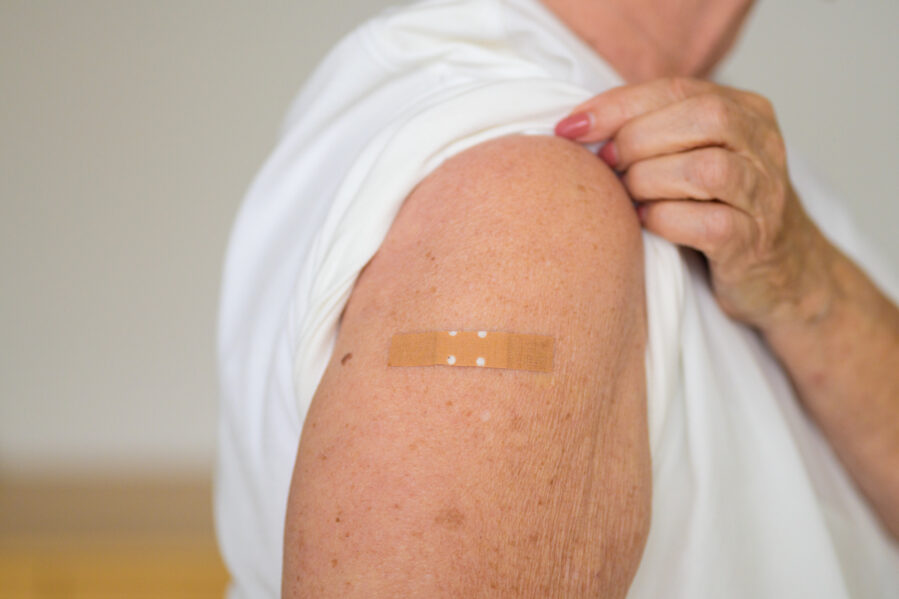
Jung Ki Kim first noticed the pattern while looking through blood samples from thousands of older Americans. Those who’d received the shingles vaccine weren’t just protected from painful rashes. Their bodies appeared to be aging differently at the molecular level.
Kim and her colleague Eileen Crimmins at the University of Southern California analyzed data from nearly 4,000 people aged 70 and older. They measured seven biological systems tied to aging: inflammation levels, immune function, cardiovascular health, neurodegeneration markers, and the molecular signatures written into DNA and RNA. Even after accounting for differences in wealth, education, and overall health, vaccinated individuals showed slower biological aging across multiple systems.
The results raise an intriguing possibility. Could a vaccine designed to prevent shingles (the painful blistering rash caused by the reactivated chickenpox virus) also be slowing the fundamental processes of aging itself? It’s a prospect that would extend vaccination far beyond its traditional role of preventing acute illness.
The Impact on “Inflammaging”
The study revealed particularly striking effects on inflammation. Vaccinated individuals had significantly lower levels of chronic, low-grade inflammation. Researchers call this phenomenon “inflammaging,” and it contributes to heart disease, frailty, and cognitive decline.
The vaccine also appeared to slow epigenetic and transcriptomic aging, the molecular clocks that track how our cells’ genetic machinery changes over time. These DNA methylation patterns predict mortality and disease risk more accurately than traditional factors.
What’s happening inside the body to produce these effects? One possibility is that the vaccine prevents periodic reactivation of the varicella-zoster virus, which lies dormant in nerve cells after a chickenpox infection. Each reactivation triggers an inflammatory response, potentially accelerating age-related decline. By keeping the virus in check, the vaccine may reduce this chronic inflammatory burden.
Another intriguing mechanism is “trained immunity.” That’s where vaccines reprogram innate immune cells to respond more effectively to future threats. It’s a form of immune memory that could reshape how the body ages.
Timing and Biological Complexity
The timing matters, too. Benefits appeared strongest within three years of vaccination for molecular aging measures, though some effects persisted for four years or more. Inflammation and innate immunity improvements, curiously, only emerged in those vaccinated years earlier. This suggests different biological systems respond on different timescales. The waning pattern mirrors what’s known about the older Zostavax vaccine used in the study, which loses efficacy over time.
Yet the findings weren’t uniformly positive. Vaccinated individuals showed higher scores on adaptive immunity measures, which in this context reflected reduced function of the immune system’s targeted defense branch. This unexpected result highlights the complexity of immune aging. The same cellular changes that indicate a normal vaccine response can resemble the exhausted immune profiles seen in immunosenescence (the gradual decline of immune function with age).
Future Outlook
The study also found no significant associations with neurodegeneration markers, despite previous research linking shingles vaccination to reduced dementia risk. This disconnect underscores an important limitation of biomarker studies, Kim notes. Molecular signatures may not capture the full pathway from intervention to clinical outcome, particularly for slowly progressing conditions like dementia that unfold over decades.
These results come from the older, less effective Zostavax vaccine. The newer Shingrix vaccine, approved in 2017, offers stronger and longer-lasting protection. Whether it produces similar or even greater effects on biological aging remains an open question requiring future research with longitudinal tracking.
The broader implications extend beyond shingles. Kim and Crimmins also examined influenza and pneumococcal vaccines, finding they affected cardiovascular measures more than inflammatory or molecular aging markers. This suggests different vaccines may influence aging through distinct biological pathways. If confirmed in experimental studies, such findings could position adult vaccination not merely as infection prevention but as a practical, low-cost intervention for promoting healthier aging at scale.
For now, the study adds to growing evidence that biological aging, particularly at the inflammatory and molecular levels, may be more malleable than previously thought. Whether a jab in your seventies can genuinely slow your body’s clock remains to be proven definitively. But the possibility that we’re already using tools with such potential, sitting in doctors’ offices worldwide, is rather remarkable.