
While reading to children has many benefits, simply speaking the words aloud may not be enough to improve cognitive development in preschoolers.
A new international study, published in the journal PLOS ONE and led by researchers at Cincinnati Children’s Hospital Medical Center, shows that engaging with children while reading books to them gives their brain a cognitive “boost.”
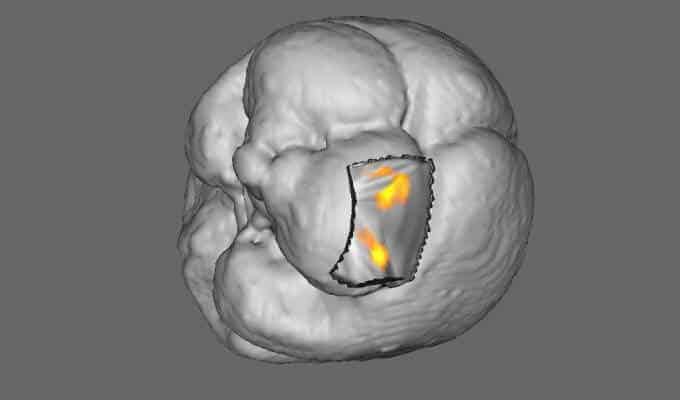
Functional magnetic resonance imaging (fMRI) found significantly greater brain activation in 4-year-old children who were more highly engaged during story listening, suggesting a novel improvement mechanism of engagement and understanding. The study reinforces the value of “dialogic reading,” where the child is encouraged to actively participate.
“The takeaway for parents in this study is that they should engage more when reading with their child, ask questions, have them turn the page, and interact with each other,” said John Hutton, MD, a pediatrician at Cincinnati Children’s and lead author of the study. “In turn, this could fuel brain activation–or “turbocharge” the development of literacy skills, particularly comprehension, in preschool aged children.”
The study involved functional MRI scans of 22 girls, age 4, to explore the relationship between engagement and verbal interactivity during a mother-child reading observation and neural activation and connectivity during a story listening task. Children exhibiting greater interest in the narrative showed increased activation in right-sided cerebellar areas of the brain, thought to support cognitive skill acquisition and refinement via connection to language, association and executive function areas.
“Our findings underscore the importance of interventions explicitly addressing both parent and child reading engagement, including awareness and reduction of distractions such as cellphones, which were the most common preventable barrier that we observed,” said Hutton.
Hutton says long-term studies are needed beginning in infancy to better understand mother-child factors contributing to healthy brain development and literacy skills, as this current study does not establish causation.
ScienceBlog.com has no paywalls, no sponsored content, and no agenda beyond getting the science right. Every story here is written to inform, not to impress an advertiser or push a point of view.
Good science journalism takes time — reading the papers, checking the claims, finding researchers who can put findings in context. We do that work because we think it matters.
If you find this site useful, consider supporting it with a donation. Even a few dollars a month helps keep the coverage independent and free for everyone.