

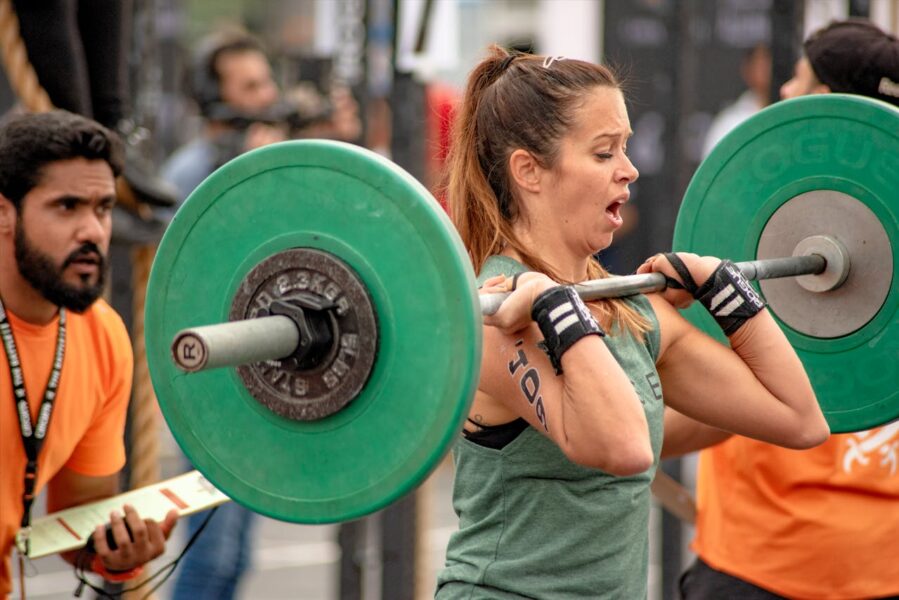
That sharp urge to curse when effort peaks isn’t just frustration breaking through. According to research published in American Psychologist, it’s a psychological mechanism that measurably boosts physical performance by helping people stop holding themselves back.
Researchers at Keele University and the University of Alabama in Huntsville ran participants through a brutal chair push-up task, supporting full body weight on their hands for as long as possible. While holding the position, they repeated either a self-selected swear word or a neutral word every two seconds. The swearers lasted significantly longer.
The effect wasn’t adrenaline or anger. It was state disinhibition, a shift where the brain’s internal brakes loosen and attention locks onto the immediate goal. Social norms and self-consciousness quietly fade. What remains is focus.
The Brake System Nobody Talks About
In everyday life, people restrain themselves without realizing it. Psychologists call this the behavioral inhibition system, the part of the brain that prioritizes social appropriateness and caution. It’s useful for not saying the wrong thing at dinner parties. Less useful when you’re trying to hold a plank.
When participants swore, they reported higher psychological flow, the state where second-guessing disappears and attention narrows completely. They felt more confident. They got distracted less. The study, which aggregated data from 300 participants across multiple experiments, found these changes explained much of the performance boost.
“In many situations, people hold themselves back, consciously or unconsciously, from using their full strength. Swearing is an easily available way to help yourself feel focused, confident and less distracted,” Richard Stephens, PhD, explains.
Stephens, the lead researcher, has spent over a decade studying profanity’s effects on pain tolerance and effort. This work extends that line into something more specific: swearing doesn’t create strength. It helps people access strength they already possess but were unconsciously withholding.
Where Hesitation Costs You
The research team tested whether humor or bystander apathy might explain the effect. Neither held up. What mattered was confidence and reduced distraction, both hallmarks of disinhibition.
The findings suggest applications beyond the gym. Co-author Nicholas Washmuth, DPT, notes that situations like public speaking or negotiating a raise also involve self-restraint and hesitation. In those moments, breaking a small social rule may help people commit fully rather than pull back.
The effect is modest but real, especially for short, intense efforts where doubt can make the difference between stopping and pushing through. Stephens calls it “a calorie neutral, drug free, low cost, readily available tool” for when performance matters.
Looking ahead, the team is testing whether the same mechanism applies to romantic approach behaviors and other high-pressure social scenarios. The persistence of swearing across cultures may not be accidental. When effort collides with hesitation, profanity might be evolution’s way of helping people go all in.