Skip to content
ScienceBlog.com
  • Featured Blogs
    • EU Horizon Blog
    • ESA Tracker
    • Experimental Frontiers
    • Josh Mitteldorf’s Aging Matters
    • Dr. Lu Zhang’s Gondwanaland
    • NeuroEdge
    • NIAAA
    • SciChi
    • The Poetry of Science
    • Wild Science
  • Topics
    • Brain & Behavior
    • Earth, Energy & Environment
    • Health
    • Life & Non-humans
    • Physics & Mathematics
    • Social Sciences
    • Space
    • Technology
  • Our Substack
  • Follow Us!
    • Bluesky
    • Threads
    • FaceBook
    • Google News
    • Twitter/X
  • Contribute/Contact

Biology

Representative venom delivery systems in plants, including (A) co-habiting ants that numerous ant-plants provide a home and food for; (B) haustria of parasitic plants that attack other plants; (C) stinging trichomes of stinging plants; and (D) raphides that penetrate the oral membranes of animals that browse on plants. Artwork by Loma Linda University student M. Benjamin Streit.

Study Reveals Venom Delivery Systems Hiding in Plants, Fungi, and Even Viruses

The team's modeling approach is significant to advancement in robotics, dynamics and control systems.

Scientists Map Complex Control System Behind Octopus Arm Movement

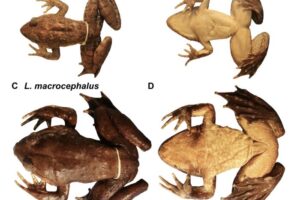
Dorsal and ventral comparison of adult male Limnonectes cassiopeia (top) and adult male L. macrocephalus, species similar enough to confuse scientists.

New Fanged Frog Species Discovered in the Philippines, Hidden in Plain Sight

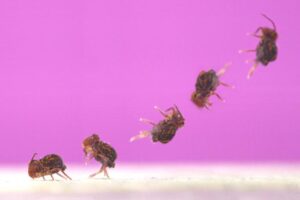
Composite image of a globular springtail jumping. Credit Adrian Smith

Tiny Backyard Bug Performs World’s Fastest Backflips

blind cave fish

Blind cavefish have extraordinary taste buds

Ohio State logo

Lake Erie walleye growth is driven by parents’ size, experience

mudskipper

To walk, you just need fins and a sense of adventure

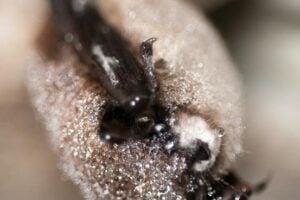
This image shows a hibernating little brown bat infected with white-nose syndrome.

A stealth fungus has decimated North American bats but scientists may be a step closer to treating white-nose syndrome

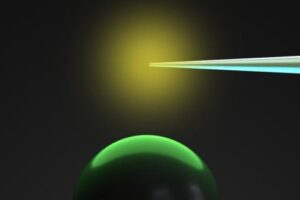
Using a microscopy image and graphic rendering, the artists illustrate a minimal synthetic cell that can sense a directional chemical cue and self-organize in response.

‘Synthetic’ cell shown to follow chemical directions and change shape, a vital biological function

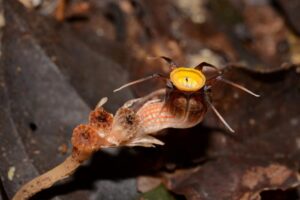
Thismia malayana live specimen.

Remarkable new plant species steals nutrients from underground fungi

NOMIS-ISTA Fellow David Brückner at the Institute of Science and Technology Austria (ISTA)

The Self-Assembling Embryo: How Cells Talk to Build a Body, Explained Mathematically

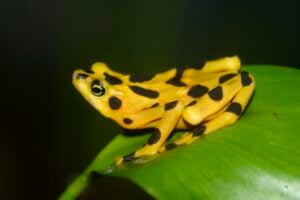
Panamanian golden frog is nearing extinction.

Discovery could end global amphibian pandemic

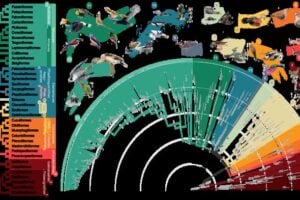
The updated bird family tree, published in Nature, delineating 93 million years of evolutionary relationships between 363 bird species.

Computational tools fuel reconstruction of new and improved bird family tree

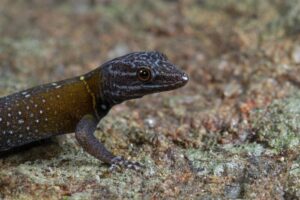
Cnemaspis vangoghi

Starry Night Inspired Lizard Discovered in India

Older posts
Page1 Page2 … Page5 Next →
Substack subscription form sign up

Comments

  • Karoly Mirnics on Common Prescription Drugs May Disrupt Cholesterol Pathways in the Womb and Raise Autism Risk
  • Aizen on Laziness helped lead to extinction of Homo erectus
  • Norwood johnson on Electrons in New Crystals Behave as If They Live in Four Dimensions
  • ScienceBlog.com on Hidden Geometry Could Finally Fix Quantum Computers
  • Theo Prinse on America Is Going Back to the Moon. This Time, It Plans to Stay
© 2026 ScienceBlog.com | Follow our RSS / XML feed