Skip to content
ScienceBlog.com
  • Featured Blogs
    • EU Horizon Blog
    • ESA Tracker
    • Experimental Frontiers
    • Josh Mitteldorf’s Aging Matters
    • Dr. Lu Zhang’s Gondwanaland
    • NeuroEdge
    • NIAAA
    • SciChi
    • The Poetry of Science
    • Wild Science
  • Topics
    • Brain & Behavior
    • Earth, Energy & Environment
    • Health
    • Life & Non-humans
    • Physics & Mathematics
    • Social Sciences
    • Space
    • Technology
  • Our Substack
  • Follow Us!
    • Bluesky
    • Threads
    • FaceBook
    • Google News
    • Twitter/X
  • Contribute/Contact

Biotechnology

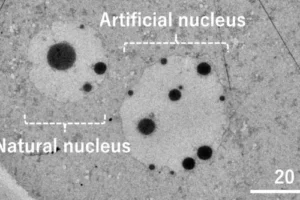
The artificial cell nucleus (right) constructed using the purified DNA was morphologically very similar to the natural cell nucleus derived from an egg (left).

Scientists Create First Artificial Cell Nuclei in Living Mouse Eggs

Prof. Koby Nahmias working in his lab.

Manufacturing Breakthrough Could Make Lab-Grown Meat Affordable

In a new study, scientists reprogrammed Nicotiana benthamiana plants to produce a diverse array of beneficial sugars that are found in breast milk, called human milk oligosaccharides.

Genetically Engineered Plants Could Provide More Nutritious Baby Formula

human lungs infected by bacteria

Giant phage holds promise as treatment for lung infections

Plastic-free vegan leather that dyes itself grown from bacteria

Plastic-free vegan leather that dyes itself grown from bacteria

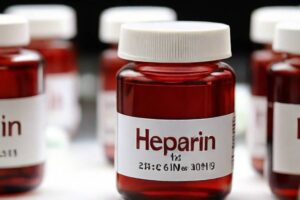
Heparin, the world’s most widely used blood thinner, is used during procedures ranging from kidney dialysis to open heart surgery.

Scientists’ discovery could reduce dependence on animals for vital anti-blood clot drug

Ohio State logo

Viruses that can help ‘dial up’ carbon capture in the sea

coffee illustration

A new brew: Evaluating the flavor of roasted, lab-grown coffee cells

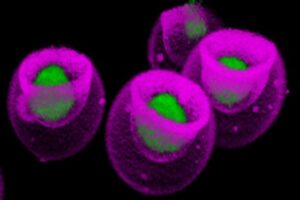
Confocal microscopic image shows mesenchymal stem cells (green) captured within nanovials (pink). The nanovial technology was developed by UCLA's Dino Di Carlo and colleagues.

‘Central dogma’ of biology be misleading bioengineers

An Anthrobot is shown, depth colored, with a corona of cilia that provides locomotion for the bot

Scientists build tiny biological robots from human cells

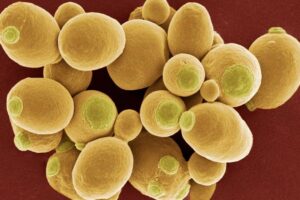
Genetically engineered yeast cells can be used to produce the naturally occurring substance, alstonine, which has shown promising results in terms of being used in the treatment of mental disorders. Photo: Steve Gschmeissner.

Yeast cells can produce drugs for treatment of psychotic disorders

Vineyards of the future will produce more than wine

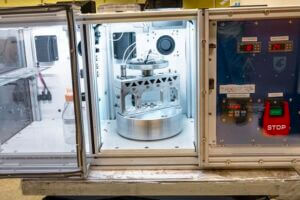
A minifridge-sized bioreactor developed by Washington State University researchers is able to manufacture cancer-killing white blood cells at 95% of the maximum growth rate – about 30% faster than current technologies.

Machine can quickly produce white blood cells for cancer treatment

Human eye

New strategy for eye condition could replace injections with eyedrops

Older posts
Page1 Page2 Next →
Substack subscription form sign up

Comments

  • Karoly Mirnics on Common Prescription Drugs May Disrupt Cholesterol Pathways in the Womb and Raise Autism Risk
  • Aizen on Laziness helped lead to extinction of Homo erectus
  • Norwood johnson on Electrons in New Crystals Behave as If They Live in Four Dimensions
  • ScienceBlog.com on Hidden Geometry Could Finally Fix Quantum Computers
  • Theo Prinse on America Is Going Back to the Moon. This Time, It Plans to Stay
© 2026 ScienceBlog.com | Follow our RSS / XML feed