Skip to content
ScienceBlog.com
  • Featured Blogs
    • EU Horizon Blog
    • ESA Tracker
    • Experimental Frontiers
    • Josh Mitteldorf’s Aging Matters
    • Dr. Lu Zhang’s Gondwanaland
    • NeuroEdge
    • NIAAA
    • SciChi
    • The Poetry of Science
    • Wild Science
  • Topics
    • Brain & Behavior
    • Earth, Energy & Environment
    • Health
    • Life & Non-humans
    • Physics & Mathematics
    • Social Sciences
    • Space
    • Technology
  • Our Substack
  • Follow Us!
    • Bluesky
    • Threads
    • FaceBook
    • Google News
    • Twitter/X
  • Contribute/Contact

brain health

lymph vessels

Aging Brain’s Trash Collection System Holds Key to Memory Restoration

grilled beef fillet steak meat with rosemary isolated on white background

Daily Processed Red Meat Linked to Higher Dementia Risk

Keck School of Medicine of USC researchers found that a higher number of small HDL particles in spinal fluid samples was associated with two key indicators that the particles might have a protective effect against Alzheimer’s disease. (Illustration iStock)

Small Particles of ‘Good’ Cholesterol May Help Protect Brain Health

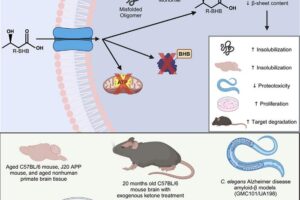
B-hydroxybutyrate is a metabolic regulator of proteostasis in the aged and Alzheimer’s disease brain

Ketone Bodies Are The Brain’s Natural Protein Cleanup Crew

Obese man illustration from Pixabay

Deep Belly Fat Linked to Early Signs of Alzheimer’s Decades Before Symptoms

Mature woman crossing the street

Simple Daily Activities May Make Your Brain Four Years Younger

The brain has about 100 billion cells called neurons. It’s made up of distinct parts, that developed though human evolution. copyright American Heart Association

Unstable Cholesterol Levels May Signal Future Dementia Risk in Older Adults

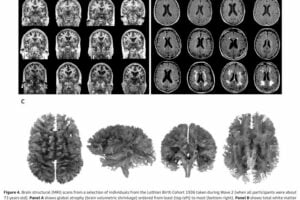
25-year study reveals key factors in healthy brain aging and cognitive performance

25-Year Study Reveals Childhood Intelligence Shapes Brain Health in Old Age

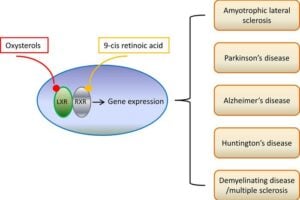
Liver X receptors (LXRs) and related neurological disorders.

Hormone Receptors Join Forces to Fight Brain Aging, Study Shows

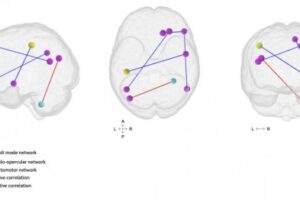
Restless sleep correlates with lower connectivity between the default mode network nodes, and default mode network and somatomotor network nodes. The default mode network is a group of brain regions that are active when we are at rest, not focusing on any specific task. The somatomotor network involves brain regions that are responsible for controlling movement and processing sensations from the body, such as touch and physical feedback.

Long-Term Brain Study Reveals Lasting Effects of Daily Activities on Cognition

Caltech postdoctoral scholar Simon Mahler, a co-lead author of the new paper, is shown here placing the CSOS device on the head of graduate student Yu Xi Huang, the other co-lead author of the paper. The new device is affordable and compact, making it ideal for stroke assessment in a clinical setting.

New Laser-based Headset Can Measure Blood Flow, Assess Risk of Stroke

three women with their backs to us walking down a trail

Menopause Symptoms May Impact Brain Health, Study Finds

Research explains why virus causing cold sores does not spread to devastating brain infection

Research explains why virus causing cold sores does not spread to devastating brain infection

Fish oil could treat nerve damage

Omega-3 Fatty Acids Show Promise in Protecting Brain Health of Older Adults

Older posts
Page1 Page2 … Page4 Next →
Substack subscription form sign up

Comments

  • Karoly Mirnics on Common Prescription Drugs May Disrupt Cholesterol Pathways in the Womb and Raise Autism Risk
  • Aizen on Laziness helped lead to extinction of Homo erectus
  • Norwood johnson on Electrons in New Crystals Behave as If They Live in Four Dimensions
  • ScienceBlog.com on Hidden Geometry Could Finally Fix Quantum Computers
  • Theo Prinse on America Is Going Back to the Moon. This Time, It Plans to Stay
© 2026 ScienceBlog.com | Follow our RSS / XML feed