Skip to content
Menu
Featured Blogs
EU Horizon Blog
ESA Tracker
Experimental Frontiers
Josh Mitteldorf’s Aging Matters
Dr. Lu Zhang’s Gondwanaland
NeuroEdge
NIAAA
SciChi
The Poetry of Science
Wild Science
Topics
Brain & Behavior
Earth, Energy & Environment
Health
Life & Non-humans
Physics & Mathematics
Social Sciences
Space
Technology
Our Substack
Follow Us!
Bluesky
Threads
FaceBook
Google News
Twitter/X
Contribute/Contact
brain health
New Blood Test Could Predict Neurodegenerative Risk in Retired Rugby Players
Brain’s Energy Boost Mechanism Uncovered, Offers Hope for Late-Life Cognitive Health
Researchers Discover Protective Quantum Effect in the Brain
Balanced Diet Linked to Superior Brain Health and Cognitive Function, Study Finds
Cannabinoid Shows Promise in Protecting the Brain Against Aging and Neurodegeneration
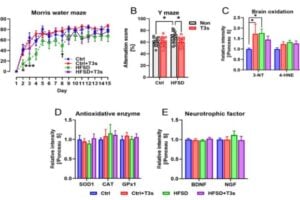
Natural Compounds Show Promise in Protecting the Brain from Obesity-Related Cognitive Decline
Racial Discrimination in Midlife Linked to Higher Risk of Alzheimer’s Disease
Lifelong RNA Molecules Hold the Key to Long-lived Brain Cells
Smartwatch Data May Help Detect Early Signs of Alzheimer’s
Tiny magnetic particles in air pollution linked to development of Alzheimer’s
May I have a quick word? Study shows talking faster is linked to better brain health as we age
Drug could protect brains from damage after concussions
Polycystic ovary syndrome tied to memory, thinking problems
Risk of dementia was nearly three times higher the first year after a stroke
Older posts
Newer posts
←
Previous
Page
1
Page
2
Page
3
Page
4
Next
→