Skip to content
ScienceBlog.com
  • Featured Blogs
    • EU Horizon Blog
    • ESA Tracker
    • Experimental Frontiers
    • Josh Mitteldorf’s Aging Matters
    • Dr. Lu Zhang’s Gondwanaland
    • NeuroEdge
    • NIAAA
    • SciChi
    • The Poetry of Science
    • Wild Science
  • Topics
    • Brain & Behavior
    • Earth, Energy & Environment
    • Health
    • Life & Non-humans
    • Physics & Mathematics
    • Social Sciences
    • Space
    • Technology
  • Our Substack
  • Follow Us!
    • Bluesky
    • Threads
    • FaceBook
    • Google News
    • Twitter/X
  • Contribute/Contact

cancer research

Teen boy in mask

Suicide Rates Triple Among Young Male Cancer Survivors

white button mushrooms

White Button Mushroom Shows Promise in Slowing Prostate Cancer Progression

twins

Scientists create cancer patients’ ‘digital twins’ to predict how well treatments may work

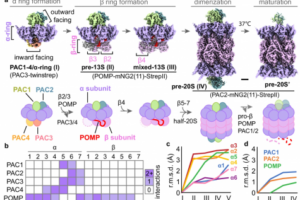
The first figure in the paper discusses several stages in the formation of the 20S proteasome, which is shaped like a barrel. This proteasome is marked by the coming together of four stacked rings comprised each of seven protein building blocks known as either alpha or beta subunits. The two rings of beta subunits at the center are sandwiched by two rings of alpha subunits.

How to Build Our Body’s Protein Recycling Factories

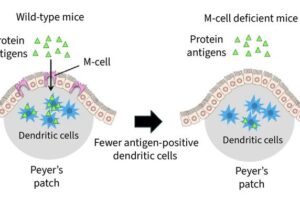
When protein antigens are injected into the small intestine of wild-type mice, they are passed to dendritic cells in the Peyer's patches; similar experiments in M-cell-deficient mice result in fewer dendritic cells receiving the protein antigen.

Food Antigens Suppress Tumor Growth in Small Intestine, Study Finds

Malassezia globosa

Skin Fungus Found to Accelerate Breast Cancer Growth

bees on a honeycomb

Manuka Honey Shows Promise in Breast Cancer Treatment, UCLA Study Finds

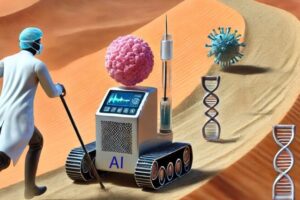
Researchers leveraged AI to identify the fate driver genes that can transform glioblastoma cells into dendritic cells, which can help target the cancer for destruction. Study author David Tran created this image using ChatGPT.

Two Promising Advances in Glioblastoma Treatment: New Brain Pathway Discovered and AI-Driven Immunotherapy Developed


“We at City of Hope are the first to demonstrate a live bacterial product’s ability to improve clinical outcomes for patients with kidney cancer treated with immunotherapy. CBM588 could be exciting in cancer treatment because of its potential to enhance the efficacy of immune checkpoint inhibitor-based treatment, improve patient outcomes and modulate the gut microbiota in beneficial ways,” said Pal, a City of Hope medical oncologist and corresponding author of the Nature Medicine study.

Changing the gut microbiome improves health outcomes for people new metastatic kidney cancer

blood cells

Blood Proteins Could Predict Cancer Risk Years in Advance, Two Studies Reveal

A generated image showing a keto supplement bottle next to a medical illustration of prostate cancer cells being attacked by T cells

Keto Supplement Boosts Prostate Cancer Immunotherapy

Mini colon

Scientists Develop Mini-Colons That Mimic Tumor Development with Unprecedented Precision

Sandro Matosevic

Promising Off-the-Shelf Immunotherapy for Incurable Brain Tumors

colorful liver and immune system illustration

Researchers Discover Key to Better Cancer Treatments Lies in Liver

Older posts
Page1 Page2 … Page4 Next →
Substack subscription form sign up

Comments

  • Norwood johnson on Electrons in New Crystals Behave as If They Live in Four Dimensions
  • ScienceBlog.com on Hidden Geometry Could Finally Fix Quantum Computers
  • Theo Prinse on America Is Going Back to the Moon. This Time, It Plans to Stay
  • george w on Hidden Geometry Could Finally Fix Quantum Computers
  • Tom Hughes on Years of Exercise, Blood Pressure Drugs Failed to Slow Cognitive Decline in Seniors at Dementia Risk
© 2026 ScienceBlog.com | Follow our RSS / XML feed