Skip to content
ScienceBlog.com
  • Featured Blogs
    • EU Horizon Blog
    • ESA Tracker
    • Experimental Frontiers
    • Josh Mitteldorf’s Aging Matters
    • Dr. Lu Zhang’s Gondwanaland
    • NeuroEdge
    • NIAAA
    • SciChi
    • The Poetry of Science
    • Wild Science
  • Topics
    • Brain & Behavior
    • Earth, Energy & Environment
    • Health
    • Life & Non-humans
    • Physics & Mathematics
    • Social Sciences
    • Space
    • Technology
  • Our Substack
  • Follow Us!
    • Bluesky
    • Threads
    • FaceBook
    • Google News
    • Twitter/X
  • Contribute/Contact

Cell biology

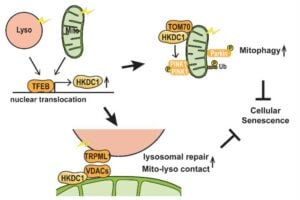
Overview: Both mitochondrial and lysosomal stress stimulate TFEB nuclear translocation, followed by increased HKDC1 expression. HKDC1 stabilizes PINK1 through interaction with TOM70, thereby facilitating PINK1/Parkin-dependent mitophagy. Additionally, HKDC1 and the VDAC proteins with which it interacts are important for repair of damaged lysosomes and maintaining mitochondria–lysosome contact. HKDC1 prevents DNA damage–induced cellular senescence by maintaining mitochondrial and lysosomal homeostasis.

A tidy cell seems to keep aging at bay

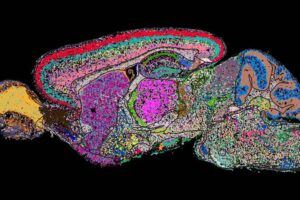
Cell atlas of the mouse brain determined by a genome-scale imaging technology called MERFISH. Shown is one sagittal section with cells colored by category. Image courtesy of Xiaowei Zhuang

Demystifying a mammal’s brain, cell by cell

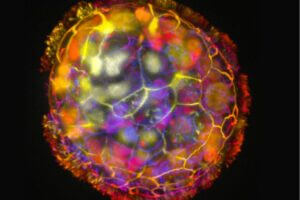
An Anthrobot is shown, depth colored, with a corona of cilia that provides locomotion for the bot

Scientists build tiny biological robots from human cells

Ohio State logo

A lethal parasite’s secret weapon: infecting non-immune cells

A green anole lizard regenerating its tai.

Researchers unlock mystery of cartilage regeneration in lizards

Elderly man's hands. Pixabay

A novel theory of aging — independent of damage accumulation

Scientists from the Milner Centre for Evolution have uncovered a new quality control system that removes damaged cells from early developing embryos.

Scientists discover new embryonic cell type that self-destructs to protect the developing embryo

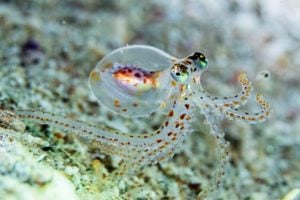
Octopuses have complex “camera” eyes, as seen here in a juvenile animal

Octopus camouflage ability transferred to human skin cells

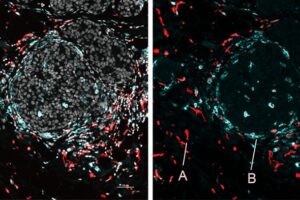
Image of human breast cancer cells showing A) immunosuppressive macrophages near tumor connective tissue, and B) immunostimulatory macrophages near tumor nests. Credit: Nir Ben Chetrit.

Scientists Locate Gene Activity and Proteins Across Tissues

Using these engineered proteins, researchers can record histories that reveal when certain genes are activated or how cells respond to a drug.

Scientists read cell history via protein chains

Newer posts
← Previous Page1 Page2
Substack subscription form sign up

Comments

  • Brunette Keller on How New Herpes Drugs Jam a Virus’s Replication Engine
  • Aizen on Laziness helped lead to extinction of Homo erectus
  • Norwood johnson on Electrons in New Crystals Behave as If They Live in Four Dimensions
  • ScienceBlog.com on Hidden Geometry Could Finally Fix Quantum Computers
  • Theo Prinse on America Is Going Back to the Moon. This Time, It Plans to Stay
© 2026 ScienceBlog.com | Follow our RSS / XML feed