Skip to content
ScienceBlog.com
  • Featured Blogs
    • EU Horizon Blog
    • ESA Tracker
    • Experimental Frontiers
    • Josh Mitteldorf’s Aging Matters
    • Dr. Lu Zhang’s Gondwanaland
    • NeuroEdge
    • NIAAA
    • SciChi
    • The Poetry of Science
    • Wild Science
  • Topics
    • Brain & Behavior
    • Earth, Energy & Environment
    • Health
    • Life & Non-humans
    • Physics & Mathematics
    • Social Sciences
    • Space
    • Technology
  • Our Substack
  • Follow Us!
    • Bluesky
    • Threads
    • FaceBook
    • Google News
    • Twitter/X
  • Contribute/Contact

conservation

infographic on biodiversity

Saving Earth’s Biodiversity: Scientists Pinpoint Crucial 1.22% of Land to Protect

Heath goannas

Giant Lizards Could Save Australian Sheep Farms Millions, Study Reveals

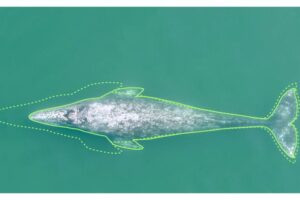
This schematic shows the difference in length between a PCFG gray whale born in 2020 vs one born prior to the year 2000. OSU researchers determined that a full-grown PCFG gray whale born in 2020 is expected to reach an adult body length that is 1.65 meters (about 5 feet, 5 inches) shorter than a gray whale born prior to 2000. For PCFG gray whales that grow to be 38-41 feet long at full maturity, that accounts for a loss of more than 13% of their total length.

Pacific coast gray whales have gotten 13% shorter in the past 20-30 years

An elephant family comforts their calf during an afternoon nap under a tree in Samburu National Reserve, Kenya. Credit: George Wittemyer

Elephants Address Each Other by Name, Study Finds

Thismia malayana live specimen.

Remarkable new plant species steals nutrients from underground fungi

fish in the ocean

New Model Reveals Most Marine Protected Areas Fail to Safeguard Rare Migratory Fish

Harbor porpoises need to eat 2000 fish a day to meet their energy needs. Not because it's demanding to swim, dive and hunt as they are streamlined and very energy efficient. They simply need vast amounts of energy to keep warm in the cold water.

Noisy Motorboats Disrupt Hunting and Threaten Survival of Denmark’s Harbor Porpoises

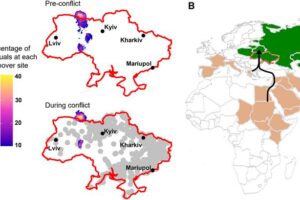
Distribution, migration, and stopover use in Ukraine for Greater Spotted Eagles

Migrating Eagles Forced to Dodge Conflict in Ukraine, Study Finds

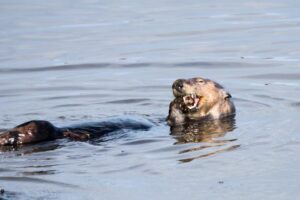
A southern sea otter preys on a marine animal.

Otters, especially females, use tools to survive a changing world

shark meat and dna test tube

Shark Meat Mislabelling Rampant in Australian Markets, Threatening Conservation Efforts

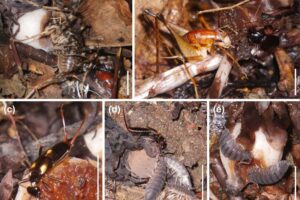
Nightly automated photography revealed which animals are the main consumers of the fruit: camel crickets (A: Diestrammena japonica, B left: Diestrammena brunneri), ground beetles (B right: Synuchus sp.), earwigs (C, D top: Eparchus yezoensis) and woodlice (D bottom, E: Porcellio scaber).

Tiny Invertebrates Like Woodlice and Earwigs Found to Disperse Seeds, Setting New Record

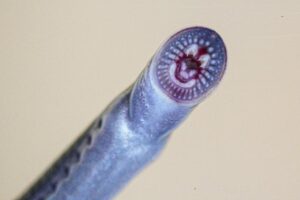
juvenile Australian brook lamprey

Endangered Australian Brook Lamprey Discovered in Tropical Waters, Extending Its Range by Over 1,000 km

Ohio State logo

Protecting endangered monkeys from poachers, habitat loss

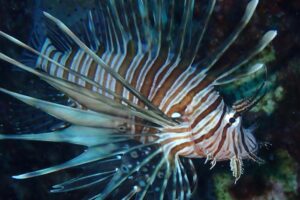
Lionfish

Invasive Lionfish Rapidly Spreading in Mediterranean, Threatening Biodiversity

Older posts
Newer posts
← Previous Page1 Page2 Page3 Page4 … Page8 Next →
Substack subscription form sign up

Comments

  • Not Buying Yer Bullshit on More Than a Third of Americans Have Lost Relationships Over Politics
  • Marco Messina on More Than a Third of Americans Have Lost Relationships Over Politics
  • Anon on Why Fructose Behaves Less Like a Calorie and More Like a Hormone
  • Mark Mellinger on Living Plastic Can Self-Destruct on Command
  • Marie Feret on The Silent Frequency That Makes Old Buildings Feel Haunted
© 2026 ScienceBlog.com | Follow our RSS / XML feed