Skip to content
ScienceBlog.com
  • Featured Blogs
    • EU Horizon Blog
    • ESA Tracker
    • Experimental Frontiers
    • Josh Mitteldorf’s Aging Matters
    • Dr. Lu Zhang’s Gondwanaland
    • NeuroEdge
    • NIAAA
    • SciChi
    • The Poetry of Science
    • Wild Science
  • Topics
    • Brain & Behavior
    • Earth, Energy & Environment
    • Health
    • Life & Non-humans
    • Physics & Mathematics
    • Social Sciences
    • Space
    • Technology
  • Our Substack
  • Follow Us!
    • Bluesky
    • Threads
    • FaceBook
    • Google News
    • Twitter/X
  • Contribute/Contact

Cosmology

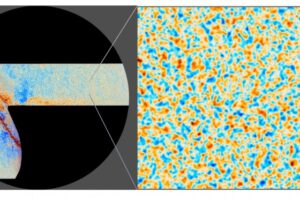
This is part of a new image that shows the vibration directions, or polarization, of the radiation. The zoom-in on the right is 10 degrees high. Polarized light vibrates in a particular direction; blue shows where the surrounding light’s vibration directions are angled towards it, like spokes on a bicycle; orange shows places where the vibration directions circle around it. This new information reveals the motion of the ancient gases in the universe when it was less than half a million years old, pulled by the force of gravity in the first step toward forming galaxies. The red band comes from our closer-by Milky Way.

Telescope Captures Clearest Images of Universe’s Infancy

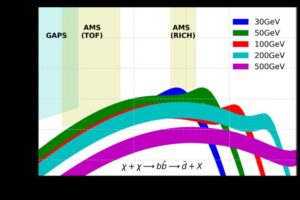
The image shows the predicted flux of antihelium-3 produced from dark matter (WIMPs) that annihilate producing these antinuclei. Each color represents the prediction for a different mass of dark matter, as shown in the legend. t The bands are almost touching the AMS-02 sensitivity, which means that in some optimistic cases, WIMPs can explain this discrepancy.

Glimmers of antimatter to explain the “dark” part of the universe

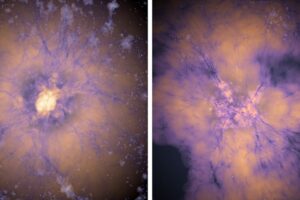
Early dark energy could have triggered the formation of numerous bright galaxies, very early in the universe, a new study finds. The mysterious unknown force could have caused early seeds of galaxies (depicted at left) to sprout many more bright galaxies (at right) than theory predicts. Credits:Image: Josh Borrow/Thesan Team

Early dark energy could resolve cosmology’s two biggest puzzles

galaxy seen from the side

New AI Distinguishes Dark Matter from Cosmic Interference

LUX-ZEPLIN Experiment Narrows the Search for Elusive Dark Matter

LUX-ZEPLIN Experiment Narrows the Search for Elusive Dark Matter

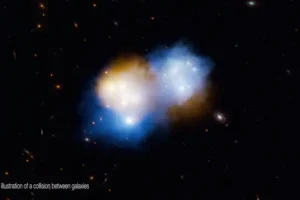
This artist's concept shows what happened when two massive clusters of galaxies, collectively known as MACS J0018.5, collided: The dark matter in the galaxy clusters (blue) sailed ahead of the associated clouds of hot gas, or normal matter (orange). Both dark matter and normal matter feel the pull of gravity, but only the normal matter experiences additional effects like shocks and turbulence that slow it down during collisions.

Dark matter flies ahead of normal matter in mega galaxy cluster collision

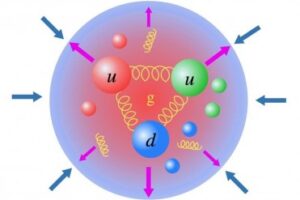
Scientists Discover Energy and Pressure Analogies Linking Hadrons, Superconductors, and Cosmic Expansion

Quantum Anomalies Link Subatomic Particles to Cosmic Expansion

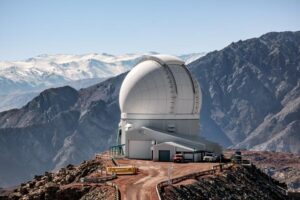
The SOAR Telescope on Cerro Pachon in Chile.

Revived technology used to count individual photons from distant galaxiesRevived technology used to count individual photons from distant galaxies

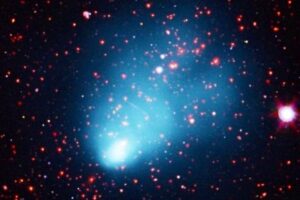
Composite colour image of the interacting galaxy cluster El Gordo, showing X-ray light from NASA's Chandra X-ray Observatory in blue, optical data from the European Southern Observatory's Very Large Telescope in red, green, and blue, and infrared emission from NASA's Spitzer Space Telescope in red and orange.

Study Suggests Dark Matter May Be Self-Interacting in Massive Galaxy Cluster Collisions

Ohio State logo

First year of DESI results unveil new clues about dark energy

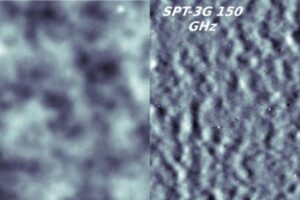
Comparison between CMB data resolution collected by Planck and SPT-3G

Cosmologists Grapple with Growing Tension in Understanding Universe’s Expansion

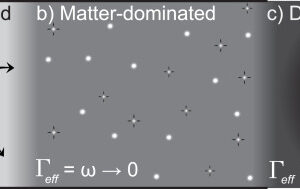
Representations of universe eras – (a) radiation, (b) matter, (c) dark energy – with the respective values of the equation of state ω = Γeff, where Γeff is the effective Grüneisen parameter. As dark energy becomes dominant, Γeff changes sign and emulates a phase transition in condensed matter physics (image: Results in Physics)

Scientists Uncover New Clues About the Universe’s Mysterious Expansion

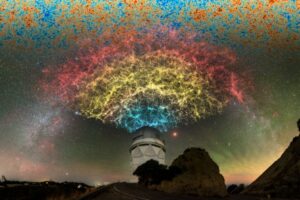
colorful sky

Unlocking the Secrets of the Universe: DESI’s Groundbreaking 3D Map Reveals Dark Energy Mysteries

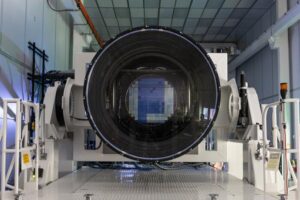
A front view of the completed LSST Camera, showing the 3,200-megapixel focal plane within.

SLAC completes construction of the largest digital camera ever built for astronomy

Older posts
Page1 Page2 Page3 Next →
Substack subscription form sign up

Comments

  • Karoly Mirnics on Common Prescription Drugs May Disrupt Cholesterol Pathways in the Womb and Raise Autism Risk
  • Aizen on Laziness helped lead to extinction of Homo erectus
  • Norwood johnson on Electrons in New Crystals Behave as If They Live in Four Dimensions
  • ScienceBlog.com on Hidden Geometry Could Finally Fix Quantum Computers
  • Theo Prinse on America Is Going Back to the Moon. This Time, It Plans to Stay
© 2026 ScienceBlog.com | Follow our RSS / XML feed