Skip to content
ScienceBlog.com
  • Featured Blogs
    • EU Horizon Blog
    • ESA Tracker
    • Experimental Frontiers
    • Josh Mitteldorf’s Aging Matters
    • Dr. Lu Zhang’s Gondwanaland
    • NeuroEdge
    • NIAAA
    • SciChi
    • The Poetry of Science
    • Wild Science
  • Topics
    • Brain & Behavior
    • Earth, Energy & Environment
    • Health
    • Life & Non-humans
    • Physics & Mathematics
    • Social Sciences
    • Space
    • Technology
  • Our Substack
  • Follow Us!
    • Bluesky
    • Threads
    • FaceBook
    • Google News
    • Twitter/X
  • Contribute/Contact

decision

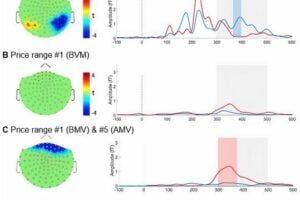
brain price infographic

Your Brain Knows When You’re Being Ripped Off Before You Do

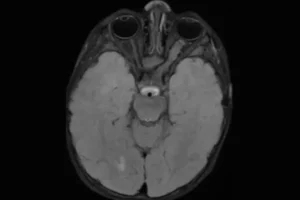
A brain scan of a neurofibromatosis type 1 (NF1) patient reveals a tumor on the optic nerve connecting the left eye to the brain (right side of the image). Researchers at Washington University School of Medicine in St. Louis have discovered that an FDA-approved epilepsy drug can prevent or slow the growth of NF1-linked optic gliomas in mice, laying the groundwork for a clinical trial.

Brain Scans Outperform Behavior in Predicting What Markets Really Want

businessman looking in the mirror

False Confidence: Why Your Most Assertive Colleagues Might Not Be Your Best Leaders

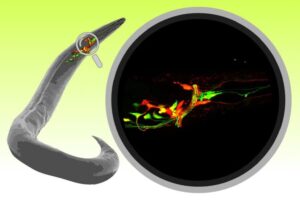
Peering into the behavioral circuits of the worm C. elegans allowed scientists to visualize how single cells connect to each other, and how changing these connections alter perception of sensory information and behavior. Illustration by Sarah Emerson

Yale Research Shows How Neural Connections Filter Sensory Information for Decision-Making

Optically Pumped Magnetometry Magnetoencephalography (OPM) devices are lightweight, wearable headsets that measure brain activity while allowing research volunteers to move freely and interact.

Advanced Brain Imaging Reveals the Neural Dance of Decision-Making

Ohio State logo

Why people think they’re right, even when they are wrong

Ohio State logo

Why people think they’re right, even when they are wrong

Researchers from MIT and elsewhere created a system that enables users to have an online, text-based conversation with an AI-generated simulation of their potential future self. Credits:Credit: Future You; Melanie Gonick, MIT

MIT Researchers Develop AI System That Simulates Users’ Future Selves

Woman thinking

Quick Decisions Often Biased, Slower Choices More Accurate

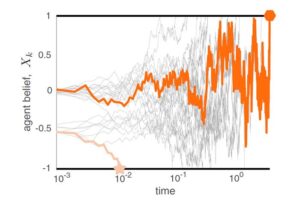
**Revised text:** The diagram illustrates the relationship between decision-making speed and bias. It shows that decisions made quickly are more likely to be influenced by the decision-maker's initial viewpoint, represented by the light pink line. In contrast, decisions made after gathering more information tend to be less biased, as depicted by the orange line.

New Model Reveals Mathematics of Decision-Making

woman and robot

AI Decision Explanations May Not Improve Human Oversight, Study Finds

Credit: Askar Abayev / Pexels

New Study Reveals People Can Gauge Trustworthiness of Their Own Memories

Brain illustration

Scientists Unravel the Neural Mechanisms of Planning

brain illustration

Brain damage reveals part of the brain necessary for helping others

Older posts
Page1 Page2 Next →
Substack subscription form sign up

Comments

  • Karoly Mirnics on Common Prescription Drugs May Disrupt Cholesterol Pathways in the Womb and Raise Autism Risk
  • Aizen on Laziness helped lead to extinction of Homo erectus
  • Norwood johnson on Electrons in New Crystals Behave as If They Live in Four Dimensions
  • ScienceBlog.com on Hidden Geometry Could Finally Fix Quantum Computers
  • Theo Prinse on America Is Going Back to the Moon. This Time, It Plans to Stay
© 2026 ScienceBlog.com | Follow our RSS / XML feed