Skip to content
ScienceBlog.com
  • Featured Blogs
    • EU Horizon Blog
    • ESA Tracker
    • Experimental Frontiers
    • Josh Mitteldorf’s Aging Matters
    • Dr. Lu Zhang’s Gondwanaland
    • NeuroEdge
    • NIAAA
    • SciChi
    • The Poetry of Science
    • Wild Science
  • Topics
    • Brain & Behavior
    • Earth, Energy & Environment
    • Health
    • Life & Non-humans
    • Physics & Mathematics
    • Social Sciences
    • Space
    • Technology
  • Our Substack
  • Follow Us!
    • Bluesky
    • Threads
    • FaceBook
    • Google News
    • Twitter/X
  • Contribute/Contact

Ecology

A spider monkey feedings on fruits of spondia mombin

Boozing animals may not be as rare as previously thought

Bacteria work together to thrive in difficult conditions

Ohio State logo

Lake Erie walleye growth is driven by parents’ size, experience

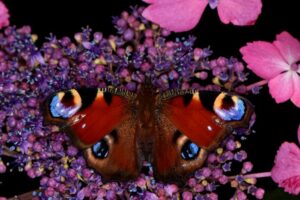
Peacock butterfly

Butterflies accumulate enough static electricity to attract pollen without contact

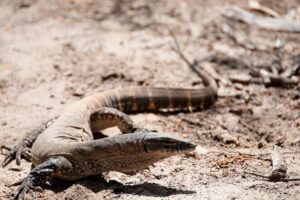
Heath goannas

Giant Lizards Could Save Australian Sheep Farms Millions, Study Reveals

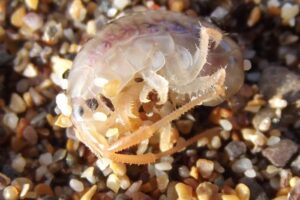
A sandhopper found around 30cm beneath the beach surface at Portwrinkle, Cornwall (UK). The creature had elevated its magnesium levels to enter a torpid state meaning it could survive the cold winter months

Is magnesium the sleeping potion that enables sandhoppers to survive cold winters?

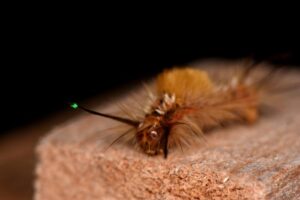
Vapourer moth caterpillar being measured with the laser Doppler vibrometer

Caterpillars can detect their predators by the static electricity they emit

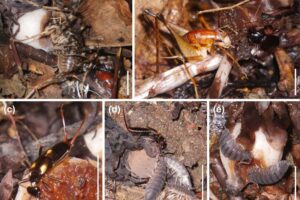
Nightly automated photography revealed which animals are the main consumers of the fruit: camel crickets (A: Diestrammena japonica, B left: Diestrammena brunneri), ground beetles (B right: Synuchus sp.), earwigs (C, D top: Eparchus yezoensis) and woodlice (D bottom, E: Porcellio scaber).

Tiny Invertebrates Like Woodlice and Earwigs Found to Disperse Seeds, Setting New Record

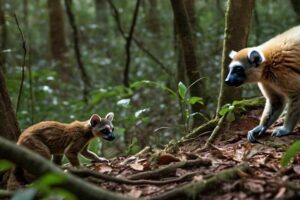
An illustration depicting a fosa stalking a diademed sifaka lemur in the isolated Betampona Strict Nature Reserve in Madagascar

Lemur’s lament: when one vulnerable species stalks another

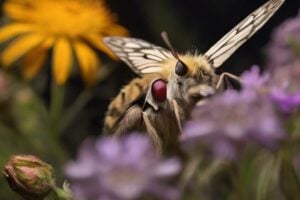
a nighttime pollinator, like a moth, holding its nose at the stinky fumes coming off near some wildflowers

Nighttime Pollution Threatens Pollinators

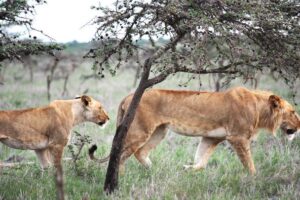
The lion in East Africa changes hunting habits due to tiny ant species

Tiny ant species disrupts lion’s hunting behavior

A hypothetical fractal forest generated with AI

Complexity of forests cannot be explained by simple mathematical rules

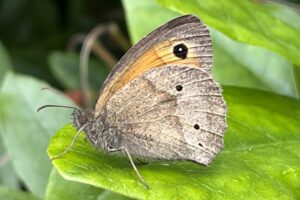
A female with three spots on the hindwing

Butterflies could lose spots as climate warms

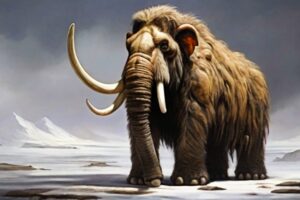
wooly mammoth

Researchers chronicle lifetime travels of a single woolly mammoth which wandered the north more than 14,000 years ago

Older posts
Page1 Page2 Page3 Next →
Substack subscription form sign up

Comments

  • Norwood johnson on Electrons in New Crystals Behave as If They Live in Four Dimensions
  • ScienceBlog.com on Hidden Geometry Could Finally Fix Quantum Computers
  • Theo Prinse on America Is Going Back to the Moon. This Time, It Plans to Stay
  • george w on Hidden Geometry Could Finally Fix Quantum Computers
  • Tom Hughes on Years of Exercise, Blood Pressure Drugs Failed to Slow Cognitive Decline in Seniors at Dementia Risk
© 2026 ScienceBlog.com | Follow our RSS / XML feed