Skip to content
ScienceBlog.com
  • Featured Blogs
    • EU Horizon Blog
    • ESA Tracker
    • Experimental Frontiers
    • Josh Mitteldorf’s Aging Matters
    • Dr. Lu Zhang’s Gondwanaland
    • NeuroEdge
    • NIAAA
    • SciChi
    • The Poetry of Science
    • Wild Science
  • Topics
    • Brain & Behavior
    • Earth, Energy & Environment
    • Health
    • Life & Non-humans
    • Physics & Mathematics
    • Social Sciences
    • Space
    • Technology
  • Our Substack
  • Follow Us!
    • Bluesky
    • Threads
    • FaceBook
    • Google News
    • Twitter/X
  • Contribute/Contact

Endangered Species

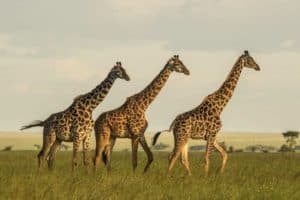
Giraffe family

The Best Way to Save Giraffes is to Support Wildlife Law Enforcement and End Poaching

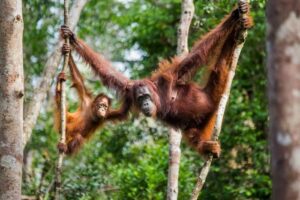
Orangutan

Killing remains a threat to Bornean orangutans

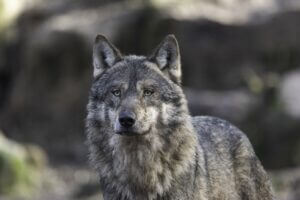
Grey wolf

Gray wolf recovery is a success—is that a problem?

Giraffes

The Giraffes of Bénoué

Ohio State logo

In Florida, endangered coral finds a way to blossom

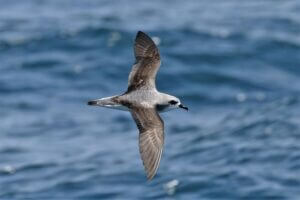
Cook's Petrel, from New Zealand, is an endangered species and is one of the seabirds most at risk from plastic exposure. During its migrations it crosses the Pacific Ocean, and its wintering areas are severely affected by the “big garbage island” of the North Pacific.

Sea of plastic: Mediterranean is the area of the world most at risk for endangered seabirds

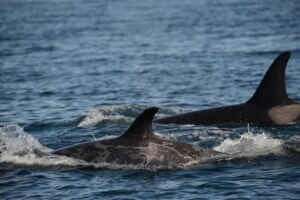
Scientists from SeaDoc Society, a UC Davis veterinary program, are concerned about gray patches observed on the skin of endangered southern resident killer whales.

Skin disease in endangered killer whales concerns scientists

Child giraffe. Pixabay.

Eastern African Giraffes In More Danger Than Previously Thought

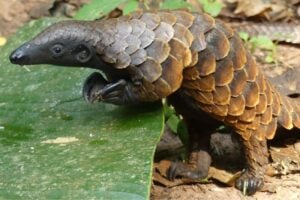
The UCLA-led research created a valuable genetic resource to help control poaching, which is the primary reason pangolins are endangered.

White-bellied pangolins have second-most chromosomes among mammals

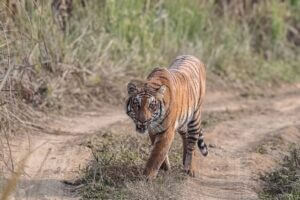
Tiger on a dirt road

Vanishing Stripes

Elephant with ivory tusk

Study finds public opinion on ivory in China shifts over two decades

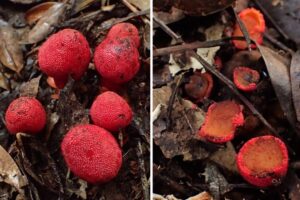
Each round mass looks like a single fruit, However, each cluster is composed of several thousand fruits, each measuring approximately 0.3 mm in size. Upon closer examination, the clusters can be seen to be composed of numerous red bumps These bumps are not the fruits, but modified leaves that that hide the actual fruits underneath.

Endangered Amami rabbit disperses seeds for non-photosynthetic plant

Underwater algae

Sunburnt Algae: Science Poetry Friday

Newer posts
← Previous Page1 Page2
Substack subscription form sign up

Comments

  • Karoly Mirnics on Common Prescription Drugs May Disrupt Cholesterol Pathways in the Womb and Raise Autism Risk
  • Aizen on Laziness helped lead to extinction of Homo erectus
  • Norwood johnson on Electrons in New Crystals Behave as If They Live in Four Dimensions
  • ScienceBlog.com on Hidden Geometry Could Finally Fix Quantum Computers
  • Theo Prinse on America Is Going Back to the Moon. This Time, It Plans to Stay
© 2026 ScienceBlog.com | Follow our RSS / XML feed