Skip to content
ScienceBlog.com
  • Featured Blogs
    • EU Horizon Blog
    • ESA Tracker
    • Experimental Frontiers
    • Josh Mitteldorf’s Aging Matters
    • Dr. Lu Zhang’s Gondwanaland
    • NeuroEdge
    • NIAAA
    • SciChi
    • The Poetry of Science
    • Wild Science
  • Topics
    • Brain & Behavior
    • Earth, Energy & Environment
    • Health
    • Life & Non-humans
    • Physics & Mathematics
    • Social Sciences
    • Space
    • Technology
  • Our Substack
  • Follow Us!
    • Bluesky
    • Threads
    • FaceBook
    • Google News
    • Twitter/X
  • Contribute/Contact

energy production

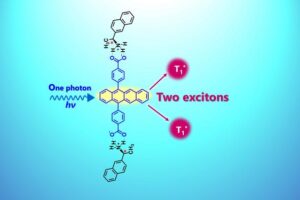
Researchers provide a valuable guide for molecular design in singlet fission research.

Chiral Chemistry Breakthrough Could Revolutionize Solar Cell Efficiency

mitochondria in cells

Study Reveals Why Paternal Mitochondrial DNA is Eliminated During Early Development

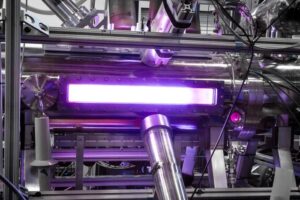
A bright flash of light from a FuZE (Fusion Z-pinch Experiment) plasma.

Zap Energy’s Compact Fusion Device Achieves Breakthrough Plasma Temperatures

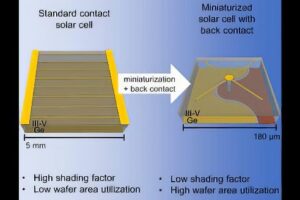
Photo showing the difference between a standard solar cell and a miniaturized solar cell

Breakthrough in the manufacture of photovoltaic cells

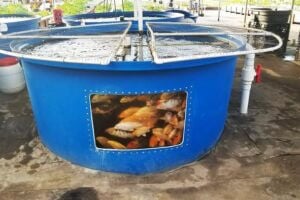
Fish raised in closed-containment farms can be coupled to plant cutltivation through a production model known as aquaponics. The researchers have now established a system to treat the hitherto ignored solid waste produced by these fish while also generating biogas from fish waste.

Transforming fish farms into biogas producers

Substack subscription form sign up

Comments

  • Ashok Kumar on Machine Learning Matched the Right Lifestyle Fix to Each Depressed Patient, Doubling Remission Rates
  • Curtis Webber on The GPS-Killer? This Quantum Device ‘Feels’ Motion Like a Brain—Down to the Atomic Level
  • Ran on How the Age You First Had Sex Could Shape How You Age Decades Later
  • Sparty on How the Age You First Had Sex Could Shape How You Age Decades Later
  • Josh Mitteldorf on A Single TV Segment Sent Leucovorin Prescriptions for Autistic Children Soaring 2,000 Percent
© 2026 ScienceBlog.com | Follow our RSS / XML feed