Skip to content
ScienceBlog.com
  • Featured Blogs
    • EU Horizon Blog
    • ESA Tracker
    • Experimental Frontiers
    • Josh Mitteldorf’s Aging Matters
    • Dr. Lu Zhang’s Gondwanaland
    • NeuroEdge
    • NIAAA
    • SciChi
    • The Poetry of Science
    • Wild Science
  • Topics
    • Brain & Behavior
    • Earth, Energy & Environment
    • Health
    • Life & Non-humans
    • Physics & Mathematics
    • Social Sciences
    • Space
    • Technology
  • Our Substack
  • Follow Us!
    • Bluesky
    • Threads
    • FaceBook
    • Google News
    • Twitter/X
  • Contribute/Contact

energy

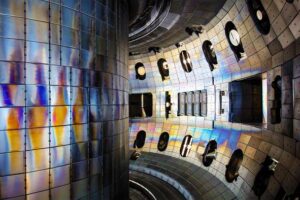
The inside of the DIII-D fusion vessel. The iridescent hues seen on some tiles lining the vessel come from atoms that can become lodged in the walls during plasma experiments.

The Fusion Puzzle: Why Fusion Walls Are Secretly Hoarding Vital Fuel

A green turtle comes up for air. Like many air-breathing marine megafauna, green turtles optimise their swim depth during migration to minimise the cost of transport, travelling at around three body-depths beneath the surface in order to avoid creating waves whilst maximising horizontal distance travelled (Picture © R. D. and B. S. Kirkby).

Marine Animals Find Energy-Saving Sweet Spot for Ocean Travel

Fracking cartoon

Energy Companies Use Aggressive Tactics to Secure Land for Fracking

power lines at night

World’s highest-performance superconducting wire segment fabricated

Depiction of a tokamak.

AI Tames Plasma Instabilities in Fusion Reactors, Boosting Performance

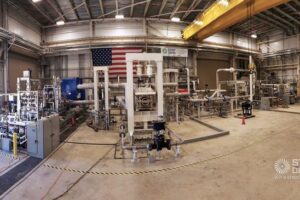
The Supercritical Transformational Electric Power (STEP) Demo pilot plant — a $169 million, 10-megawatt supercritical carbon dioxide (sCO2) test facility at Southwest Research Institute (SwRI) in San Antonio — has generated electricity for the first time. SwRI collaborated with project lead GTI Energy and GE Vernova, the U.S. Department of Energy/National Energy Technology Laboratory, and several industry participants to develop the STEP Demo project.

Supercritical Carbon Dioxide Power Plant Generates Electricity for the First Time

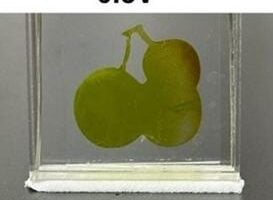
This electrochromic film’s color and optical properties change when the electric potential goes from 0 to 0.8 to 1.6 volts: Green helps reduce glare, and red enhances thermal insulation.

Electrochromic films — like sunglasses for your windows?

Cover of the journal Nature

Chemists Introduce Roadmap for Fossil-Free Refineries by 2050

An artistic rendering of a copper oxide crystal, with electrons moving diagonally through the cube-shaped structure. The crystal is bathed in sunlight, symbolizing its potential for solar energy conversion and clean hydrogen fuel generation.

Twisting Copper Oxide Crystals Boosts Sustainable Fuel Generation

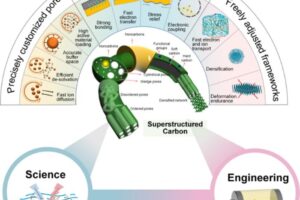
Each characteristic displayed in an integral part in ensuring the function of the SCC can be used to improve upon traditional carbon materials used in energy storage and conversion devices.

Customizable carbon and its potential impact on green energy

Mice illustration

Life span increases in mice when specific brain cells are activated

Ohio State logo

Using AI to pinpoint hidden sources of clean energy underground

Jeremy Snyder/Berkeley Lab

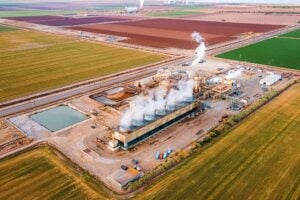
Analysis Confirms California’s Salton Sea Region to Be a Rich Domestic Lithium Resource

Photo montage of catalytic process

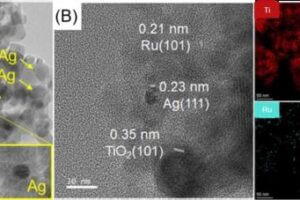
High-efficiency catalysts convert atmospheric CO2 into fuel

Older posts
Page1 Page2 Next →
Substack subscription form sign up

Comments

  • Karoly Mirnics on Common Prescription Drugs May Disrupt Cholesterol Pathways in the Womb and Raise Autism Risk
  • Aizen on Laziness helped lead to extinction of Homo erectus
  • Norwood johnson on Electrons in New Crystals Behave as If They Live in Four Dimensions
  • ScienceBlog.com on Hidden Geometry Could Finally Fix Quantum Computers
  • Theo Prinse on America Is Going Back to the Moon. This Time, It Plans to Stay
© 2026 ScienceBlog.com | Follow our RSS / XML feed