Skip to content
ScienceBlog.com
  • Featured Blogs
    • EU Horizon Blog
    • ESA Tracker
    • Experimental Frontiers
    • Josh Mitteldorf’s Aging Matters
    • Dr. Lu Zhang’s Gondwanaland
    • NeuroEdge
    • NIAAA
    • SciChi
    • The Poetry of Science
    • Wild Science
  • Topics
    • Brain & Behavior
    • Earth, Energy & Environment
    • Health
    • Life & Non-humans
    • Physics & Mathematics
    • Social Sciences
    • Space
    • Technology
  • Our Substack
  • Follow Us!
    • Bluesky
    • Threads
    • FaceBook
    • Google News
    • Twitter/X
  • Contribute/Contact

Game theory

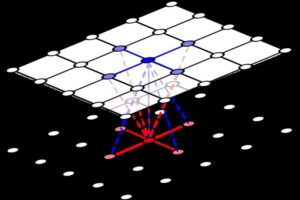
A model developed by evolutionary mathematicians in Canada and Europe reveals that as cooperation becomes easier, it can unexpectedly break down. Researchers from the University of British Columbia and the Hungarian Research Network used computational spatial models to arrange individuals from two species on separate, facing lattices.

Cooperative Behavior Between Species Shows Unexpected Breakdown, New Model Reveals

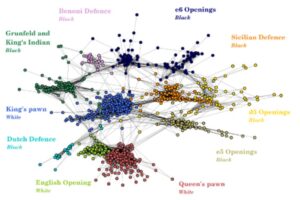
The new method identified ten clusters of chess openings represented with different colors. Openings that are close to each other on this network appear often together in the repertoire of players.

Researchers create new classification of chess openings

Substack subscription form sign up

Comments

  • Brunette Keller on How New Herpes Drugs Jam a Virus’s Replication Engine
  • Aizen on Laziness helped lead to extinction of Homo erectus
  • Norwood johnson on Electrons in New Crystals Behave as If They Live in Four Dimensions
  • ScienceBlog.com on Hidden Geometry Could Finally Fix Quantum Computers
  • Theo Prinse on America Is Going Back to the Moon. This Time, It Plans to Stay
© 2026 ScienceBlog.com | Follow our RSS / XML feed