Skip to content
ScienceBlog.com
  • Featured Blogs
    • EU Horizon Blog
    • ESA Tracker
    • Experimental Frontiers
    • Josh Mitteldorf’s Aging Matters
    • Dr. Lu Zhang’s Gondwanaland
    • NeuroEdge
    • NIAAA
    • SciChi
    • The Poetry of Science
    • Wild Science
  • Topics
    • Brain & Behavior
    • Earth, Energy & Environment
    • Health
    • Life & Non-humans
    • Physics & Mathematics
    • Social Sciences
    • Space
    • Technology
  • Our Substack
  • Follow Us!
    • Bluesky
    • Threads
    • FaceBook
    • Google News
    • Twitter/X
  • Contribute/Contact

gene therapy

an illustration split in two. On the left is a brain, emphasizing its vascular system of blood vessels. On the right is a lab mouse sniffing the air

COVID-19 Infection Linked to Memory Loss and Learning Difficulties in Mice

fatima pedrosa domellof

Gene Discovery Offers Hope for Muscular Dystrophy Treatment

Retrotransposons found in the genomes of the white-throated sparrow and the zebra finch are shown to safely shepherd transgenes into the human genome, providing a gene therapy approach complementary to CRISPR-Cas9 gene editing.

Junk DNA in birds may hold key to safe, efficient gene therapy

Jiantao Guo (left), professor of chemistry, and Janos Zempleni, Willa Cather Professor of molecular nutrition, were selected as Phase 1 winners in the National Institutes of Health's Targeted Genome Editor Delivery Challenge.

Milk-based nanoparticles sidestep problem that plagues other gene editing tools

child with a cochlear implant

Gene therapy restores hearing in children with hereditary deafness

Conceptual art Illustration of DNA in a cell

A novel switch to turn genes on/off on cue

Ohio State logo

Two Ohio State medical scientists elected to the National Academy of Inventors

Retrograde AAV selectively targets D1-MSNs and rescues parkinsonian symptoms with chemogenetic modulation

Gene Therapy Breakthrough: Navigating Parkinson’s Circuitry for Lasting Relief

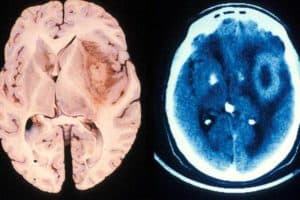
glioblastoma scan

Gene therapy effectively targets glioblastoma

Whole spinal cord visualization of regenerating projections from the lower thoracic spinal cord that project to walking execution centers.

Neurons restore walking in mice after paralysis from spinal cord injury

An artistic rendering of lipid nanoparticles showing multiple layers that take on different molecular arrangements, giving the particle varying properties. Jenny Nuss

Breaking Barriers in Drug Delivery with Better Lipid Nanoparticles

“The gene silencing Dz 46 enzyme we developed through chemical engineering has the ability to distinguish and cut a single point mutation in an RNA strand,” says John Chaput, UCI professor of pharmaceutical sciences and corresponding author. “When you are talking about precision medicine for patients, it doesn’t get more precise than that.” Steve Zylius / UCI

Gene silencing DNA enzyme can target single molecule

Engineers at MIT and the University of Massachusetts Medical School have designed a new type of nanoparticle that can be administered to the lungs, where it can deliver messenger RNA encoding useful proteins. Credits:Image: iStock

New nanoparticles can perform gene editing in the lungs

blood brain barrier illustration

Rabies virus helps Alzheimer’s treatment cross blood-brain barrier

Newer posts
← Previous Page1 Page2
Substack subscription form sign up

Comments

  • Karoly Mirnics on Common Prescription Drugs May Disrupt Cholesterol Pathways in the Womb and Raise Autism Risk
  • Aizen on Laziness helped lead to extinction of Homo erectus
  • Norwood johnson on Electrons in New Crystals Behave as If They Live in Four Dimensions
  • ScienceBlog.com on Hidden Geometry Could Finally Fix Quantum Computers
  • Theo Prinse on America Is Going Back to the Moon. This Time, It Plans to Stay
© 2026 ScienceBlog.com | Follow our RSS / XML feed