Skip to content
ScienceBlog.com
  • Featured Blogs
    • EU Horizon Blog
    • ESA Tracker
    • Experimental Frontiers
    • Josh Mitteldorf’s Aging Matters
    • Dr. Lu Zhang’s Gondwanaland
    • NeuroEdge
    • NIAAA
    • SciChi
    • The Poetry of Science
    • Wild Science
  • Topics
    • Brain & Behavior
    • Earth, Energy & Environment
    • Health
    • Life & Non-humans
    • Physics & Mathematics
    • Social Sciences
    • Space
    • Technology
  • Our Substack
  • Follow Us!
    • Bluesky
    • Threads
    • FaceBook
    • Google News
    • Twitter/X
  • Contribute/Contact

Geology

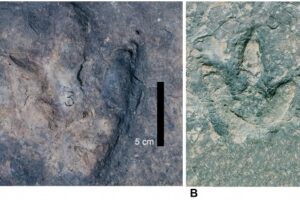
Two representative theropod tracks from the Koum Basin in northern Cameroon.

Dinosaur Footprints Reveal Ancient Continental Connection Between South America and Africa

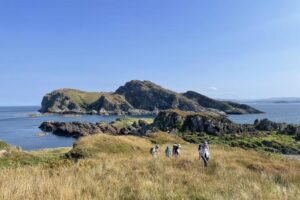
A view of Garbh Eileach, the largest island in the Garvellach island chain where the gradational transition into snowball Earth is recorded.

Ancient Scottish and Irish Rocks Unveil Earth’s Icy Past, Shaping Life as We Know It

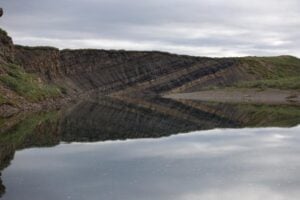
Part of the Nanushk formation

Alaska dinosaur tracks reveal a lush, wet environment

MIT geologists determined the original orientation of many of the bedrock samples collected on Mars by the Perseverance rover, depicted in this image rendering. The findings can give scientists clues to the conditions in which the rocks originally formed. Credits:Image: NASA/JPL-Caltech

Study determines the original orientations of rocks drilled on Mars

The Welsh countryside near the Coed Cochion Quarry, where the fossils were found. Picture: Anthony Clarke

Key moment in the evolution of life on Earth captured in fossils

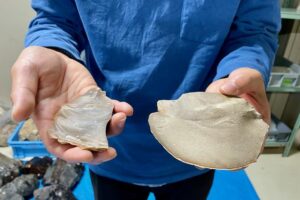
An archaeologist, Eiki Suga, showing fine-grained flint (left) and middle-grained flint (right).

Paleolithic humans may have understood the properties of rocks for making stone tools

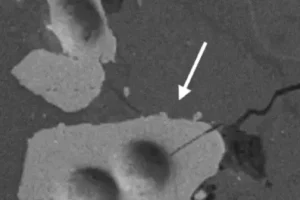
A lunar zircon grain under a microscope. Credit: Jennika Greer

The moon is 40M years older than previously thought

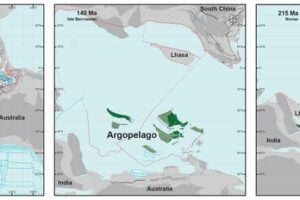
What happened to Argoland, the continent that broke off western Australia 155 million years ago? Geologists at Utrecht University have now managed to reconstruct the history of the lost continent. As it turns out, Argoland is in fragments, but is still there.

Finding Argoland: How a lost continent resurfaced

Meteors help answer riddles about water

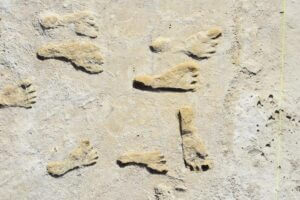
Ancient footprints in New Mexico

Study confirms age of oldest fossil human footprints in North America

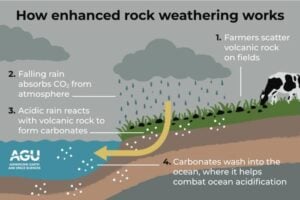
A climate intervention strategy called enhanced rock weathering, if applied globally, could help meet a key IPCC goal for slowing climate change, according to new research published in the AGU journal Earth’s Future. Enhanced rock weathering improves soil health, sequesters carbon, and combats ocean acidification.

“Planting” rocks in farms could help meet key IPCC carbon removal goal

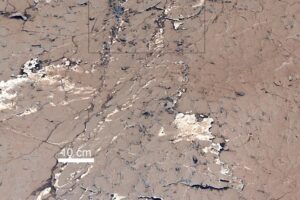
This raw image from the Curiosity Rover shows the hexagon-shaped mudcracks filled with salt.

New insights into the potential for early steps of biological evolution on Mars

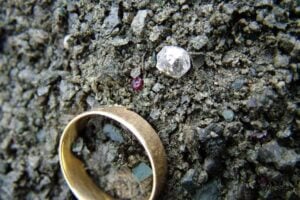
Diamond in its host rock (kimberlite)

Scientists crack the code of what causes diamonds to erupt

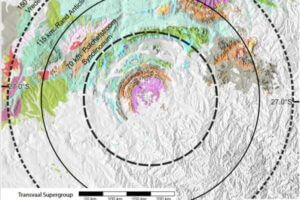
Impact craters and their broader structures can be visible in a geologic map, like a bullseye. But what geophysical traces remain at the structure’s outermost edges?

Earth’s most ancient impact craters are disappearing

Older posts
Page1 Page2 Next →
Substack subscription form sign up

Comments

  • Karoly Mirnics on Common Prescription Drugs May Disrupt Cholesterol Pathways in the Womb and Raise Autism Risk
  • Aizen on Laziness helped lead to extinction of Homo erectus
  • Norwood johnson on Electrons in New Crystals Behave as If They Live in Four Dimensions
  • ScienceBlog.com on Hidden Geometry Could Finally Fix Quantum Computers
  • Theo Prinse on America Is Going Back to the Moon. This Time, It Plans to Stay
© 2026 ScienceBlog.com | Follow our RSS / XML feed