Skip to content
ScienceBlog.com
  • Featured Blogs
    • EU Horizon Blog
    • ESA Tracker
    • Experimental Frontiers
    • Josh Mitteldorf’s Aging Matters
    • Dr. Lu Zhang’s Gondwanaland
    • NeuroEdge
    • NIAAA
    • SciChi
    • The Poetry of Science
    • Wild Science
  • Topics
    • Brain & Behavior
    • Earth, Energy & Environment
    • Health
    • Life & Non-humans
    • Physics & Mathematics
    • Social Sciences
    • Space
    • Technology
  • Our Substack
  • Follow Us!
    • Bluesky
    • Threads
    • FaceBook
    • Google News
    • Twitter/X
  • Contribute/Contact

Immunology

Shrimp

Fiber from crustaceans, insects, mushrooms promotes digestion

Ohio State logo

Digging deeper into how vaccines work against parasitic disease

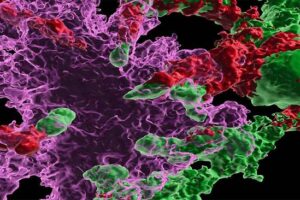
Systemic transplantation of wild-type hematopoietic stem and progenitor cells (green) led to their differentiation into microglia-like cells (red), which reduced the amount of beta amyloid plaques (magenta) in the brain.

Stem cell therapy rescues symptoms of Alzheimer’s

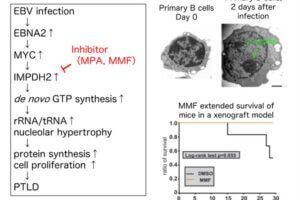
New study shows how the Epstein-Barr virus transforms B cells

How the Epstein-Barr virus transforms cells

Woman with a red throat.

This disease can be caused by a food allergy and prevent children from eating. A new study may show how to treat it

Ohio State logo

Tracing maternal behavior to brain immune function

Immune cell.

Discovery could lead to more treatments to prevent cancer and infectious diseases

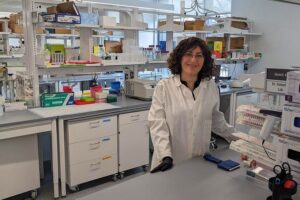
Parisa Kalantari, assistant professor of immunology, is shown in her laboratory in the Department of Veterinary and Biomedical Sciences, Penn State’s College of Agricultural Sciences. Credit: Contributed photo. All Rights Reserved.

Protein Puts Parasite Problems on Pause: How a Protein May Help Millions Battle Schistosomiasis

The UCLA-developed nanoparticle has sugars on its surface that target specific cells in the liver (dark blue and pink shapes) and an mRNA payload that encodes for a specific protein fragment (red).

Nanoparticle with mRNA appears to prevent, treat peanut allergies in mice

HIV virus closeup

HIV can persist for years in myeloid cells of people on antiretroviral therapy

Research conducted in mice shows gut microbes fuel production of immune cells that actively seek out sites of injury

Torn muscle? Send in the gut microbes for rapid repair

Ebola virus

NIH vaccine protects macaques from Ebola

Illustration of a man and woman with shields fighting off health threats

Mild COVID-19 infection may have lasting impact on men’s immune system

A lymph node with clusters of germinal centers full of mature B cells (red), dotted with less evolved “naive” B cells (green).

When the body’s B cell training grounds stay open after hours

Older posts
Newer posts
← Previous Page1 Page2 Page3 Page4 Next →
Substack subscription form sign up

Comments

  • Karoly Mirnics on Common Prescription Drugs May Disrupt Cholesterol Pathways in the Womb and Raise Autism Risk
  • Aizen on Laziness helped lead to extinction of Homo erectus
  • Norwood johnson on Electrons in New Crystals Behave as If They Live in Four Dimensions
  • ScienceBlog.com on Hidden Geometry Could Finally Fix Quantum Computers
  • Theo Prinse on America Is Going Back to the Moon. This Time, It Plans to Stay
© 2026 ScienceBlog.com | Follow our RSS / XML feed