Skip to content
ScienceBlog.com
  • Featured Blogs
    • EU Horizon Blog
    • ESA Tracker
    • Experimental Frontiers
    • Josh Mitteldorf’s Aging Matters
    • Dr. Lu Zhang’s Gondwanaland
    • NeuroEdge
    • NIAAA
    • SciChi
    • The Poetry of Science
    • Wild Science
  • Topics
    • Brain & Behavior
    • Earth, Energy & Environment
    • Health
    • Life & Non-humans
    • Physics & Mathematics
    • Social Sciences
    • Space
    • Technology
  • Our Substack
  • Follow Us!
    • Bluesky
    • Threads
    • FaceBook
    • Google News
    • Twitter/X
  • Contribute/Contact

immunotherapy

A generated image showing a keto supplement bottle next to a medical illustration of prostate cancer cells being attacked by T cells

Keto Supplement Boosts Prostate Cancer Immunotherapy

Sandro Matosevic

Promising Off-the-Shelf Immunotherapy for Incurable Brain Tumors

An illustration depicting a traumatic brain injury, showing blood leaking into the brain and activating immune cells

Scientists Uncover Key Mechanism Linking Traumatic Brain Injury to Neurodegeneration

colorful liver and immune system illustration

Researchers Discover Key to Better Cancer Treatments Lies in Liver

A boy eating peanut butter on bread

Antibody reduces allergic reactions to multiple foods in NIH clinical trial

cancer cells illustration

Secondary cancers following CAR T cell therapy are rare

Deadly sepsis and antibiotic-resistant bacteria are in Europe’s crosshairs

A C57BL/6 mouse used in the study (Photo: Haruka Wada)

Cancer stem cells trigger macrophage aging

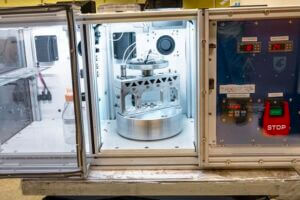
A minifridge-sized bioreactor developed by Washington State University researchers is able to manufacture cancer-killing white blood cells at 95% of the maximum growth rate – about 30% faster than current technologies.

Machine can quickly produce white blood cells for cancer treatment

Young teen getting her blood tested

Breakthrough Drug Helps Children with New-Onset Type 1 Diabetes

glioblastoma scan

Gene therapy effectively targets glioblastoma

A figure illustrating how a “closed-loop” implant called HAMMR (short for “hybrid advanced molecular manufacturing regulator”) will be used to treat recurrent ovarian cancer. The implant, which is small enough to be implanted with minimally invasive surgery, is being developed by a Rice University-led team of researchers from eight universities and two companies in seven states. The Advanced Research Projects Agency for Health awarded $45 million to fast-track development of the implant, which includes funding for a first-phase clinical trial within five years.

Feds fund research that could slash US cancer deaths by 50%

Caption:In this colon tumor, which has a mutation that gives it a high degree of DNA mismatch repair deficiency, T cells (labeled black, green, and red) have accumulated primarily in the supportive tissues (pink regions), while very few have infiltrated tumor cells (islands surrounded by the supportive tissues). Credits:Image: Courtesy of the researchers

Why certain immunotherapies don’t always work as predicted

Colorectal cancer patients may benefit from breakthrough EU research

Older posts
Newer posts
← Previous Page1 Page2 Page3 Page4 Next →
Substack subscription form sign up

Comments

  • Brunette Keller on How New Herpes Drugs Jam a Virus’s Replication Engine
  • Aizen on Laziness helped lead to extinction of Homo erectus
  • Norwood johnson on Electrons in New Crystals Behave as If They Live in Four Dimensions
  • ScienceBlog.com on Hidden Geometry Could Finally Fix Quantum Computers
  • Theo Prinse on America Is Going Back to the Moon. This Time, It Plans to Stay
© 2026 ScienceBlog.com | Follow our RSS / XML feed