Skip to content
ScienceBlog.com
  • Featured Blogs
    • EU Horizon Blog
    • ESA Tracker
    • Experimental Frontiers
    • Josh Mitteldorf’s Aging Matters
    • Dr. Lu Zhang’s Gondwanaland
    • NeuroEdge
    • NIAAA
    • SciChi
    • The Poetry of Science
    • Wild Science
  • Topics
    • Brain & Behavior
    • Earth, Energy & Environment
    • Health
    • Life & Non-humans
    • Physics & Mathematics
    • Social Sciences
    • Space
    • Technology
  • Our Substack
  • Follow Us!
    • Bluesky
    • Threads
    • FaceBook
    • Google News
    • Twitter/X
  • Contribute/Contact

immunotherapy

Closeup of human skin. Pixabay

Poop transplants may aid skin cancer treatment

Genes and DNA from Pixabay

Knocking out gene triggers powerful anti-cancer response

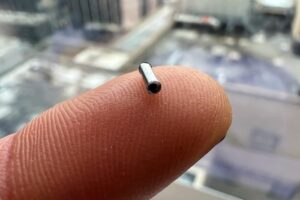
Houston Methodist Research Institute nanomedicine researchers used an implantable nanofluidic device smaller than a grain of rice to deliver immunotherapy directly into a pancreatic tumor.

Implantable device shrinks pancreatic tumors

The novel coronavirus SARS CoV-2 is responsible for the COVID-19 global pandemic. A new form of monoclonal antibody therapeutic to treat the disease is described in a new study, which graces the cover of Plant Biology Journal.

New treatment for COVID-19 is made from plants

An Asian woman in her 60s embraces her mid-30s daughter who is battling cancer - stock photo

Defense-funded researchers move forward on breast cancer vaccine

brawndo

The nutrient that cancer cells crave

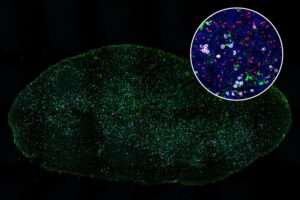
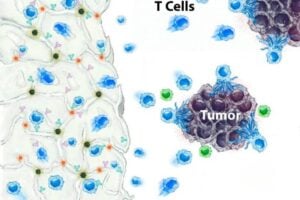
A new MIT study explains why dendritic cells (green) in lymph nodes that drain from the lungs fail to stimulate killer T cells (white) to attack lung tumors. Credits:Courtesy of the researchers

Why lung cancer doesn’t respond well to immunotherapy

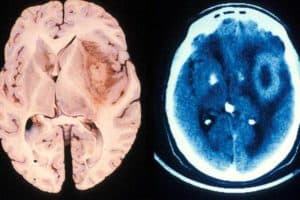
glioblastoma scan

Blood pressure drug may prevent brain swelling in patients with glioblastoma

Happy dog getting back of ears scratched

Novel cancer therapy extends lives of terminally ill dogs

Infant boy

New drug combo fights fatal childhood brain tumor

The SymphNode device (left), contains nanoparticles (red dots) that release a drug that blocks the activity of regulatory T cells (green), which suppress the body’s response to solid tumors. At the same time, the SymphNode’s microparticles (black dots) attract and beef up cancer-fighting T cells.

Tiny implantable sponge helps kill cancer

Cancer cells

Killing cancer with cancer: Vaccine destroys brain tumors in mouse model

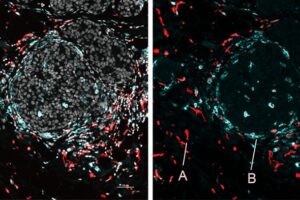
Image of human breast cancer cells showing A) immunosuppressive macrophages near tumor connective tissue, and B) immunostimulatory macrophages near tumor nests. Credit: Nir Ben Chetrit.

Scientists Locate Gene Activity and Proteins Across Tissues

Breast cancer: an aggressive variant triggers a hunt for cures

Older posts
Newer posts
← Previous Page1 Page2 Page3 Page4 Next →
Substack subscription form sign up

Comments

  • Brunette Keller on How New Herpes Drugs Jam a Virus’s Replication Engine
  • Aizen on Laziness helped lead to extinction of Homo erectus
  • Norwood johnson on Electrons in New Crystals Behave as If They Live in Four Dimensions
  • ScienceBlog.com on Hidden Geometry Could Finally Fix Quantum Computers
  • Theo Prinse on America Is Going Back to the Moon. This Time, It Plans to Stay
© 2026 ScienceBlog.com | Follow our RSS / XML feed