Skip to content
ScienceBlog.com
  • Featured Blogs
    • EU Horizon Blog
    • ESA Tracker
    • Experimental Frontiers
    • Josh Mitteldorf’s Aging Matters
    • Dr. Lu Zhang’s Gondwanaland
    • NeuroEdge
    • NIAAA
    • SciChi
    • The Poetry of Science
    • Wild Science
  • Topics
    • Brain & Behavior
    • Earth, Energy & Environment
    • Health
    • Life & Non-humans
    • Physics & Mathematics
    • Social Sciences
    • Space
    • Technology
  • Our Substack
  • Follow Us!
    • Bluesky
    • Threads
    • FaceBook
    • Google News
    • Twitter/X
  • Contribute/Contact

Laser technology

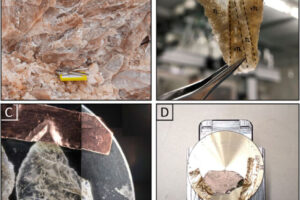
Gypsum’s crystalline facies and sample handling. Images of the studied twinned selenite crystal and of the sample preparation and handling for optical microscopy, SEM-EDX, and LIMS analyses. (A) Smal crystal selenite (SC) and decimeter-sized twinned arrow-head selenite (TS) crystals show the darker re-entrant angle of the crystals (dashed black lines). (B) Large petrographic thin section of the re-entrant angle of the twinned selenite crystal marked in the blue rectangle in (A). It shows very turbid (vTL), turbid (TL) and limpid laminations (LL). (C) Small petrographic thin section of turbid laminae fixed on the LIMS sample holder with copper tape. (D) Gold coated sample on the LIMS sample holder.

Laser-powered device tested on Earth could spot microbial fossils on Mars

The researchers sandwich the circulating tumor cells between two mirrors and shine an excitation laser at them one cell at a time.

Researchers Use Light-Based Technology to Detect Cancer Cells in Blood

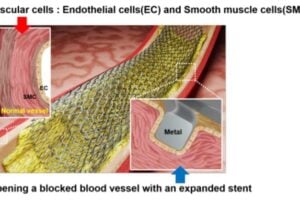
Expanded stent physically opens a blocked blood vessel, but interactions between the metal surface and vascular cells can either promote healing or lead to adverse effects.

Laser-Perfected Stents: A Drug-Free Revolution for Safer Heart Healing

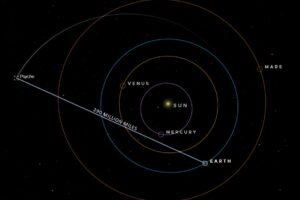
This visualization shows Psyche’s position on July 29 when the uplink station for NASA’s Deep Space Optical Communications sent a laser signal about 290 million miles to the spacecraft. See an interactive version of the Psyche spacecraft in NASA’s Eyes on the Solar System. Credit: NASA/JPL-Caltech

NASA’s Laser Communication Breaks Distance Record, Paving Way for Future Space Exploration

Rendering of the photonic topological insulator developed in the study

How a tiny device could lead to big physics discoveries and better lasers

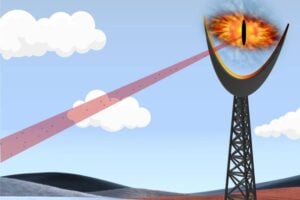
Graphic depicting a new laser-based technology, which can detect potentially harmfful aerosols, as the flaming Eye of Sauron. (Credit: Greg Rieker)

A real life Eye of Sauron? New project to spot possible chemical threats in the air

illustration of domain walls

Ultrafast laser pulses could lessen data storage energy needs

Woman sitting next to car that hit her while riding her bicycle

Eye-safe laser technology to diagnose traumatic brain injury

When a beam of light is shone into a water droplet, the light is trapped inside the droplet.

Creating an ‘optical atom’ with water and light

Substack subscription form sign up

Comments

  • Karoly Mirnics on Common Prescription Drugs May Disrupt Cholesterol Pathways in the Womb and Raise Autism Risk
  • Aizen on Laziness helped lead to extinction of Homo erectus
  • Norwood johnson on Electrons in New Crystals Behave as If They Live in Four Dimensions
  • ScienceBlog.com on Hidden Geometry Could Finally Fix Quantum Computers
  • Theo Prinse on America Is Going Back to the Moon. This Time, It Plans to Stay
© 2026 ScienceBlog.com | Follow our RSS / XML feed