Skip to content
ScienceBlog.com
  • Featured Blogs
    • EU Horizon Blog
    • ESA Tracker
    • Experimental Frontiers
    • Josh Mitteldorf’s Aging Matters
    • Dr. Lu Zhang’s Gondwanaland
    • NeuroEdge
    • NIAAA
    • SciChi
    • The Poetry of Science
    • Wild Science
  • Topics
    • Brain & Behavior
    • Earth, Energy & Environment
    • Health
    • Life & Non-humans
    • Physics & Mathematics
    • Social Sciences
    • Space
    • Technology
  • Our Substack
  • Follow Us!
    • Bluesky
    • Threads
    • FaceBook
    • Google News
    • Twitter/X
  • Contribute/Contact

medical research

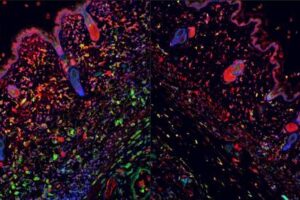
Image of intense inflammation in active lesion (left) and then after experimental treatment (right).

Novel Nanoparticle Tech Unleashes Marijuana-Like Compound Against Skin Lupus

Tackling heart disease and stroke risks with customised treatment

Scientist at a computer research cannabis

Can cannabis-based meds help people manage oral cancer pain?

Brain scans

Converting brain immune cells into neurons helps mice recover after stroke

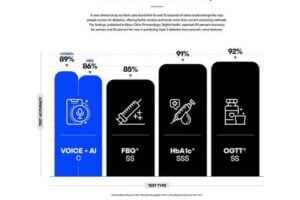
A new clinical study by Klick Labs found that AI and 10 seconds of voice could change the way people screen for diabetes, offering better access and lower costs than current screening methods. The findings, published in Mayo Clinic Proceedings: Digital Health, reported 89 percent accuracy for women and 86 percent for men in predicting Type 2 diabetes from acoustic voice features.

AI and 10 seconds of voice can screen for diabetes, new study reveals

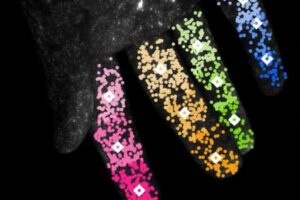
Human hand marked with GlowTrack fluorescent tags.

Unleashing the power of AI to track animal behavior

Illustration of a heart and stethoscope

Transfer of ageing: New drug class prevents key ageing mechanism in organ transplants

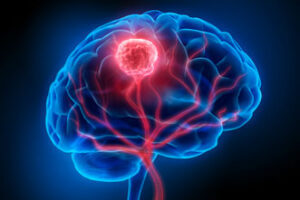
Brain and tumor illustration. Courtesy of nottingham.ac.uk

New research signals a quantum leap for brain tumour treatment

Woman eating a strawberry

No increase in cancer risk for most patients with reflux disease

University of Virginia School of Medicine researcher Daniel J. Cox, PhD, not only developed the GEM program but has used it to manage his type 2 diabetes.

Radical new approach to managing type 2 diabetes receives $3.5 million from NIH

With a custom-fabricated experimental chamber housing a “mini-brain,” Purdue researcher Riyi Shi traces the link between concussion and Alzheimer’s disease. (Purdue University photo/Charles Jischke)

A ‘mini-brain’ traces the link between concussion and Alzheimer’s disease

Woman with measuring take around belly

Certain gut conditions may be early warning signs of Parkinson’s disease

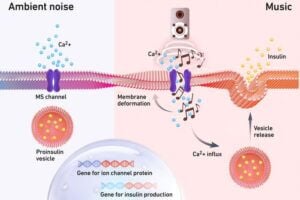
Ambient noise does not trigger insulin secretion (left). Direct exposure of the cells to certain rock songs, on the other hand, triggers insulin release within minutes (right).

Cells with an ear for music release insulin

Brain tracker

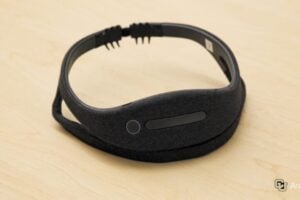
A fitness tracker for brain health: How a headband can identify early signs of Alzheimer’s disease in your sleep

Older posts
Newer posts
← Previous Page1 … Page6 Page7 Page8 … Page13 Next →
Substack subscription form sign up

Comments

  • Josh Mitteldorf on Red States and Blue States Are Becoming the Same Unhappy Country
  • Josh Mitteldorf on Scientists Have Written the Rules for First Contact, and Step One Is Don’t Panic
  • John E on A New Theory Says DMT Entities Might Be Real, and Proposes How to Test It
  • ScienceBlog.com on A New Theory Says DMT Entities Might Be Real, and Proposes How to Test It
  • John E on A New Theory Says DMT Entities Might Be Real, and Proposes How to Test It
© 2026 ScienceBlog.com | Follow our RSS / XML feed