Skip to content
ScienceBlog.com
  • Featured Blogs
    • EU Horizon Blog
    • ESA Tracker
    • Experimental Frontiers
    • Josh Mitteldorf’s Aging Matters
    • Dr. Lu Zhang’s Gondwanaland
    • NeuroEdge
    • NIAAA
    • SciChi
    • The Poetry of Science
    • Wild Science
  • Topics
    • Brain & Behavior
    • Earth, Energy & Environment
    • Health
    • Life & Non-humans
    • Physics & Mathematics
    • Social Sciences
    • Space
    • Technology
  • Our Substack
  • Follow Us!
    • Bluesky
    • Threads
    • FaceBook
    • Google News
    • Twitter/X
  • Contribute/Contact

nanotechnology

An artistic illustration shows how microscopic bolometers (depicted on the right) can be used to sense very weak radiation emitted from qubits (depicted on the left).

Tiny Bolometers Could Revolutionize Quantum Computing

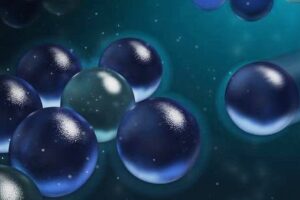
The study found that negatively charged silica microparticles suspended in water attracted each other to form hexagonally arranged clusters. Image credit: Cover image: Zhang Kang.

It’s not only opposites that attract – new study shows like-charged particles can come together

The capacity within the area of a DVD-sized disc can reach up to Pb level

Green optical big-data storage: Coming of age

three images showing an original snapshot of a snowy farm with versions created by the new invention for Ai systems

Optical invention mirrors the image processing power of a human eye

Illustration of surgeon holding a heart

Hydrogels can help mend a broken heart

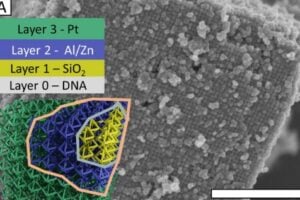
3D metallic and semiconductor nanostructure

Hacking DNA to Make Next-Gen Materials

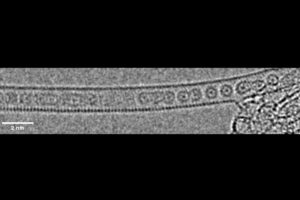
Still image of trapped gas atoms

Scientists trap krypton atoms to form one-dimensional gas

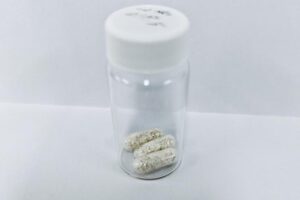
These capsules containing nano-carriers with insulin will be tested on humans in 2025.

Smart Insulin Breakthrough: Scientists Develop Oral Insulin Encased in Nano-Carriers

silicon carbide wafer

Researchers create first functional semiconductor made from graphene

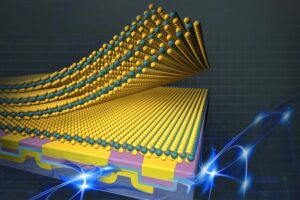
This artist’s rendition shows the newly developed integration platform. By engineering surface forces, researchers are able to directly integrate 2D materials into devices in a single contact-and-release step. Credits:Image: Courtesy of Sampson Wilcox/Research Laboratory of Electronics

Researchers safely integrate fragile 2D materials into devices

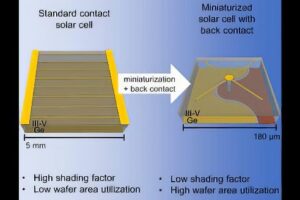
Photo showing the difference between a standard solar cell and a miniaturized solar cell

Breakthrough in the manufacture of photovoltaic cells

The new platform technology modeled after the brain is composed of a tangled-up network of wires containing silver, laid on a bed of electrodes.

Experimental brain-like computing system more accurate with custom algorithm

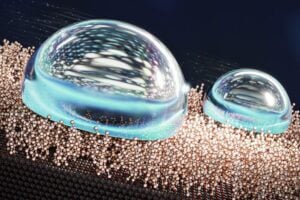
An artist's depiction of the liquid-like layer of molecules repelling water droplets.

Researchers create the most water-repellent surface ever

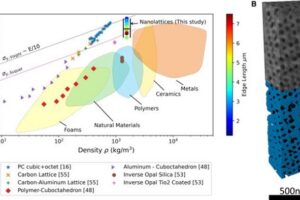
A graph comparing the nanolattice in this experiment to the relative strength of various materials

New glass made of DNA

Older posts
Newer posts
← Previous Page1 Page2 Page3 Page4 Next →
Substack subscription form sign up

Comments

  • Karoly Mirnics on Common Prescription Drugs May Disrupt Cholesterol Pathways in the Womb and Raise Autism Risk
  • Aizen on Laziness helped lead to extinction of Homo erectus
  • Norwood johnson on Electrons in New Crystals Behave as If They Live in Four Dimensions
  • ScienceBlog.com on Hidden Geometry Could Finally Fix Quantum Computers
  • Theo Prinse on America Is Going Back to the Moon. This Time, It Plans to Stay
© 2026 ScienceBlog.com | Follow our RSS / XML feed