Skip to content
ScienceBlog.com
  • Featured Blogs
    • EU Horizon Blog
    • ESA Tracker
    • Experimental Frontiers
    • Josh Mitteldorf’s Aging Matters
    • Dr. Lu Zhang’s Gondwanaland
    • NeuroEdge
    • NIAAA
    • SciChi
    • The Poetry of Science
    • Wild Science
  • Topics
    • Brain & Behavior
    • Earth, Energy & Environment
    • Health
    • Life & Non-humans
    • Physics & Mathematics
    • Social Sciences
    • Space
    • Technology
  • Our Substack
  • Follow Us!
    • Bluesky
    • Threads
    • FaceBook
    • Google News
    • Twitter/X
  • Contribute/Contact

Neurological Disorders

humanoid

Gut Bacteria Infiltrate the Brain Following Medical Device Implantation

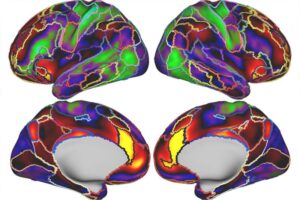
The image displays four views of a person's brain, highlighting the boundaries between different functional brain networks, each represented by different colored lines, as mapped using functional MRI. This map is overlaid on a salience network connectivity heat map, where warmer colors indicate stronger connectivity within the salience network. Researchers discovered that a larger salience network may be associated with an increased risk of depression. Credit: Lynch/Liston Labs.

Large-Scale Study Uncovers Hundreds of Genetic Variants Linked to Brain Structure

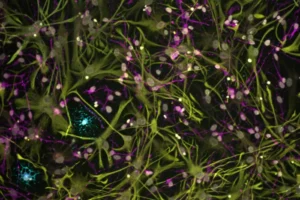
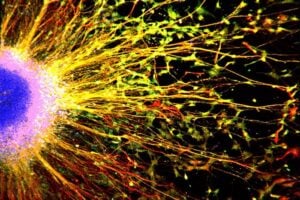
Glia-enriched cultures from a primary progressive multiple sclerosis iPSC line showing astrocytes (yellow), oligodendrocytes (cyan), and neurons (magenta)

Stem Cell Models Uncover Crucial Role of Brain Cells in Multiple Sclerosis

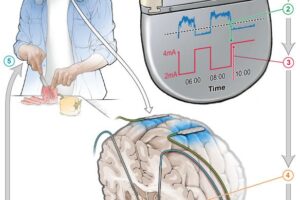
Implanted device responds to changes in brain signals, adjusting the amount of stimulation throughout the day, allowing individuals to go about their daily activities.

Self-Adjusting Brain Pacemaker Shows Promise in Reducing Parkinson’s Symptoms

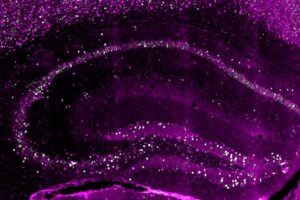
Early-born neurons (magenta) in the hippocampus create a long-persisting copy of a memory.

Brain Creates Triple Backup: New Study Reveals Multiple Copies of Memories

garbage dump

Cleaning up the aging brain: Scientists restore brain’s trash disposal system

A brain organoid culture, where the MECP2 gene (linked to Rett syndrome) has been knocked out, is shown under a fluorescent microscope. The culture was treated with the experimental cancer drug ADH-503, resulting in the formation of new synapses.

Cancer Drug Shows Promise for Improving Cognition in Rett Syndrome and Other Neurological Disorders

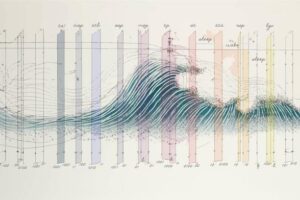
Hengen's artistic interpretation of the varied brain wave patterns that produce the fundamental states of sleep and wake.

Scientists find that small regions of the brain can take micro-naps while the rest of the brain is awake and vice versa

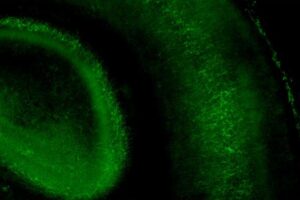
A cross-section of the somatosensory cortex in a young mouse brain. A key receptor protein named mGluR1 (green) is necessary to prime sensory circuits early in life, affecting how the mouse senses the world through touch.

Brain Protein Discovery Could Lead to New Autism Treatments

warhol-style-illustration-of-two-brains-face-to-face.-The-left-half-has-a-red-background-and-blue-brain.-The-right-half-has-a-blue-background

Neural balance in the brain is associated with brain maturity and better cognitive ability

A model image of the targeted deep brain zone, the striatum, which plays a crucial role in reward and reinforcement mechanisms.

Non-Invasive Brain Stimulation: A New Frontier in Treating Addiction, Depression, and OCD

A conceptual illustration depicting the brain and gut connected by a beam of light, symbolizing the application of photobiomodulation to the gut-brain axis.

Innovative Light Therapy Shows Promise in Treating Neurological Disorders

Illustration of spinal cord

Flexible, Robotic Nerve ‘Cuffs’ Offer Potential for Minimally Invasive Monitoring and Treatment of Neurological Conditions

Mary Kaupas participates in a experiment to study how humans of various ages reach for targets. Tubes monitor her breathing to measure how much energy she uses. (Credit: Erik Summerside/Mary Kaupas)

Why old people move slowly

Older posts
Page1 Page2 Next →
Substack subscription form sign up

Comments

  • Norwood johnson on Electrons in New Crystals Behave as If They Live in Four Dimensions
  • ScienceBlog.com on Hidden Geometry Could Finally Fix Quantum Computers
  • Theo Prinse on America Is Going Back to the Moon. This Time, It Plans to Stay
  • george w on Hidden Geometry Could Finally Fix Quantum Computers
  • Tom Hughes on Years of Exercise, Blood Pressure Drugs Failed to Slow Cognitive Decline in Seniors at Dementia Risk
© 2026 ScienceBlog.com | Follow our RSS / XML feed