Skip to content
ScienceBlog.com
  • Featured Blogs
    • EU Horizon Blog
    • ESA Tracker
    • Experimental Frontiers
    • Josh Mitteldorf’s Aging Matters
    • Dr. Lu Zhang’s Gondwanaland
    • NeuroEdge
    • NIAAA
    • SciChi
    • The Poetry of Science
    • Wild Science
  • Topics
    • Brain & Behavior
    • Earth, Energy & Environment
    • Health
    • Life & Non-humans
    • Physics & Mathematics
    • Social Sciences
    • Space
    • Technology
  • Our Substack
  • Follow Us!
    • Bluesky
    • Threads
    • FaceBook
    • Google News
    • Twitter/X
  • Contribute/Contact

Neurological Disorders

Brain drawing

Scientists Uncover Brain Cells’ Coordination of Focus and Short-Term Memory Storage

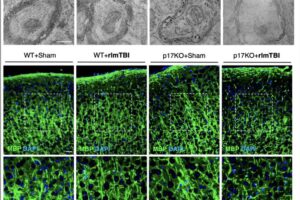
The p17 transporter in mice

Drug could protect brains from damage after concussions

Illustration accompanying growth hormone anxiety story

Growth hormone influences regulation of anxiety

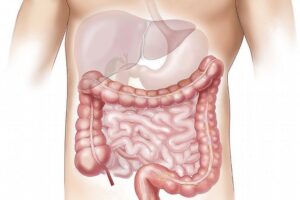
Human digestive tract and biome. Pixabay

Microorganisms living in gastrointestinal tracts may foretell diagnoses of debilitating diseases including Alzheimer’s and Parkinson’s

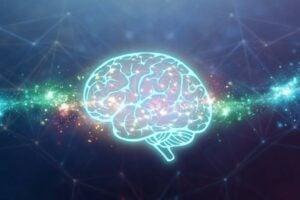
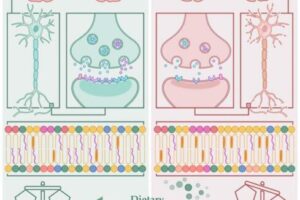
The process of brain aging is distinguished by a gradual deterioration in the functioning of neurons, which can be attributed to an imbalance in the cellular and molecular mechanisms governing synaptic plasticity. Synapses are enriched with various lipid species including phosphatidylcholine, phosphatidylethanolamine, phosphatidylserine, sphingolipids, and some other less abundant components. Those components are altered in aging brain, could affect brain functions, including structural development, nerve-impulse transmission, neurogenesis, synaptogenesis and myelin formation. Dietary phospholipid intervention could prevent brain aging by maintaining lipid homeostasis and enhancing synaptic plasticity.

Dietary fat as potential strategy to prevent brain aging

Woman with measuring take around belly

Certain gut conditions may be early warning signs of Parkinson’s disease

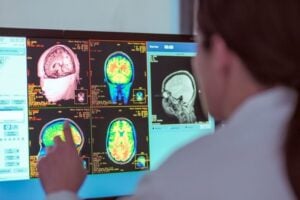
Physician reads a color monitor brain scan. From University of Michigan

Diabetes linked to functional and structural brain changes through MRI

Nerve cell illustration

Altered Pain Perception in Alzheimer’s Disease Could Lead to Improved Pain Management

Image of fused neurons (yellow) expressing Spike S fusogen from the SARS-CoV-2 virus and the human receptor hACE2.

Brain cells can fuse from COVID-19

Abnormal neural synchrony underlies many neurological conditions, including Parkinson’s disease, which can cause tremors. | iStock/Astrid860

New Focused Ultrasound Effective for treating Parkinson’s, Movement Disorders

Woman getting her blood pressure checked

Ideal blood pressure may remodel brain clearance pathways linked to brain health, dementia

blood brain barrier illustration

Rabies virus helps Alzheimer’s treatment cross blood-brain barrier

New experiences are absorbed into neural representations over time, symbolized here by a hyperboloid hourglass.

The brain’s ability to perceive space expands like the universe

This image was generated by artificial intelligence based upon a request for 3D art using a natural language interpretation of “artificial intelligence that detects mutations in the genome.” Photo by Joseph Gleeson/UC San Diego

AI Learns to ID Rare ‘Mosaic Mutations’ That Cause Disease

Newer posts
← Previous Page1 Page2
Substack subscription form sign up

Comments

  • Norwood johnson on Electrons in New Crystals Behave as If They Live in Four Dimensions
  • ScienceBlog.com on Hidden Geometry Could Finally Fix Quantum Computers
  • Theo Prinse on America Is Going Back to the Moon. This Time, It Plans to Stay
  • george w on Hidden Geometry Could Finally Fix Quantum Computers
  • Tom Hughes on Years of Exercise, Blood Pressure Drugs Failed to Slow Cognitive Decline in Seniors at Dementia Risk
© 2026 ScienceBlog.com | Follow our RSS / XML feed